10 Interesting (To Me) Stats For This Week - July 7, 2026
Welcome back to another week of ’10 Interesting (To Me) Stats’. With the Draft, a slew of major trades, and the bulk of free agency behind us, we should start looking ahead to next season.
*Reminder: This newsletter will move to Ghost in the coming months, so to ensure you keep getting them, be sure to subscribe there. Just follow this link.
Over on my Ghost blog (which is where his newsletter will be permanently hosted in the near-future, so be sure to subscribe over there), I have been writing about the evolution of NHL defencemen. Teams need their blue liners to be mobile and part of the offence, not just cross-check people in front of their net, so let’s look at 10 non-playoff teams from last season, where their defence groups lagged behind, and whether any of their offseason changes addressed these problems.
Tracking data is from All Three Zones and other player/team data is from Evolving Hockey.
1 – Florida Panthers
A bevy of lengthy injuries to key players derailed Florida’s desire to three-peat as league champs, and with a healthy roster, plus acquiring Brady Tkachuk, they’re looking at a big rebound. In 2024-25, Florida's blue line generated very good rates of scoring chances, and were heavily involved in the cycle/forecheck, and the problem is that completely disappeared in 2025-26:
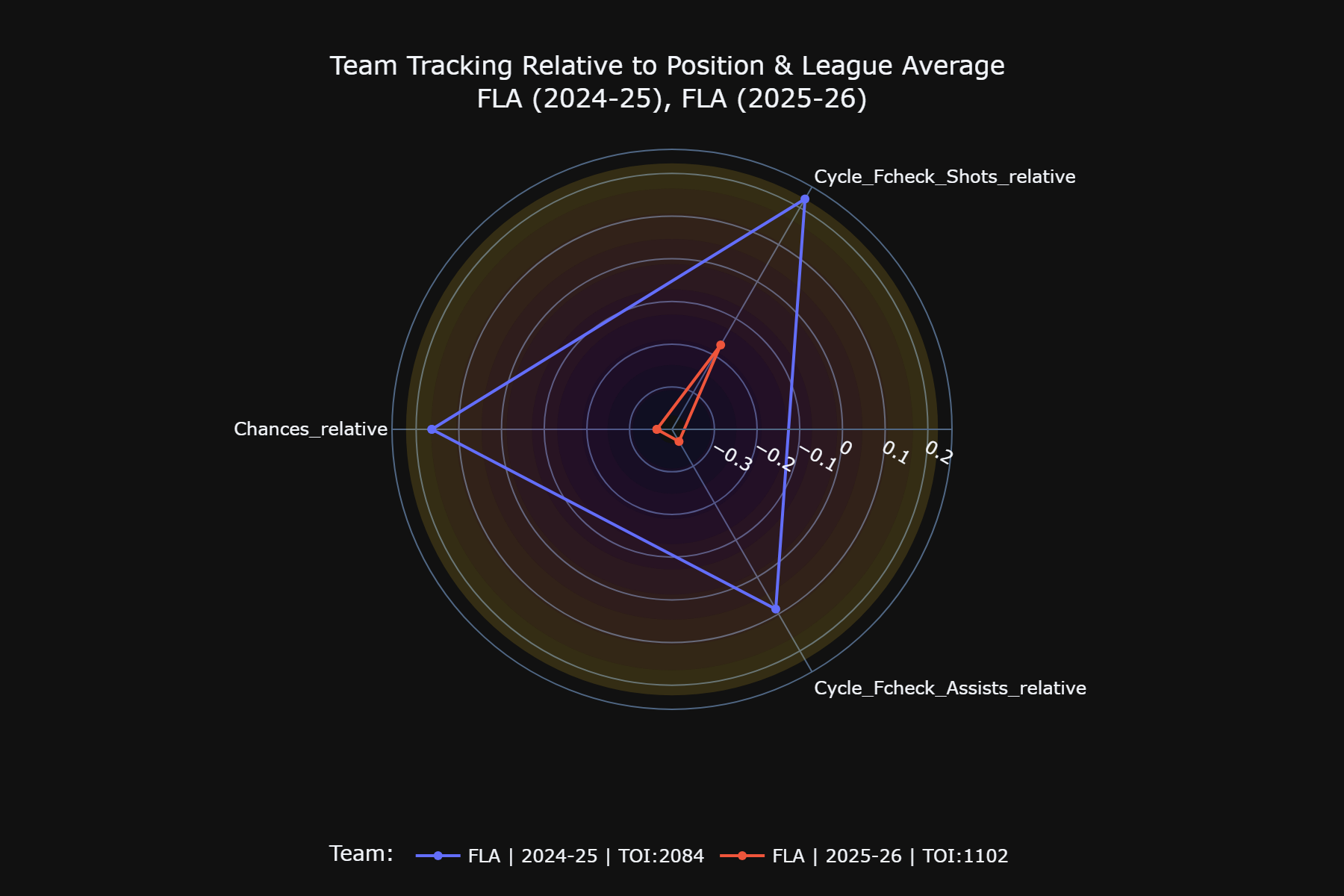
It isn’t hard to chalk this up to the team’s forwards having so many injuries, but every single Florida defenceman will be at least 30 years old next season as they run back largely the same group they had. They have a long track record of success, so they deserve the benefit of the doubt, but this is the same defence group that just had a poor offensive season. Their defencemen will need to be a lot better if the Panthers want to get the most out of their deep, talented forward group.
2 – Detroit Red Wings
Regardless of Dylan Larkin’s future, Detroit’s defence depth needs a serious upgrade. When looking at the rate at which their defencemen carried the puck into the offensive zone, exited the defensive zone with possession, or failed to exit the defensive zone/botched defensive retrievals, the Wings were all demonstrably worse than league average (positive rate of botch/fail percentage is bad):
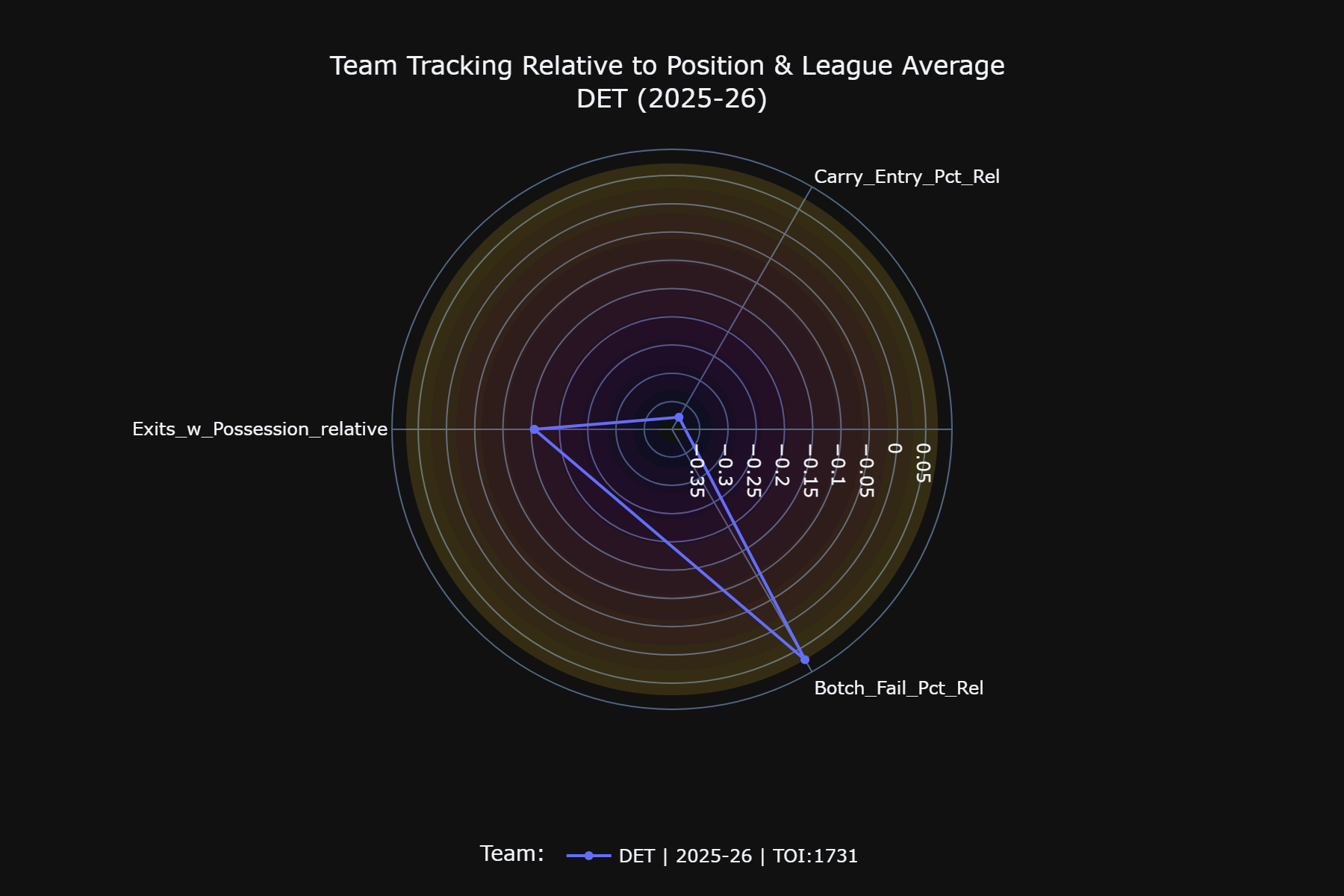
When Detroit blue liners had the puck on their sticks, they struggled to carry the puck in, struggled to get the puck out with control, and struggled to get the puck out at all. That kind of combination is poison for a team’s offence, and they didn’t make an impactful change on the blue line. Detroit will need Simon Edvinsson and Axel Sandin Pellikka to take big strides for this team to improve offensively, Larkin or not.
3 – Toronto Maple Leafs
If we use the same stats for Toronto that we just used for Detroit, and compare them to the Edmonton Oilers, a team that was average-to-good in those stats, we can clearly see just how far the Leafs’ blue line had to go:
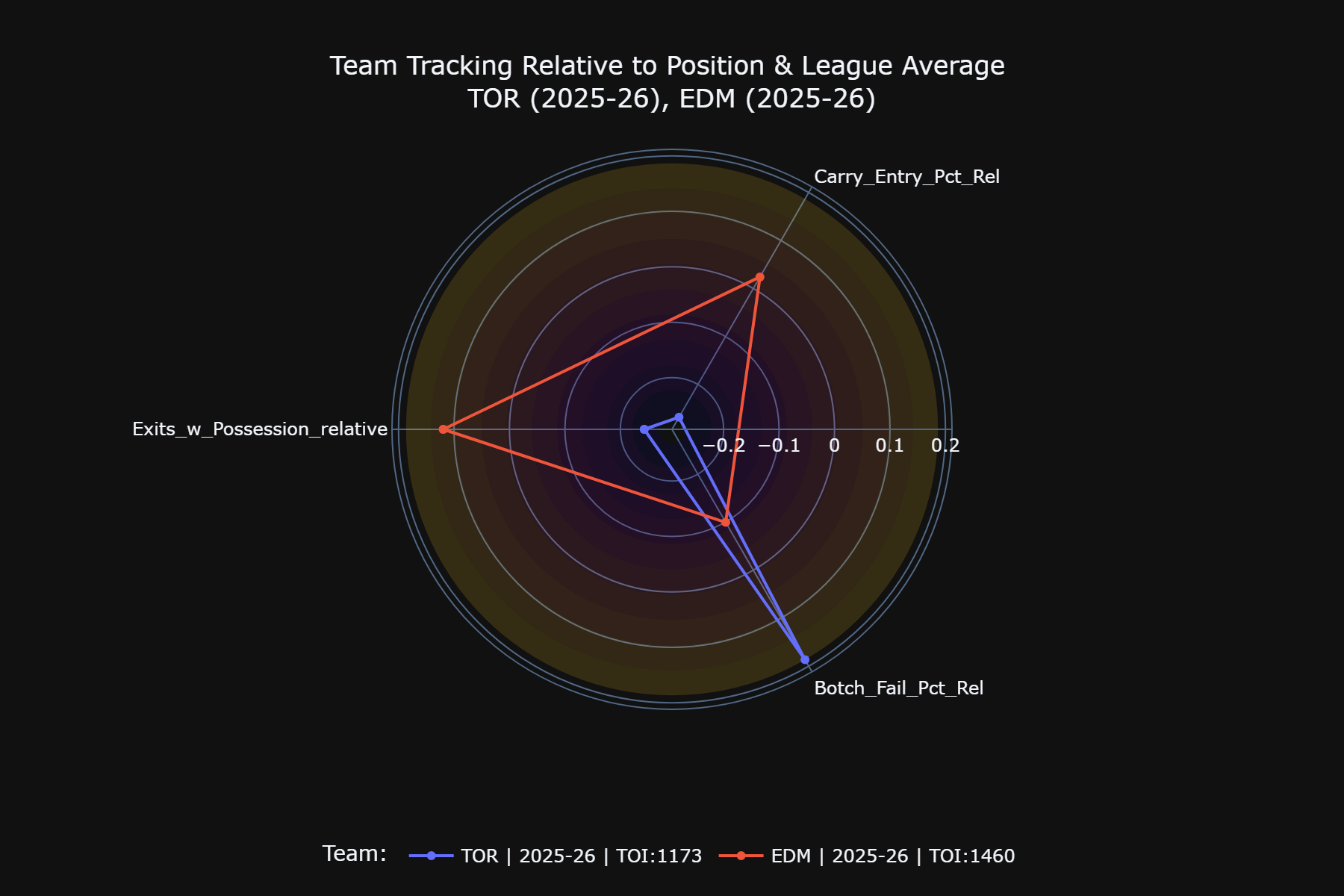
The additions of Darren Raddysh and Emil Andrae matter a lot here. It isn’t just that they’re good in those areas, it’s that they are massive improvements on the two guys they replaced: Brandon Carlo and Simon Benoit. The Leafs had a clear need to improve the puck-moving from the back end and addressed it in a significant way.
4 – New York Islanders
Hiring Pete DeBoer as a head coach should have a positive impact on the team, but the real issue is that when adding zone entries to the same stats we just employed with Toronto and Detroit, the Islanders’ blue line is just Matthew Schaefer and Some Guys:
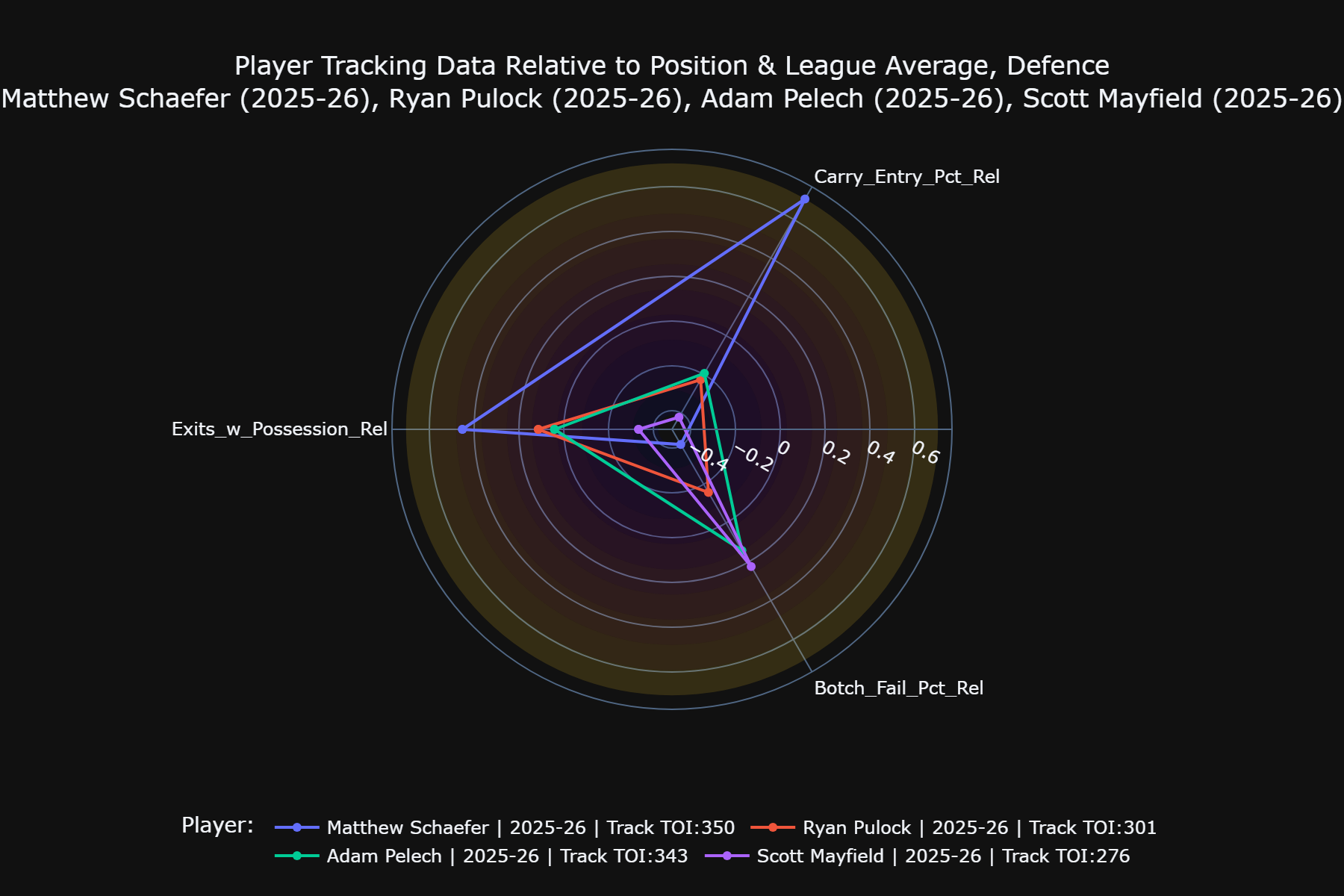
In fairness, Ryan Pulock and Adam Pelech were fine at zone exits with possession, and Tony DeAngelo isn’t on the graph, but he was fine on carrying the puck in. Fine can be good enough if there are improvements thanks to an upgrade from the coaching staff, but running back this same defence group puts a considerable burden on Schaefer being as good, if not better, than last season. He should be, but one six-week injury from Schaefer would be enough to derail the Islanders’ entire season.
5 – New Jersey Devils
If there was one word to describe the 2025-26 Devils defencemen, it was ‘risky’. They contributed well to offence off the rush, but were poor at contributing to offence off the cycle/forecheck, and their botch/fail rate was much higher than league average. Put it all together, and their 2025-26 season compared to a team we just analyzed:
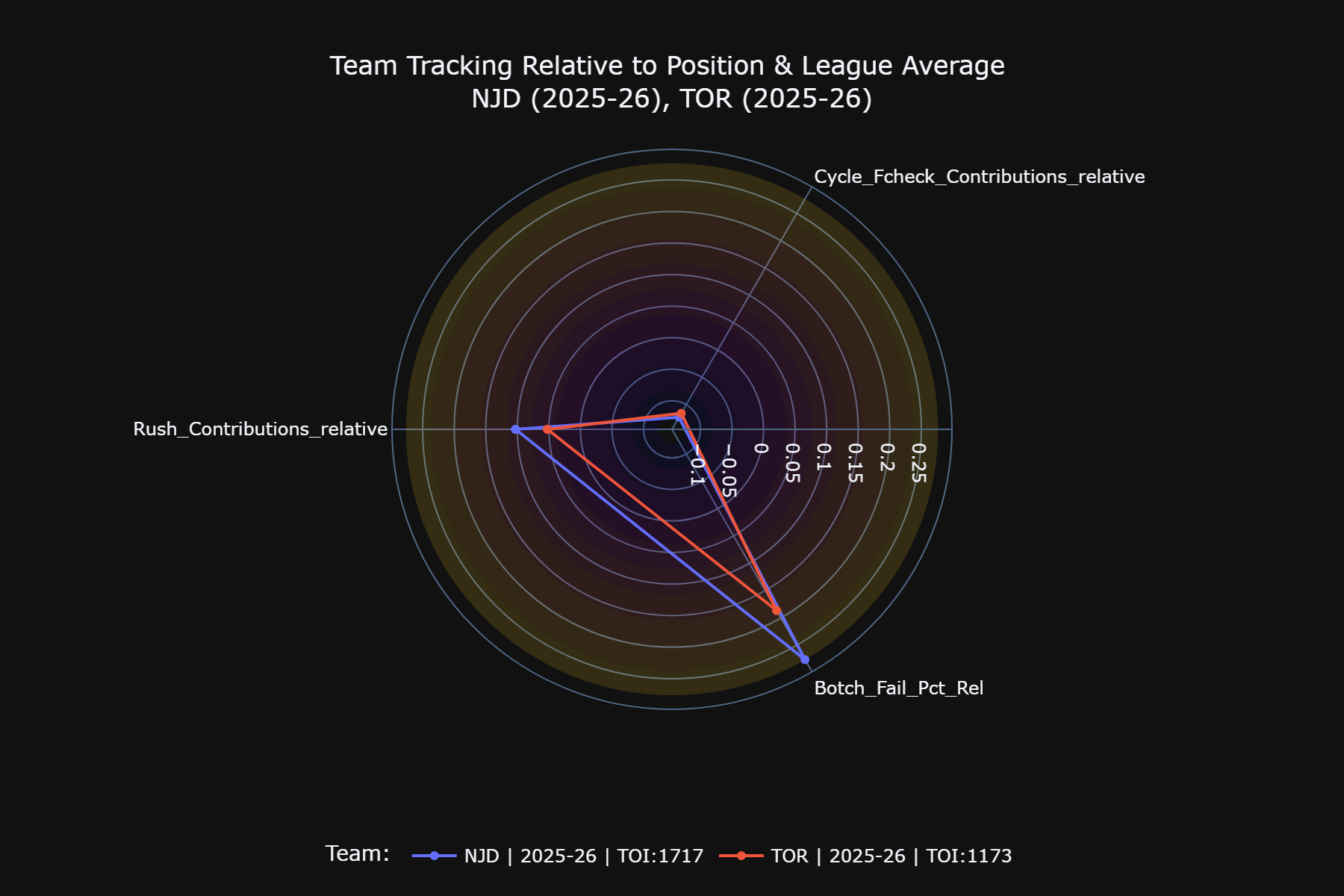
Trading Simon Nemec might actually help here as he had by far the highest botch/fail rate on the New Jersey blue line. This could be a case of addition by subtraction (in one specific area, anyway), but the Devils need more stability from their defencemen or else they could be on the outside of the playoff picture once again in a deep Eastern Conference.
6 – San Jose Sharks
The 2025-26 Sharks roster had one of, if not the, least mobile blue lines in the league. When looking at all the playmaking/facilitation stats like assists on scoring chances, high-danger passes, zone entries, and so on, they were below average across the board. It is not a good sign when your defence group compares to, and sometimes falls well short of, the Detroit defence group:
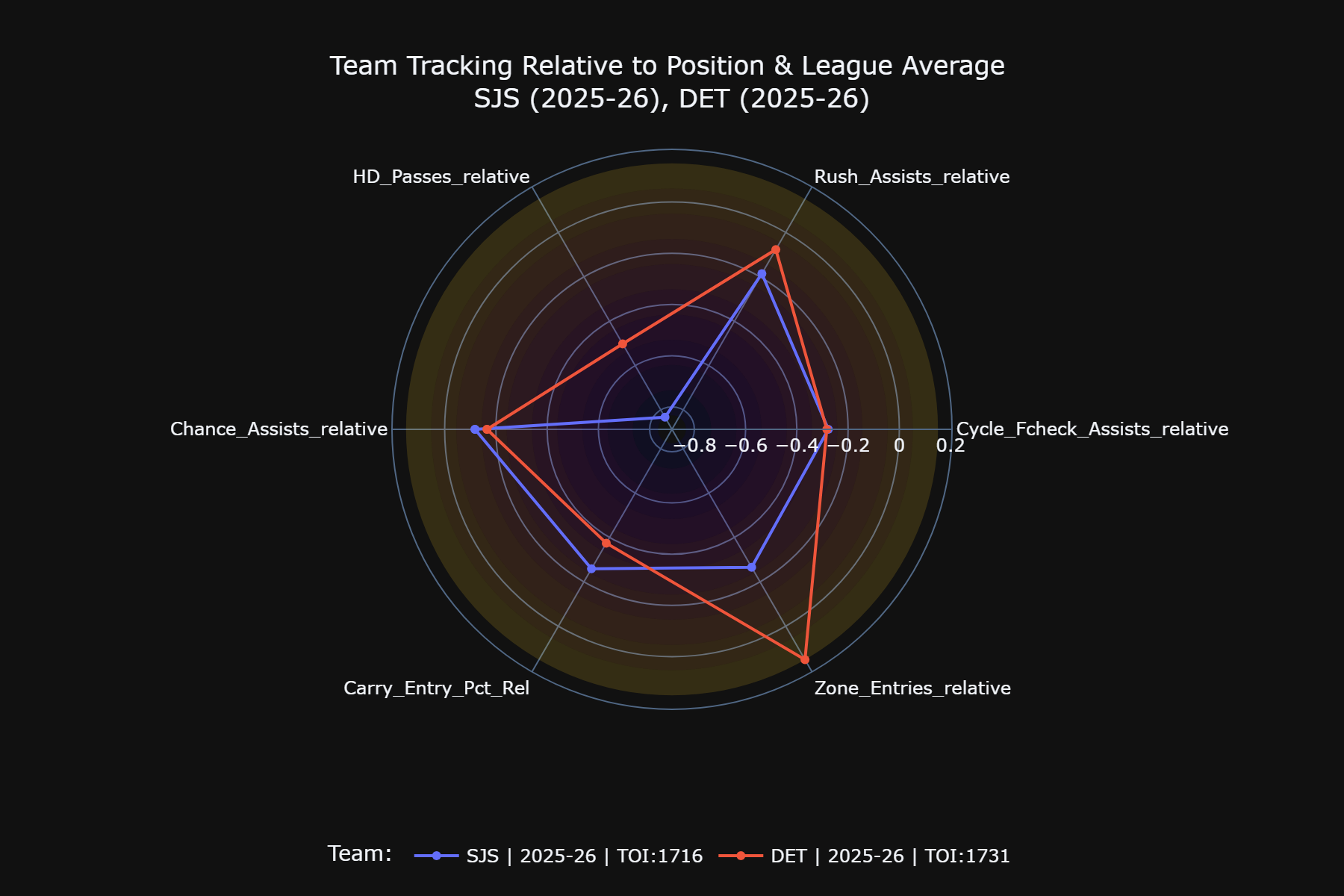
San Jose is just emerging from their rebuild phase, added Michael Kesselring, Darnell Nurse, and Jacob Trouba, and have both Sam Dickinson and Luca Cagnoni (hopefully) improving. Those moves/improvements should all help their defence puck-moving numbers, but this team has a long way to go, so this is a case where we’re looking for increases, not dominance, in 2026-27.
7 – Chicago Blackhawks
There is a difference between avoiding unnecessary risks and avoiding risk altogether, and the Blackhawks’ blue line falls into the latter group. When looking at their contributions off the rush, their zone entries, and how often they carried the puck on those zone entries, we can see how little they jumped into the play:
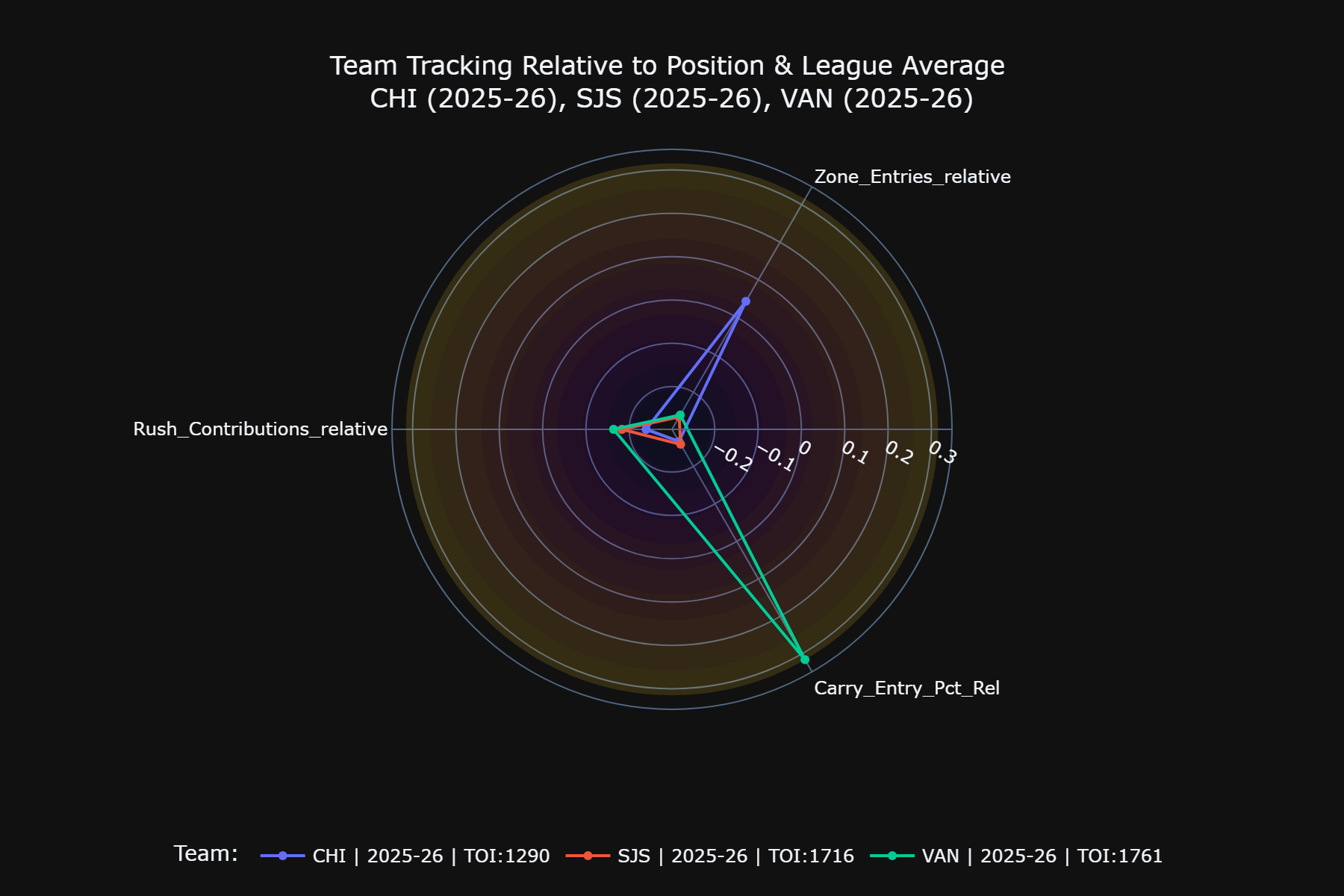
When your defencemen rank somewhere between San Jose and Vancouver, there is some concern. Adding Bowen Byram – a guy who loves to jump into the rush and carry the puck – should help in these areas. They need others to step up, though, so better years from Artyom Levshunov and Sam Rinzel matter a lot.
8 – Winnipeg Jets
Losing Nikolaj Ehlers undoubtedly hurt Winnipeg’s scoring depth. What also hurt was that their defencemen had a very high botch/fail rate, were below average on zone entries, and rarely carried the puck into the zone, comparing to the 2025-26 Toronto Maple Leafs:
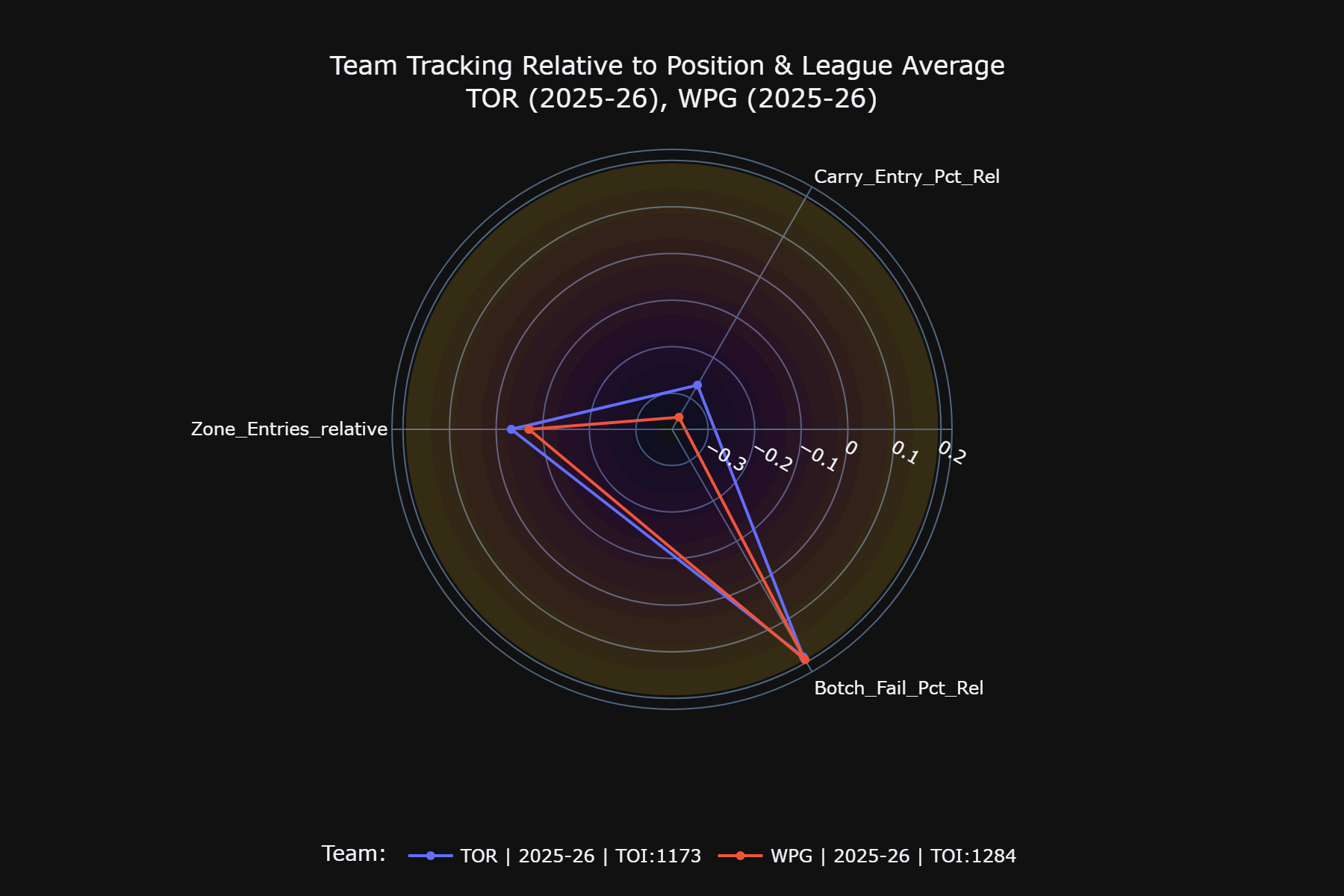
There is good news. Trading Logan Stanley late last season should help, regardless of his replacement, because he was very poor in these areas. Also, Dylan Samberg started the season injured and didn’t play to the level he’s capable of. Better results from the Stanley replacement, Elias Salomonsson improving on the bottom pair, and a rebound from Samberg would go a long way to getting Winnipeg’s defence group back to where it can be.
9 – Seattle Kraken
Defencemen carrying the puck into the zone can be a good thing, but it depends on what happens next. That was a glaring problem for the Kraken in 2025-26 as they carried the puck in at a very high rate, but their rate of assists on scoring chances and assists off the rush or cycle were below average:
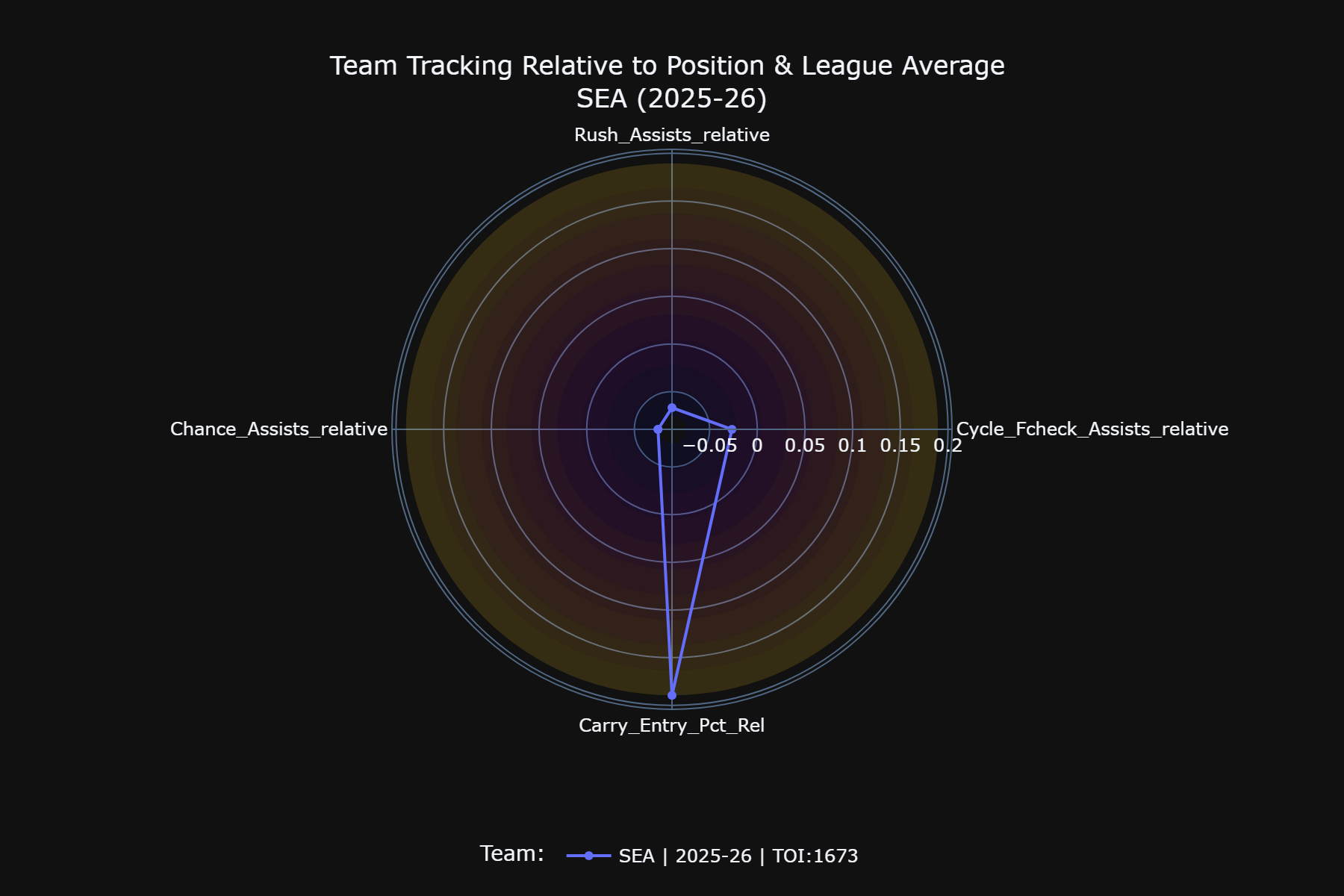
Scoring a goal is the result of a sequence of events. It isn’t always a straight line from start to finish but breaks in that sequence are where the offence dies. The Kraken blue line is nearly identical to what it was in 2025-26, so whether things get better is a fair question to ask.
10 – St. Louis Blues
We have saved the best* for last. The 2025-26 Blues defencemen were bottom-10 by contributions off the rush, dead last by contributions off the cycle, and 30th by botch-fail rate. The team they compared to is not flattering:
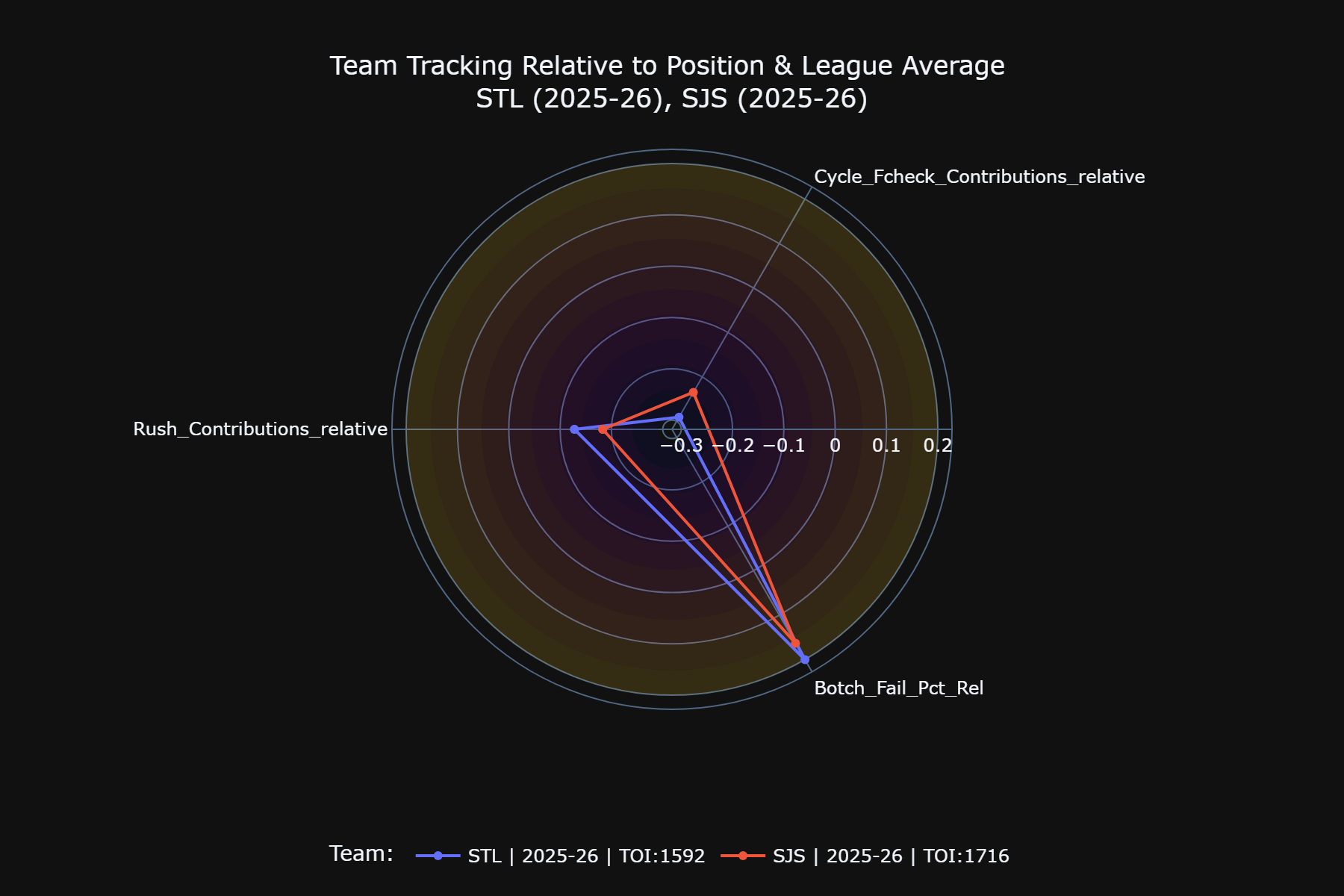
Trading Justin Faulk would have helped, but adding Brandon Carlo might make things worse. They need veterans like Colton Parayko and Cam Fowler to improve, and a gigantic leap from Logan Mailloux. Otherwise, this team is spinning its wheels. At least they’re in a Western Conference whose middle-of-the-road teams aren’t demonstrably better.
*Worst
Until next week.