10 Interesting (To Me) Stats For This Week - November 10, 2026

Welcome back to another week of ’10 Interesting (To Me) Stats’. We are six weeks into the regular season, and each team has played anywhere from 15-20 games. This sample gives us a good idea of what each team wants to do offensively, so let’s dig into that.
The following graphs are going to look at four stats tracked by All Three Zones:
1. Forecheck/Cycle Contributions – Shots and assists created off the forecheck or cycle.
2. Rush Contributions – Shots and assists created off the rush.
3. High-Danger Passes – Passes either across the slot or from behind the net.
4. Carry Entry Percentage – The percentage of entries that are carried in as opposed to dumped in.
The data is at 5-on-5 only and each is relative to the league average at their specific position. The graphs will look at either the overall changes among each team’s forwards or each team’s defencemen. All data is updated as of available tracking from Monday, November 9th. Graphs are my own.
Beware that the samples are still small. Many of the teams have five-or-fewer games tracked, so I’ll do my best to focus on the teams with the most tracked games, but things can and will change once more games are accumulated.
1 – Utah Overhaul
All the public models have the Utah Mammoth 2nd by expected goal share at 5-on-5 this season, an improvement from being 6th last season by that measure across Natural Stat Trick, Evolving Hockey, or MoneyPuck. They are doing this by not only creating more of the rush but more of the cycle, too:
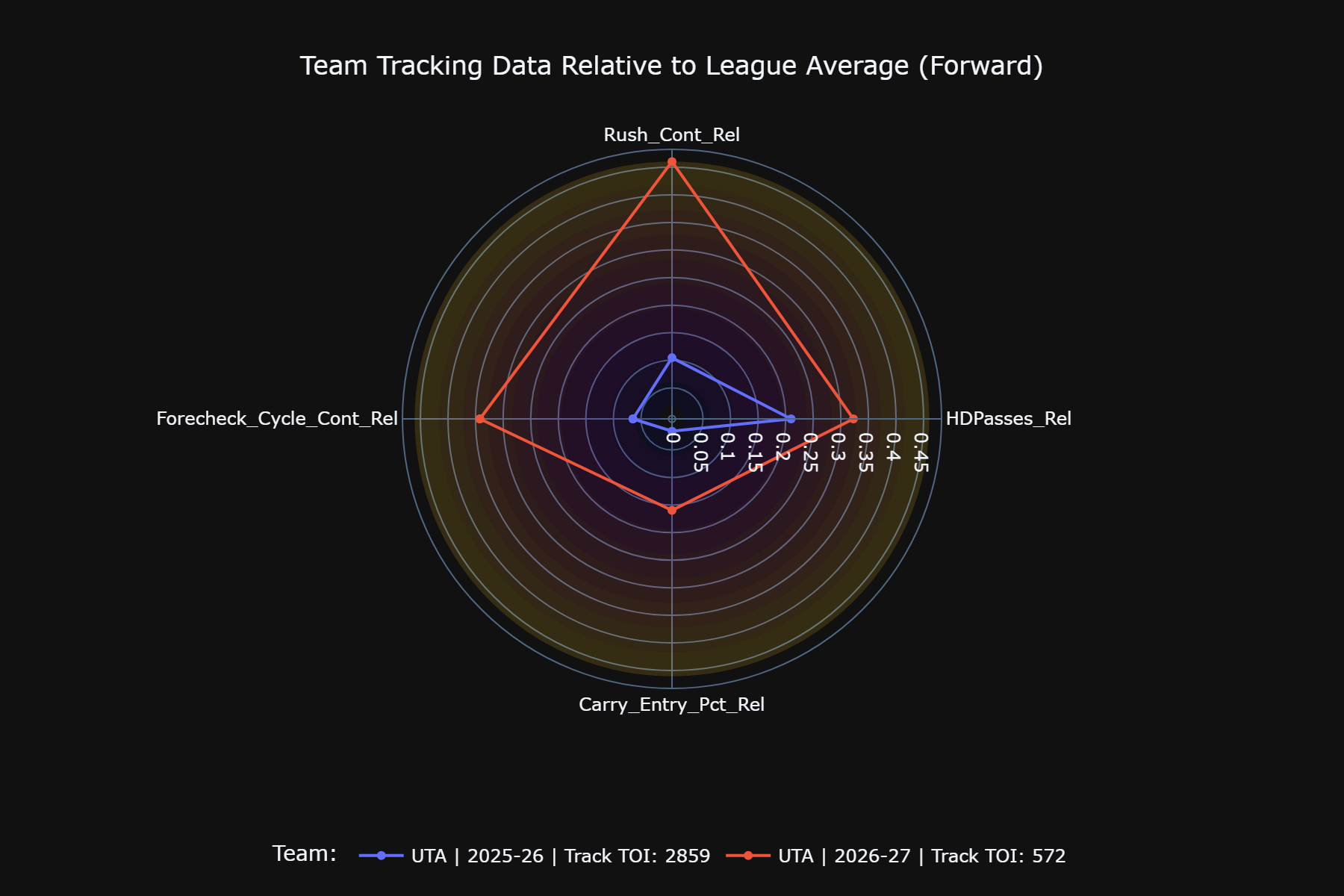
The fruits of this labour haven’t been reaped yet as the Mammoth are one of the top teams by expected goals-for per 60 minutes at 5-on-5 but are below average by actual goal scoring. The offseason additions and stylistic changes have cemented the Mammoth as one of the deepest, and most dangerous, forward groups in the league, and the goals should see a sizeable increase over the next five months.
2 – The New New Jersey Devils
Last season, New Jersey Devils forwards had the fourth-highest rate of contributions off the rush among all 32 teams. It didn’t lead to much scoring, though, finishing with the second-lowest goal rate at 5-on-5. They have further improved their rush offence this season:
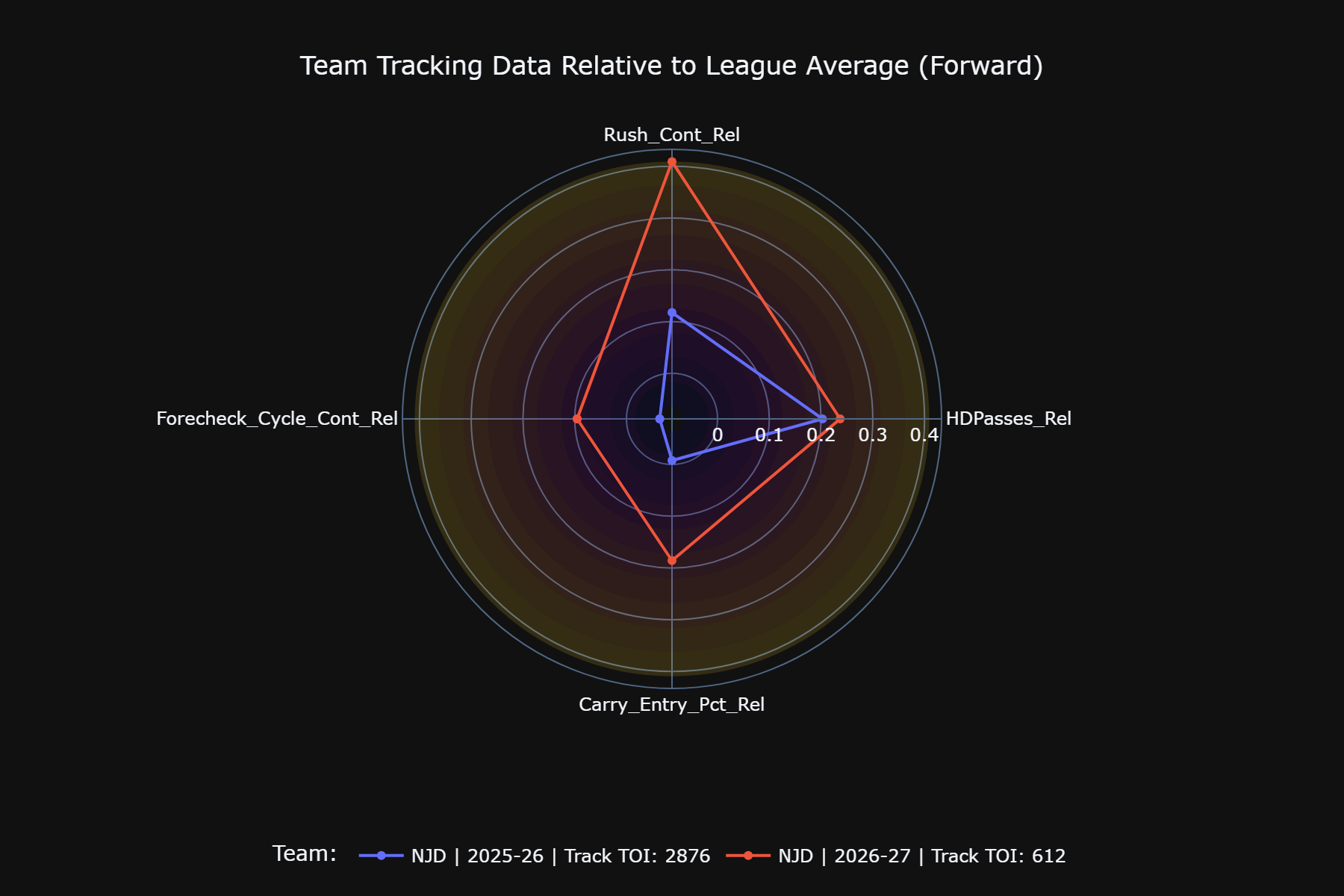
The result has been the Devils jumping to 8th in the league by 5-on-5 goal scoring despite a below-average shooting percentage. They may not have the group to be highly efficient offensively, but they create substantial volume, and it seems the additional rush offence is helping them convert with higher percentages (for now, anyway).
3 – Cutting Against The Hurri-grain
Back in June, I wrote about how teams who found a lot of success last year (Carolina, Buffalo, Boston) all had increases in their offence off the rush. So far this season, the Hurricanes have reversed course once again as their offence off the rush has declined substantially but their offence off the cycle/forecheck has improved:
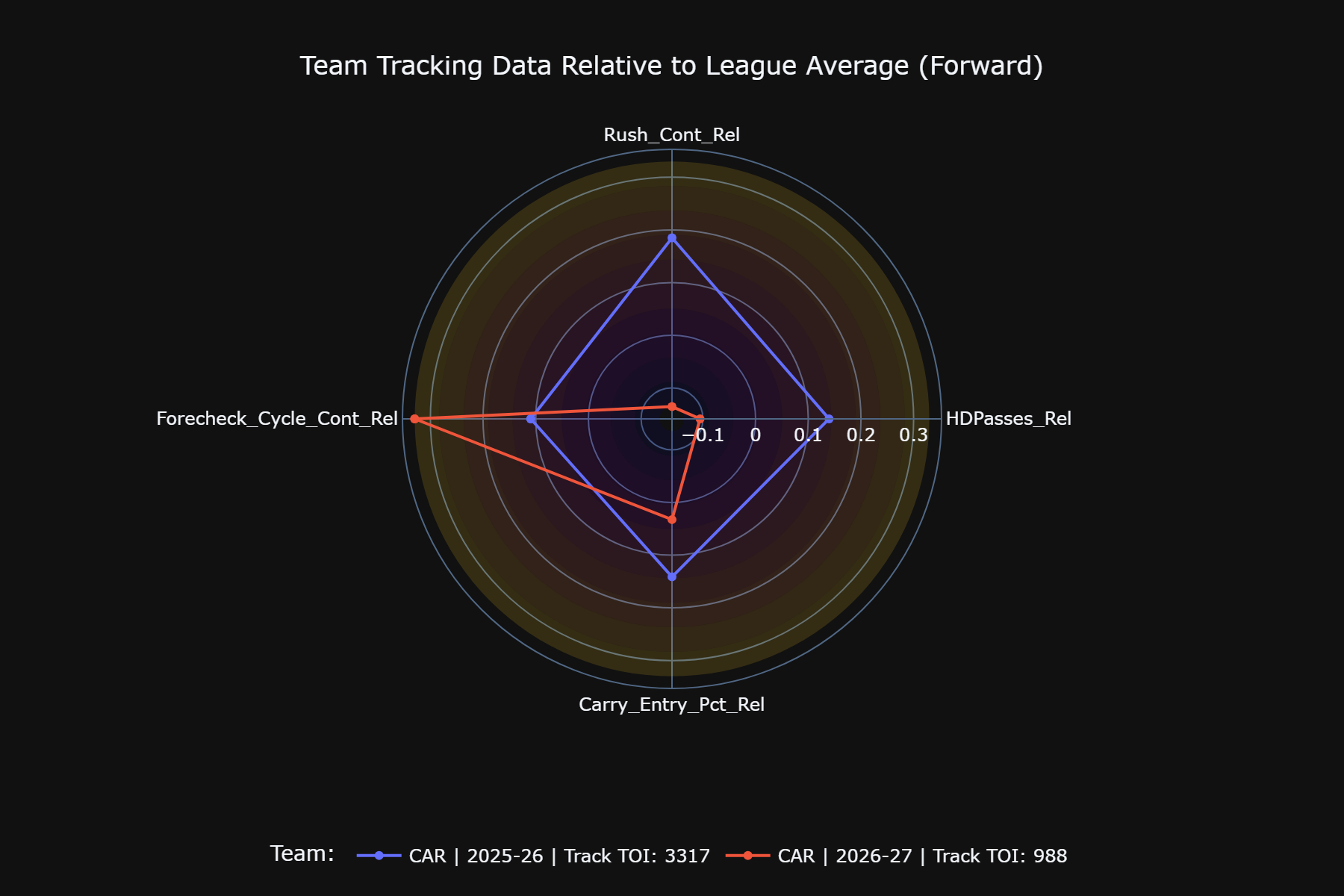
I want to mention that Carolina has had the easiest schedule in the league to this point, so I’m not entirely confident what we’ve seen through six weeks is where they will be after 16 weeks. All the same, Carolina looks to have made adjustments once again, and it’s hard to argue with their results.
4 – Dimming Stars
The Dallas Stars are off to a great start this season but are the slowest paced team in the league by combined shot attempts for/against per 60 minutes at 5-on-5, and that makes sense when we look at the changes to their offence:
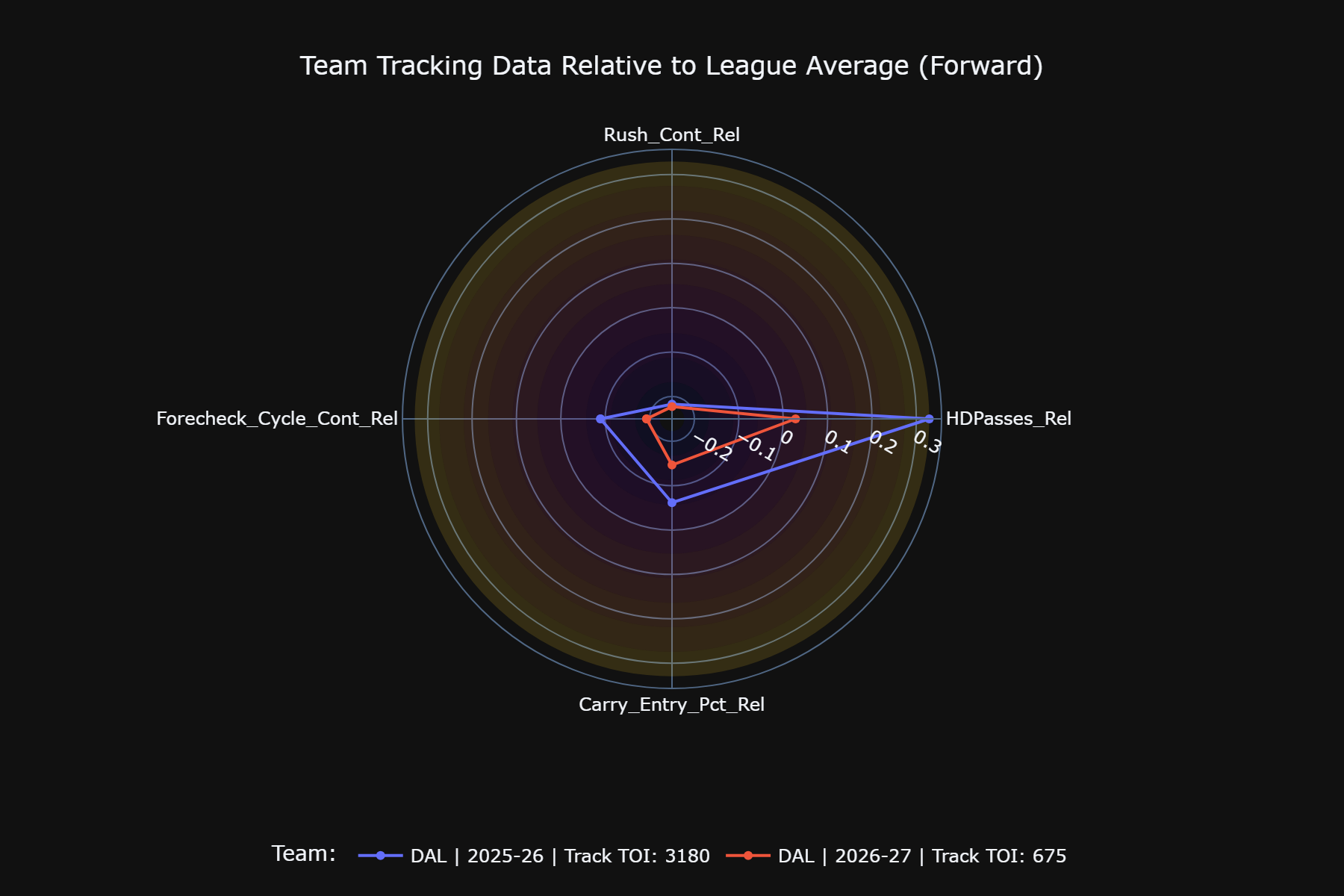
Last year, Dallas was not a team that created a lot of offence at 5-on-5, finishing outside the top-10 of the league by goal rate and among the bottom-5 teams by shot attempts per 60 minutes. This year, Dallas has a below-average scoring rate at 5-on-5 and are bottom-10 by shot attempts. This is a team focused strictly on preventing goals, which is helping them win games, but makes them incredibly boring to watch.
5 – Not Washed
Offseasons additions of Alex Tuch, Jordan Kyrou, and Boone Jenner, with a full season from Ilya Protas, overhauled the Washington forward group. They were good offensively last year, finishing 10th by goal rate at 5-on-5, but they sit 3rd in the league so far this year, and that is going hand-in-hand with a huge increase in their rush offence:
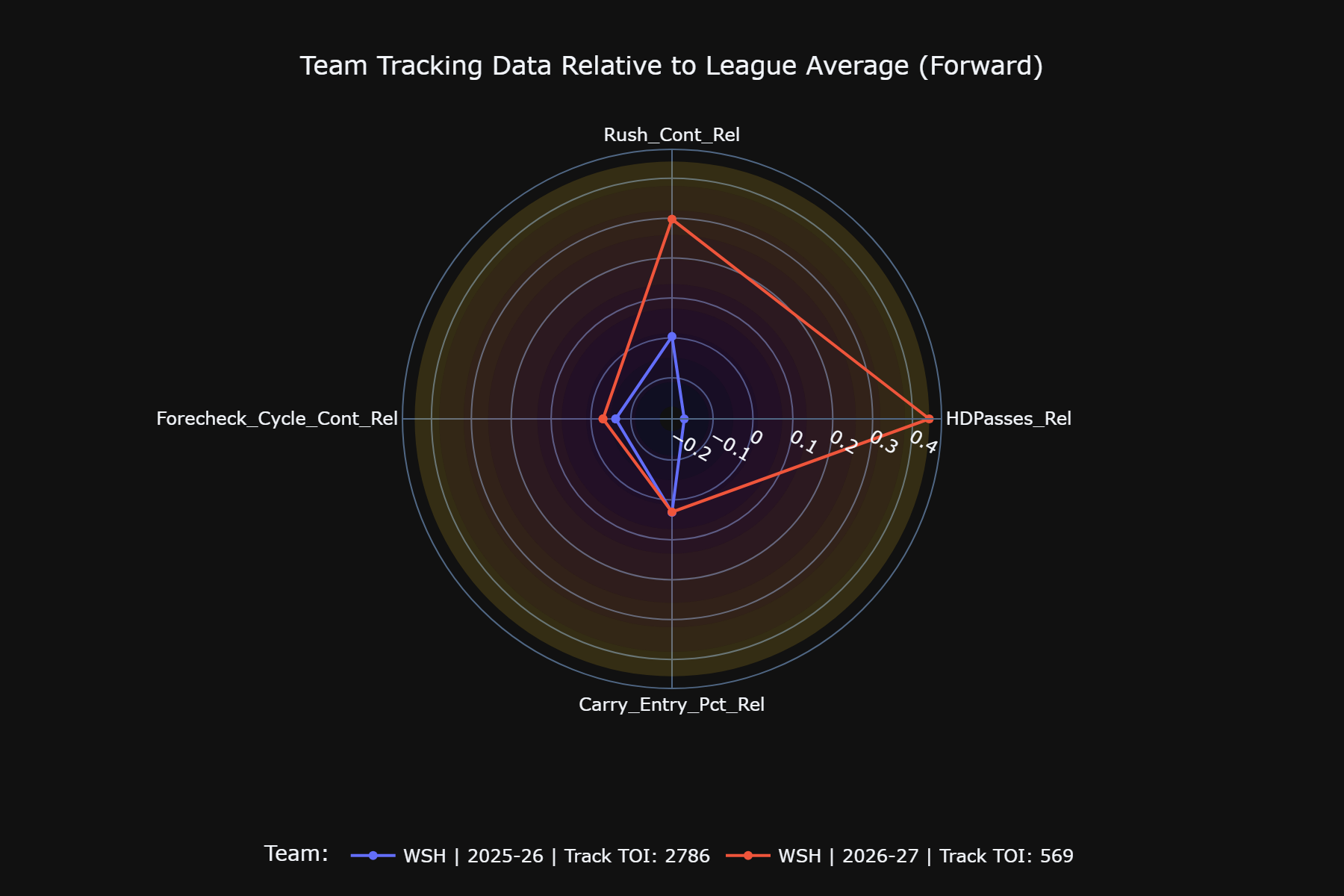
A healthy(ish) Pierre-Luc Dubois is helping, as is a big start from the young Ryan Leonard. Of course, Washington’s season will be judged by how they finish and not how they start but, like Utah earlier, this is a deep and dangerous offensive team at 5-on-5 who can go to-to-toe with any roster.
6 – New York, New Me
What the New York Islanders would look like with a full season under new coach Pete DeBoer was the big question around this team, and to this point, the answer is a team that is creating even more offence off both the rush and cycle/forecheck:
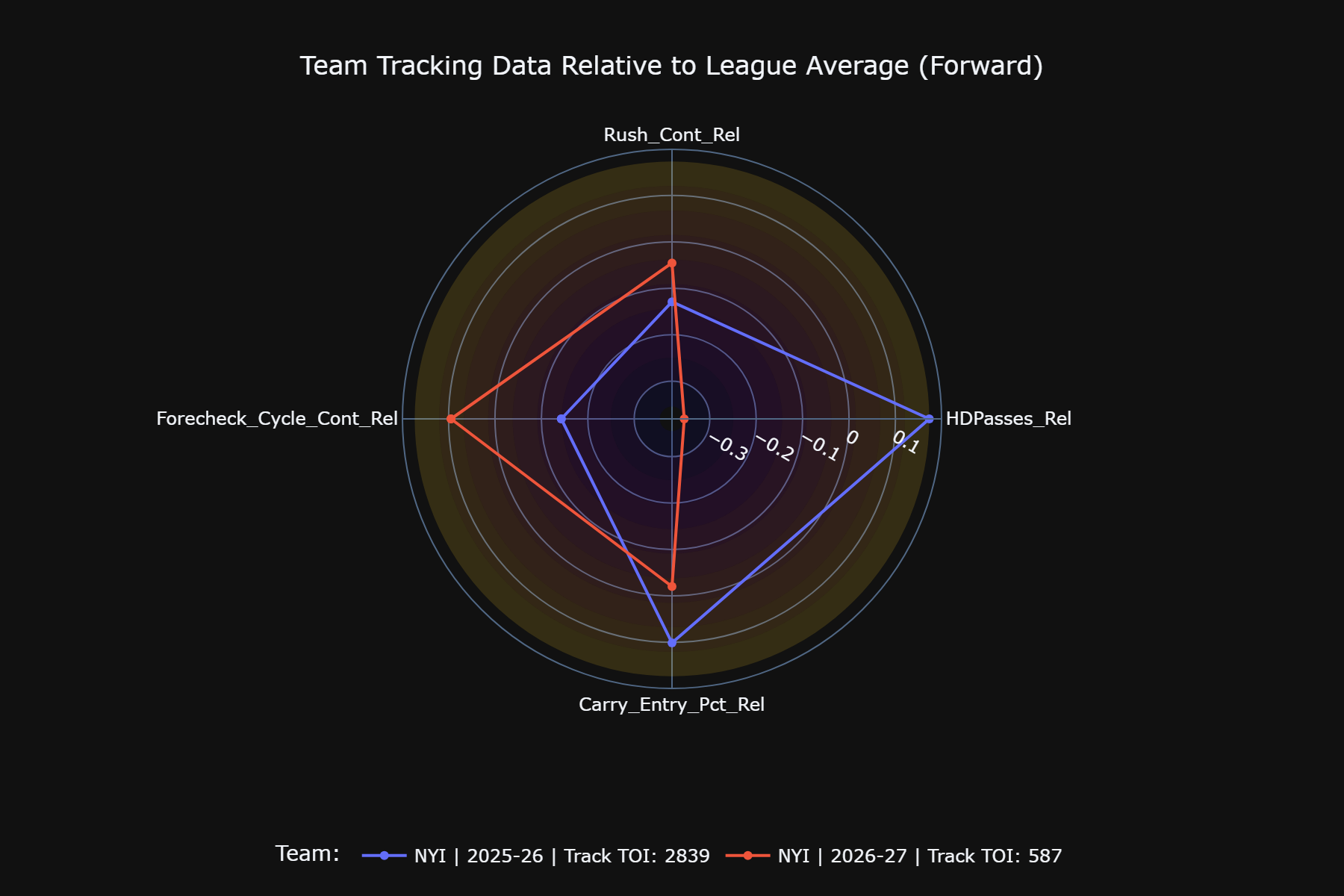
A fresh reminder that this has been done with Mathew Barzal having yet to play a game this season. This is not a team laden with star power, and have been without their most dangerous forward, and yet DeBoer has gotten them from poor offensive creation on both the rush and forecheck/cycle to around league average. That is not nothing.
7 – Highly Dangerous
For years, a big problem with the Ottawa Senators’ offence was a complete lack of high-danger passes from their forwards; they were consistently among the worst teams in the league at creating dangerous shots off dangerous passes. That has not been the case in 2026-27 as they’ve gone from among the worst in the league to easily above average:
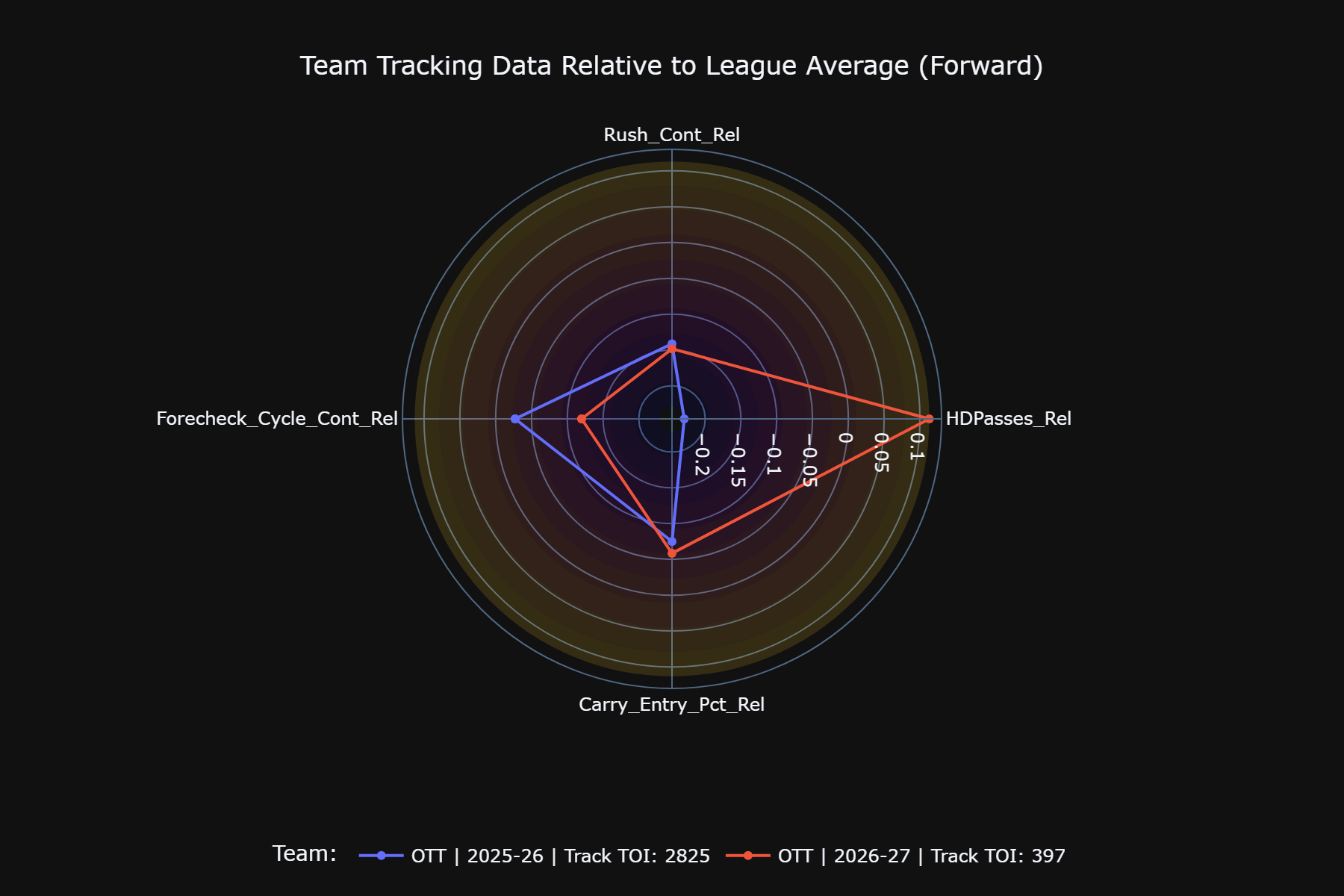
The forecheck/cycle offence has declined, but Brady Tkachuk being traded to Florida helps explain a good chunk of that. Either way, the Sens have greatly improved their 5-on-5 shooting percentage and whether they hold onto that increase is another matter, but there is a change in what kinds of shots they’re looking to create. Keep in mind this is largely without William Eklund, who is one of the better playmakers in the league.
8 – Engine Oil
Last season, the defencemen from the Edmonton Oilers saw across-the-board declines in the four stats we’ve looked at today. There have been further declines in their carried entry percentage and rush offence, but sizeable improvements in their forecheck/cycle contributions and high-danger passes:
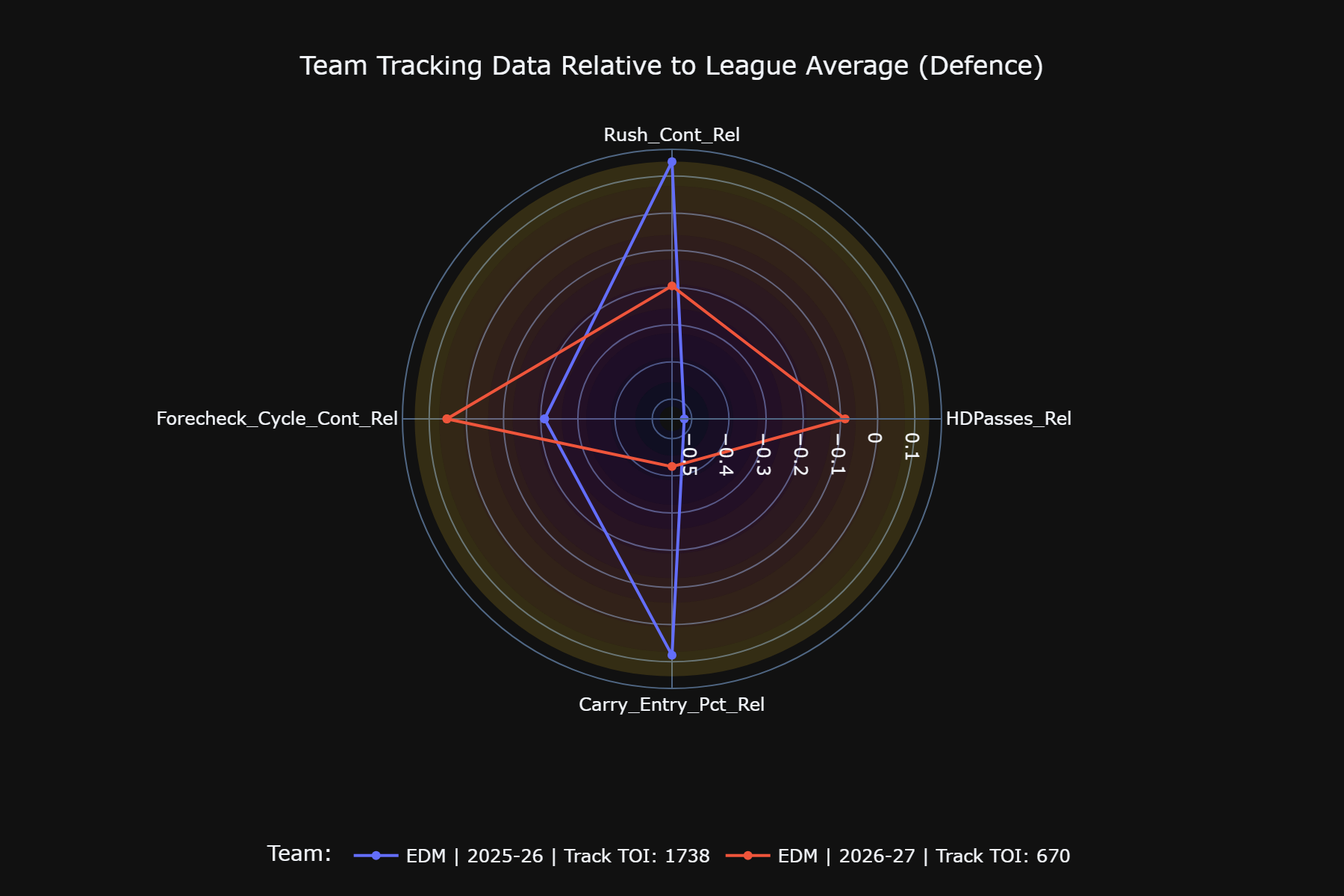
It seems as if new Head Coach Mike Babcock is encouraging their blue liners to get involved once the puck is in the offensive zone, but is leaving everything to the forward group until the puck crosses the blue line. Not for nothing, but the Oilers are top-10 in the league by both goals and expected goals against at 5-on-5, so it seems to be working.
9 – Flame On
There isn’t much of a minutes sample for the Calgary defencemen, but I wanted to mention them because of the sizeable increases that have appeared. There are across-the-board improvements in all four areas, but how often they’re carrying the puck in the offensive zone is a monumental change:
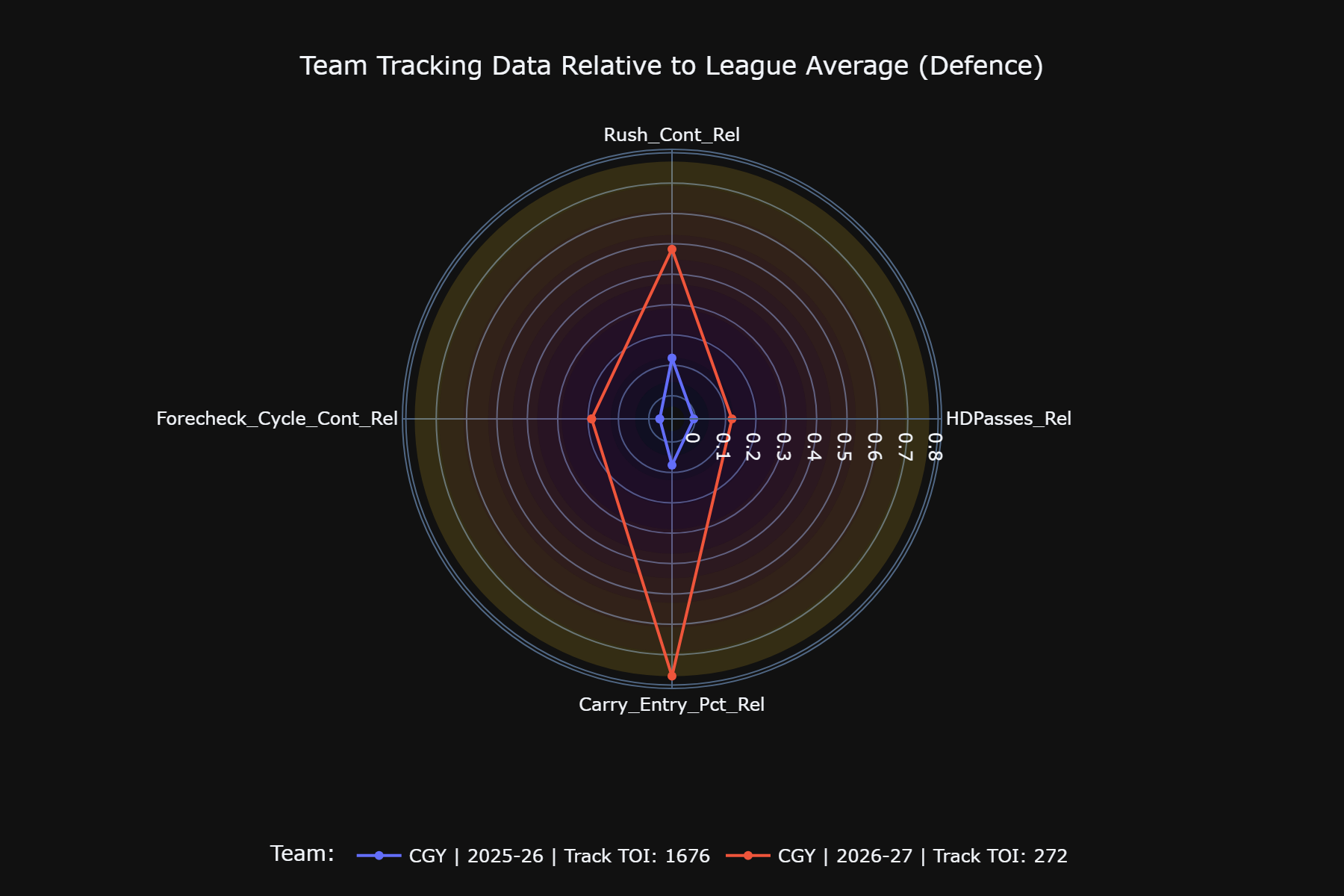
Last year, Flames blue liners were slightly above average by percentage of zone entries carried in. So far this season, Calgary defencemen are 2nd in the league. Again, the sample here is small, so let’s see what things look like when more tracked games are available. However, the small sample does show their defencemen being heavily involved, with offseason addition Šimon Nemec and 20-year-old Zayne Parekh are driving the bus.
10 – Kickin’ The Hab-it
The defencemen for the 2025-26 Montreal Canadiens finished top-10 in the league by percentage of zone entries carried in at 5-on-5. To this point of the 2026-27 season, the same group of defencemen is in the bottom-10 of the league by percentage of zone entries carried in:
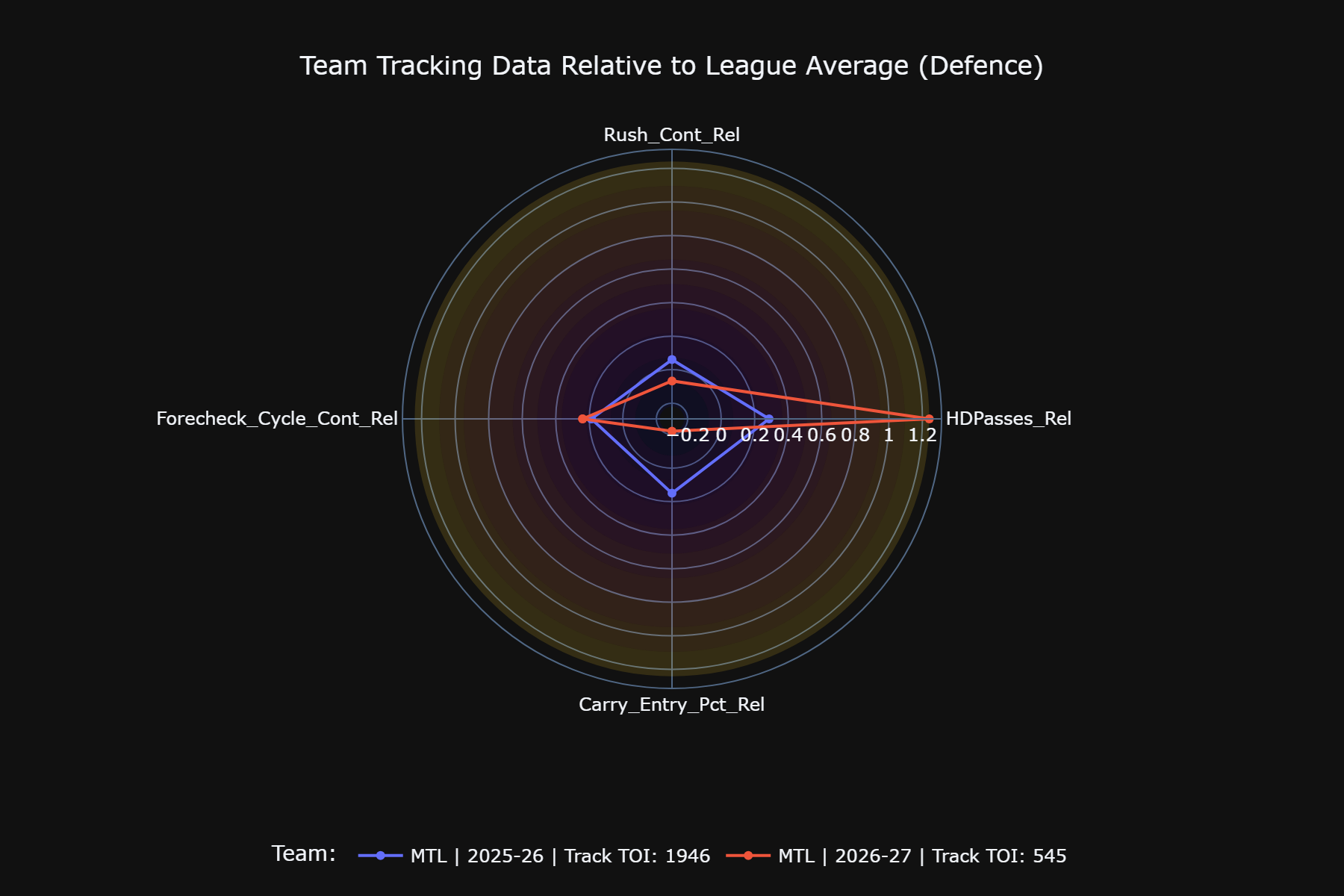
To this point, Montreal is about league average by expected goals against per 60 minutes at 5-on-5, a modest improvement from their bottom-10 rate last season. I am dubious the high-danger passes will remain anywhere near as high as the improvement shown, but it is interesting that they aren’t carrying the puck in. The Habs’ blue liners are getting involved in the offensive attack once the puck is in the zone, something similar to what we just saw with Edmonton.
Until next week.