10 Interesting (To Me) Stats For This Week - November 3, 2026
Welcome back to another week of ’10 Interesting (To Me) Stats’. We have survived the first five weeks of the new season, and are nearing the point where we can make some reasonable determinations on the fates of certain teams. For now, let’s review what has happened over the last five weeks and find our biggest 5-on-5 difference-makers so far.
To do this, we are using data from Natural Stat Trick and reviewing 5-on-5 Goal Share relative to a player’s teammates and their Expected Goal Share relative to teammates. In the following graphs, we are looking for players in the top-right quadrant, and the larger the team logo, the more points/60 at 5-on-5 they’ve accumulated.
Data is current as of the afternoon of Monday, November 2nd. We are limiting our sample to forwards with 125 minutes at 5-on-5 and defencemen with 150. The red and blue lines are the one standard deviation above average for their related stats.
1 – Zach Benson (Buffalo Sabres)
Benson had a slow start to his season last year, fought some injuries, but really came alive in the playoffs by leading Sabres forwards with four goals at 5-on-5 and finishing seconds by goal differential (+6). He has carried that momentum into the 2026-27 season as he is the clear leader among their forwards:
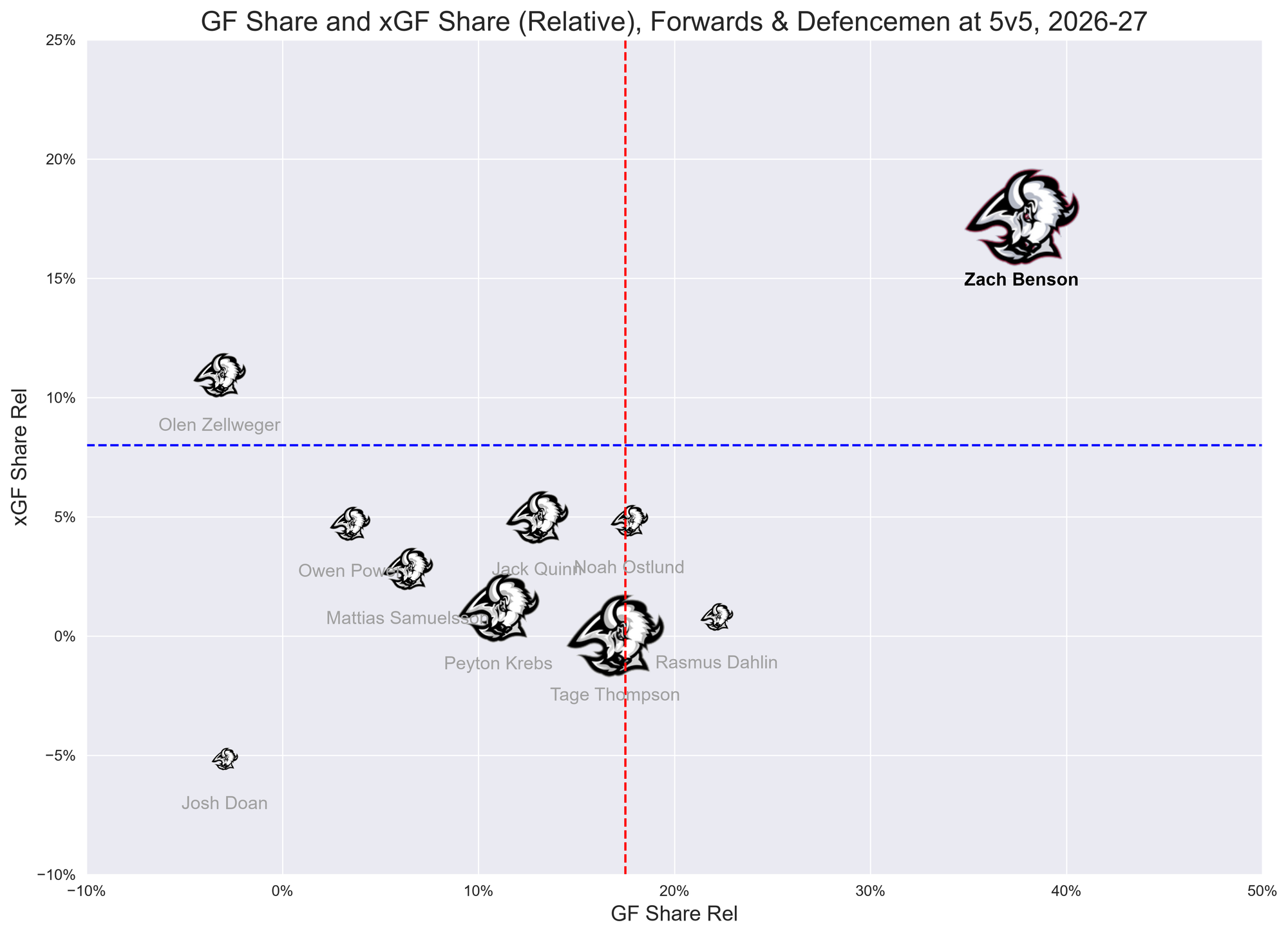
So far this season, the Sabres have a +10 goal differential at 5-on-5 with Benson on the ice. That is double the next-closest Sabres forward (Tage Thompson at +5). Benson is also the runaway leader by xG differential, he kills penalties, and skates the top PP unit. He may have just two goals, but Benson is the MVP for the Sabres through five weeks.
2 – Jackson Blake (Carolina Hurricanes)
The offseason surgery for Seth Jarvis meant a bigger role for Blake early in the year, and he made the most of it with 11 points in 11 games before Jarvis’ return. That included very good PP production, but he has also been great at 5-on-5, both by goal and xG shares as well as point production:
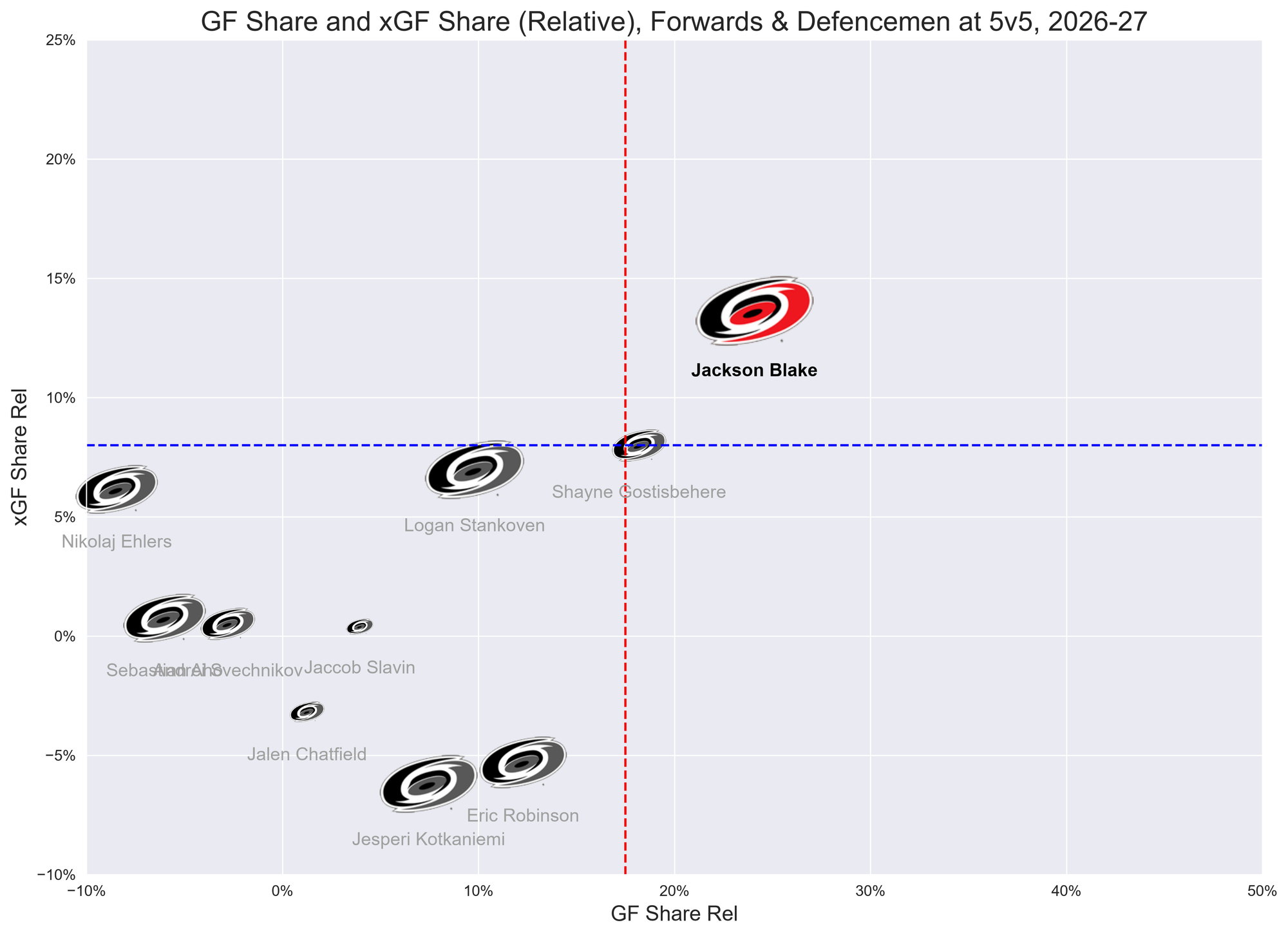
This isn’t something new for Blake, as his goal share led Carolina forwards across the prior two seasons while his xG share was second. To have relative goal and xG shares that good on a team who generally thrives at 5-on-5 anyway, and to do it in the first three seasons of your career, portends great things for the young winger. He is turning into a genuine star.
3 – Michael Brandsegg-Nygård (Detroit Red Wings)
The 15th overall pick from 2024 had a very good rookie season in the AHL last year with 44 points in 60 games, and he’s having a very good rookie season in the NHL this year with 8 points in 14 games. All those points have come at 5-on-5, which puts him second on the team behind Alex DeBrincat (9). He also has great goal and xG shares relative to his teammates:
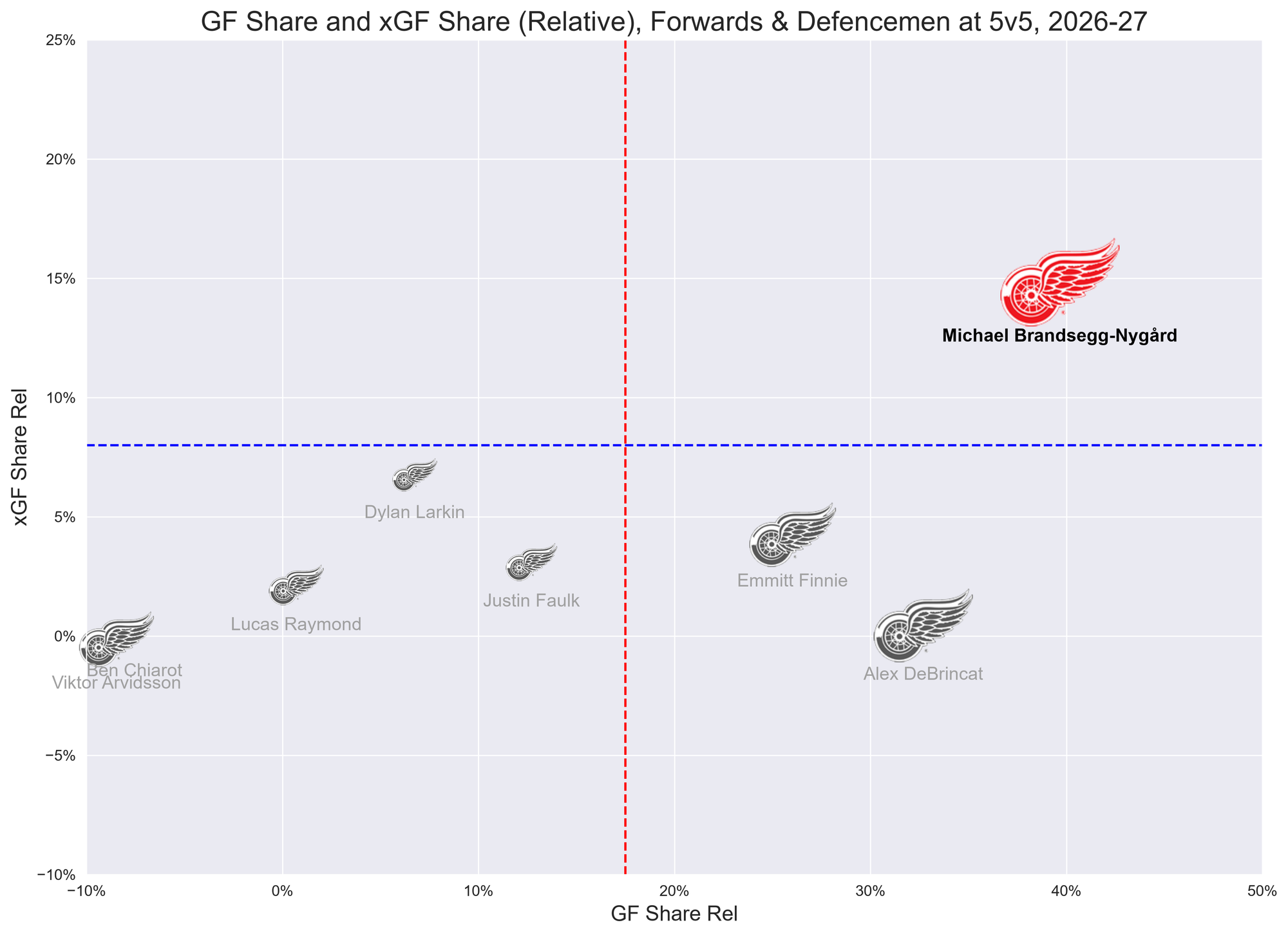
He has been able to do this whether skating on the second line with DeBrincat or not. There are several months left in the season, and the Wings are still working on the Dylan Larkin trade, but Brandsegg-Nygård has been a big difference-maker for the team, and him turning into a star player early in his career changes the long-term outlook for this franchise.
4 – Adrian Kempe (Los Angeles Kings)
With just 8 points in 12 games, the production from Kempe hasn’t been quite to the level he wants. Regardless, the results with him on the ice has put him at the top of the list among Kings forwards:
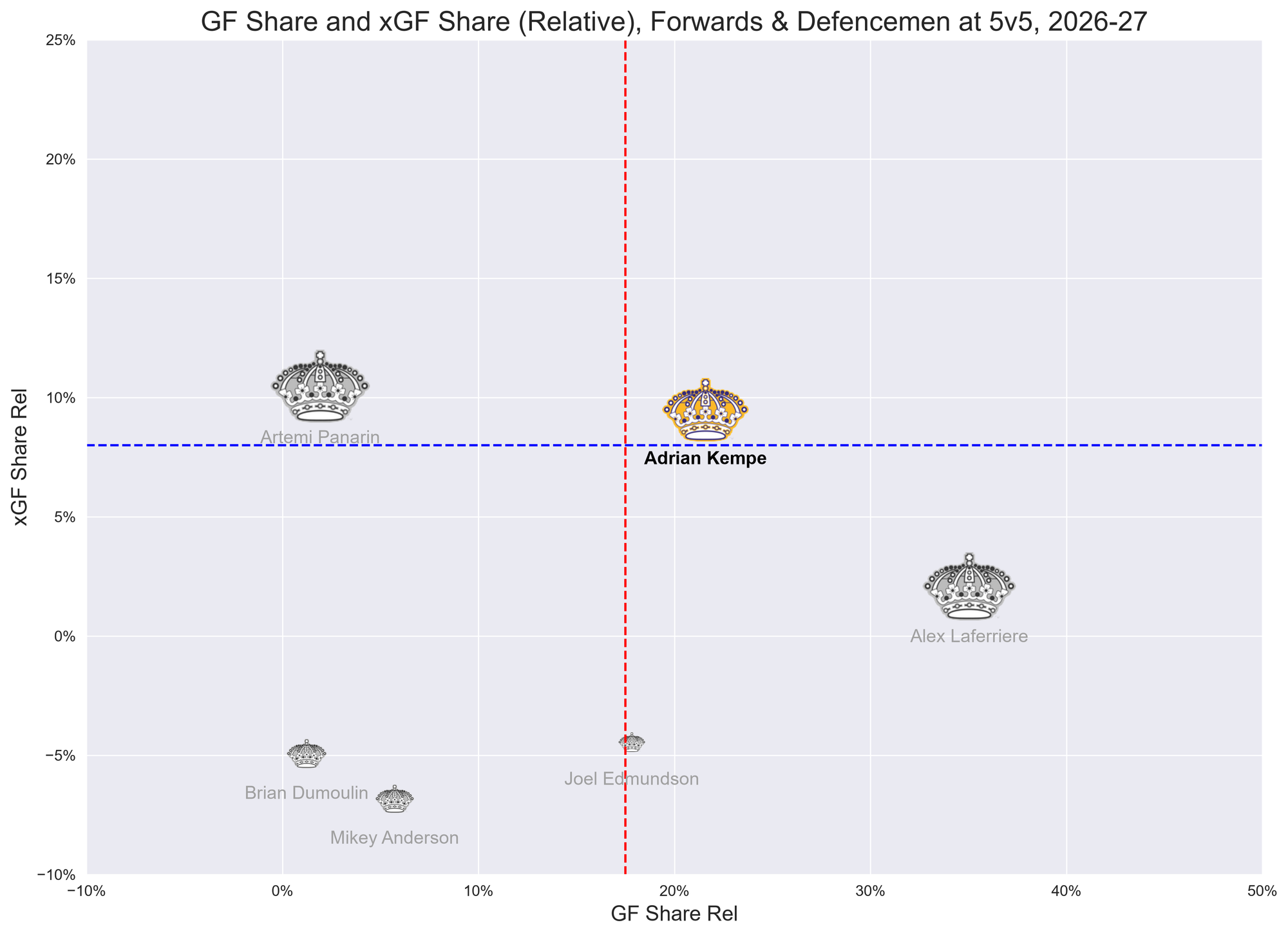
In general, we see the three skaters that have often formed the top line either above the xGF line (blue, Artemi Panarin) or the GF line (red, Alex Laferriere), so it’s clear which trio has been driving the bus for the Kings this season. That is what the team expects from them, but it also points to the lack of depth they’ve had, particularly with the injuries from Mats Zuccarello and Kevin Fiala.
5 – Zachary Bolduc (Montreal Canadiens)
Bolduc cooled off last year after a great start, so that is something to watch for. Nevertheless, he is off to a very good start again this year with five goals in 14 games while skating under 14 minutes a night. Backing up the goal scoring are his goal and xG shares at 5-on-5:
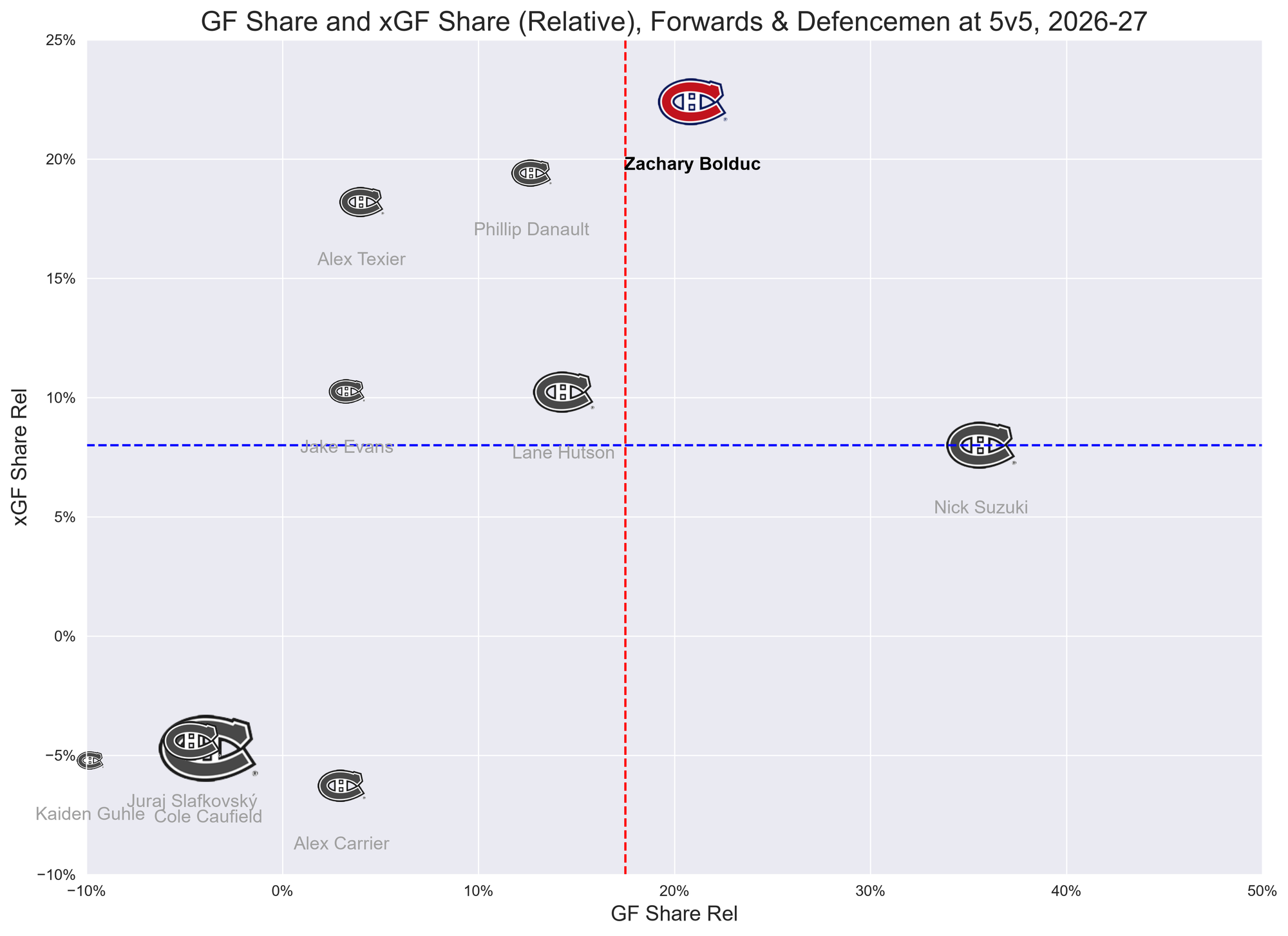
His line with Alex Texier and Phillip Danault has been great at driving the play, they just haven’t had much goal-scoring success (yet). Regardless, Montreal needs forward depth past the top line to compete with top Eastern Conference teams like Carolina and Florida, so whether Bolduc builds off this early success is something to keep an eye on.
6 – Tomáš Hertl (Vegas Golden Knights)
The 2025-26 campaign was tough for Hertl as his 1.3 points/60 minutes at 5-on-5 was a borderline 4th line rate, meaning all his success came on the power play. That is what makes his start to the 2026-27 campaign so encouraging as his xG share leads the team and his goal share is neck-and-neck with Jack Eichel’s top line:
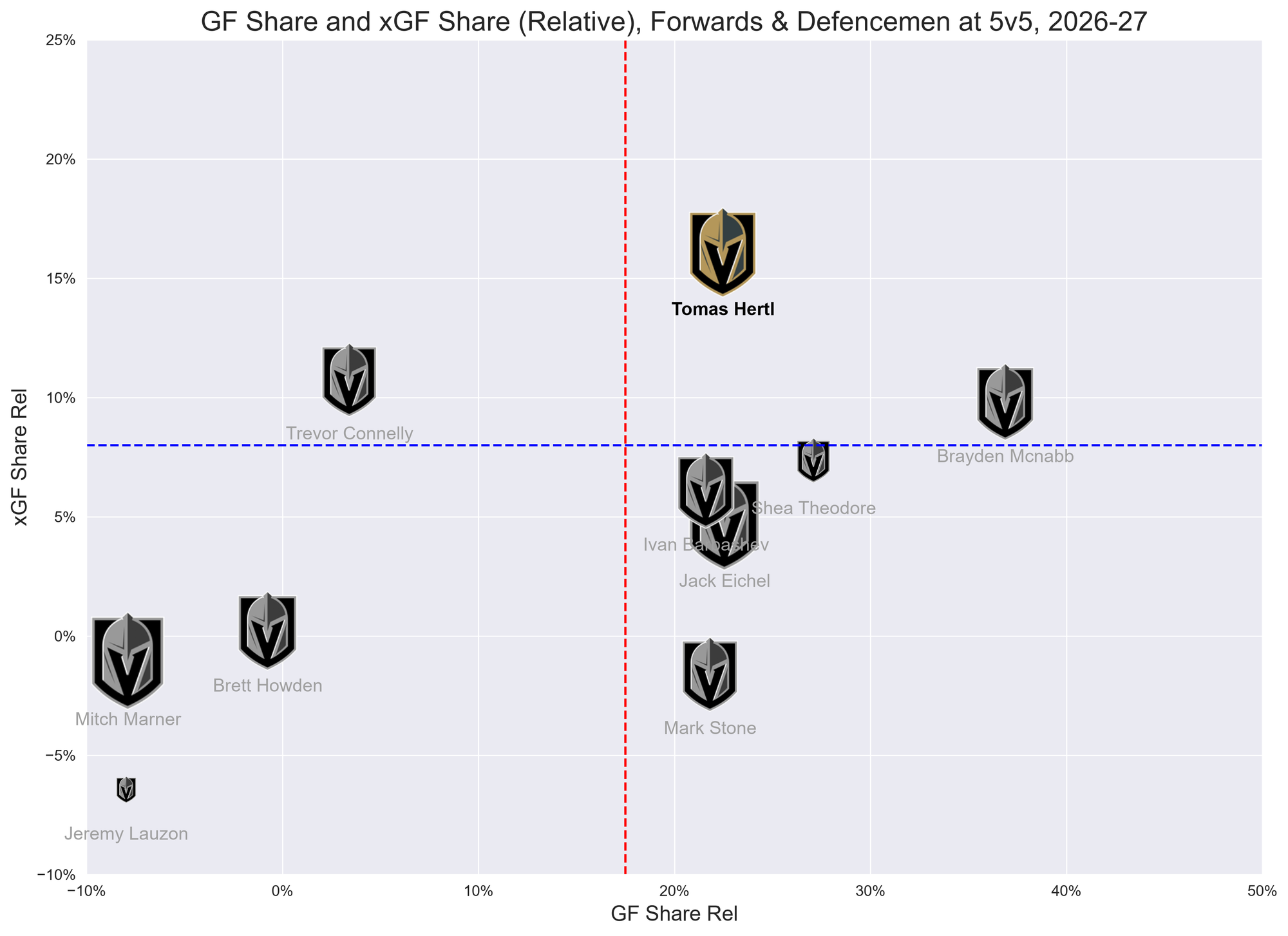
Hertl’s 60-minute production at 5-on-5 has also increased by nearly 33%, going from a borderline 4th line rate to a 2nd line rate. What he’s done so far is much more in line with what the Golden Knights need and expect from Hertl, so if he can give them these kinds of results from the third line, it makes them a deep and dangerous squad.
7 – Brayden McNabb (Vegas Golden Knights)
Staying with Vegas for a second, let’s turn our attention to the blue line and what McNabb has done. This column covered McNabb in the offseason and how he added some playmaking to his game in recent years, and did so without sacrificing the good defensive play he’s known for. Put it all together and he’s off to an excellent start:
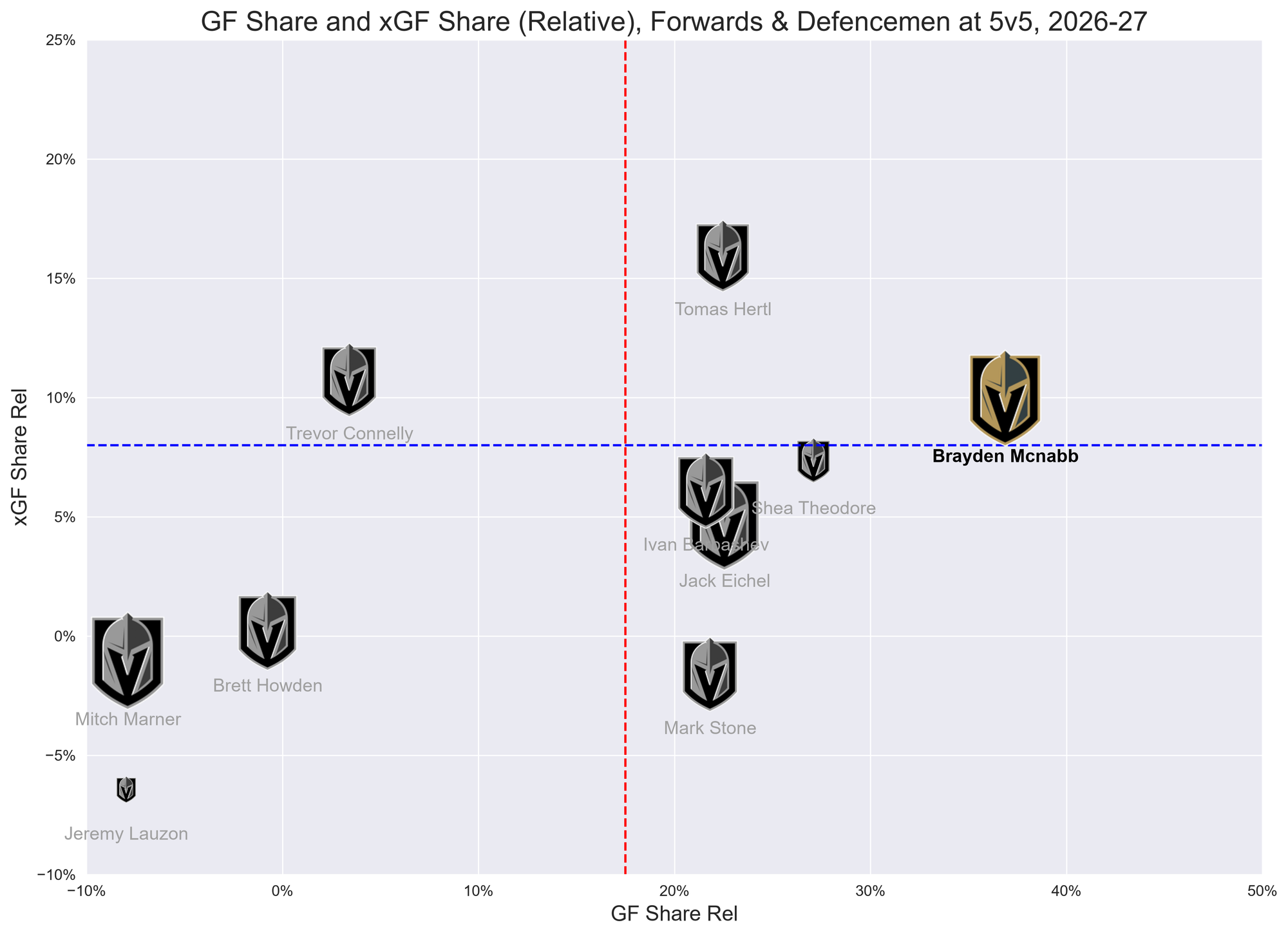
He has skated nearly 40% of his 5-on-5 time with Eichel on the ice, but the results are similar (even better) when he’s on the ice without Eichel. McNabb and Shea Theodore have formed an excellent pairing for Vegas that can help elevate any line they play with. McNabb turns 36 years old in January, but this is a guy who has only gotten better in his mid-30s.
8 – Jared Spurgeon (Minnesota Wild)
Quinn Hughes is without question the engine of the Minnesota roster, but teams need depth to have success, and Spurgeon bouncing back from a poor 2025-26 campaign would be paramount. He has done exactly that as he and Hughes have very similar goal and xG shares at 5-on-5:
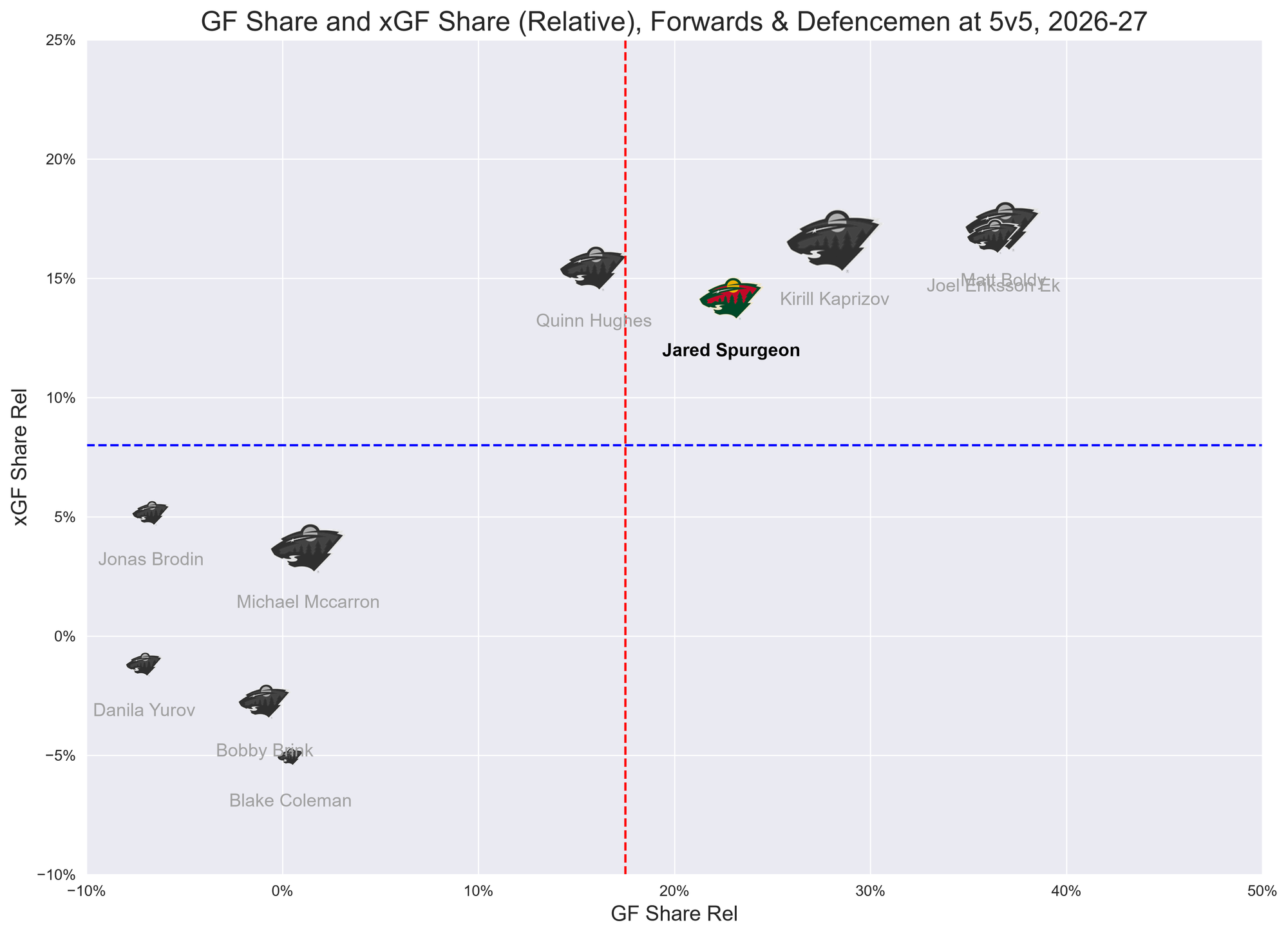
The caveat here is that Spurgeon has spent most of the season skating next to Hughes, and Spurgeon was put on the IR a few days ago. Whether Spurgeon can replicate anywhere close to this kind of success with a different defence partner will ultimately determine his value, particularly once Brock Faber returns, so it’s something to monitor when he returns from injury.
9 – Devon Toews (Colorado Avalanche)
As with Spurgeon, the caveat for Toews is that he’s skating two-thirds of his 5-on-5 time with Cale Makar, and that means a lot of time with Nathan MacKinnon. However, Toews’ results have been better than Makar’s when they are separated, and that is what puts him at the top of our board for Avs blue liners:
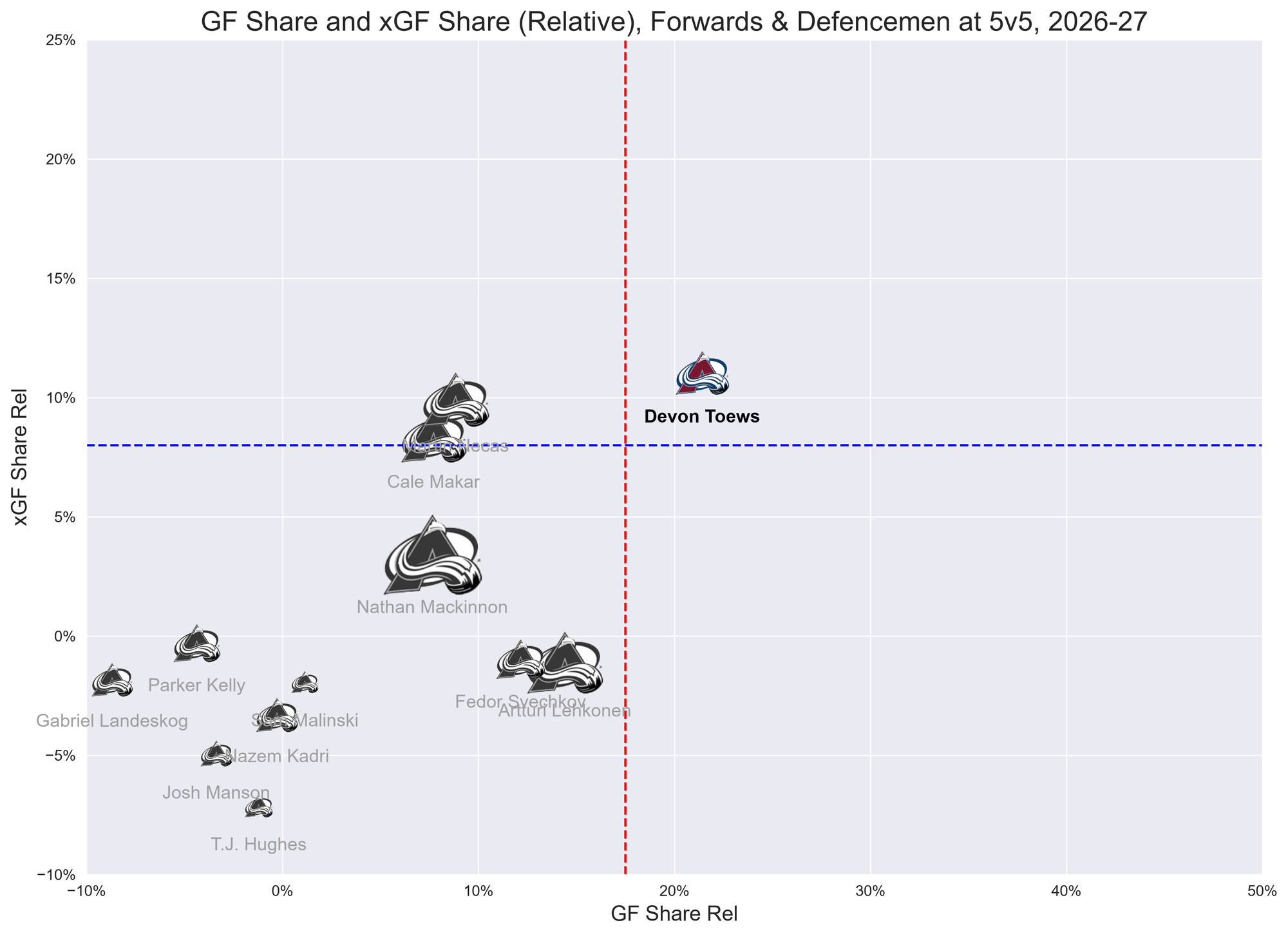
Again like Spurgeon, Toews did not have a good 2025-26 season, at least compared to what we expect from him. He has been much better to start the 2026-27 season, and it’s a wonder if they don’t try him with different defence partners to try and help balance the Colorado defence group.
10 – Shayne Gostsibehere (Carolina Hurricanes)
At this point of his career, Gostisbehere is a third-pair option, even though he does run Carolina’s top PP unit. Regardless, he is off to a great start in his role on a team looking to repeat as Stanley Cup champions:
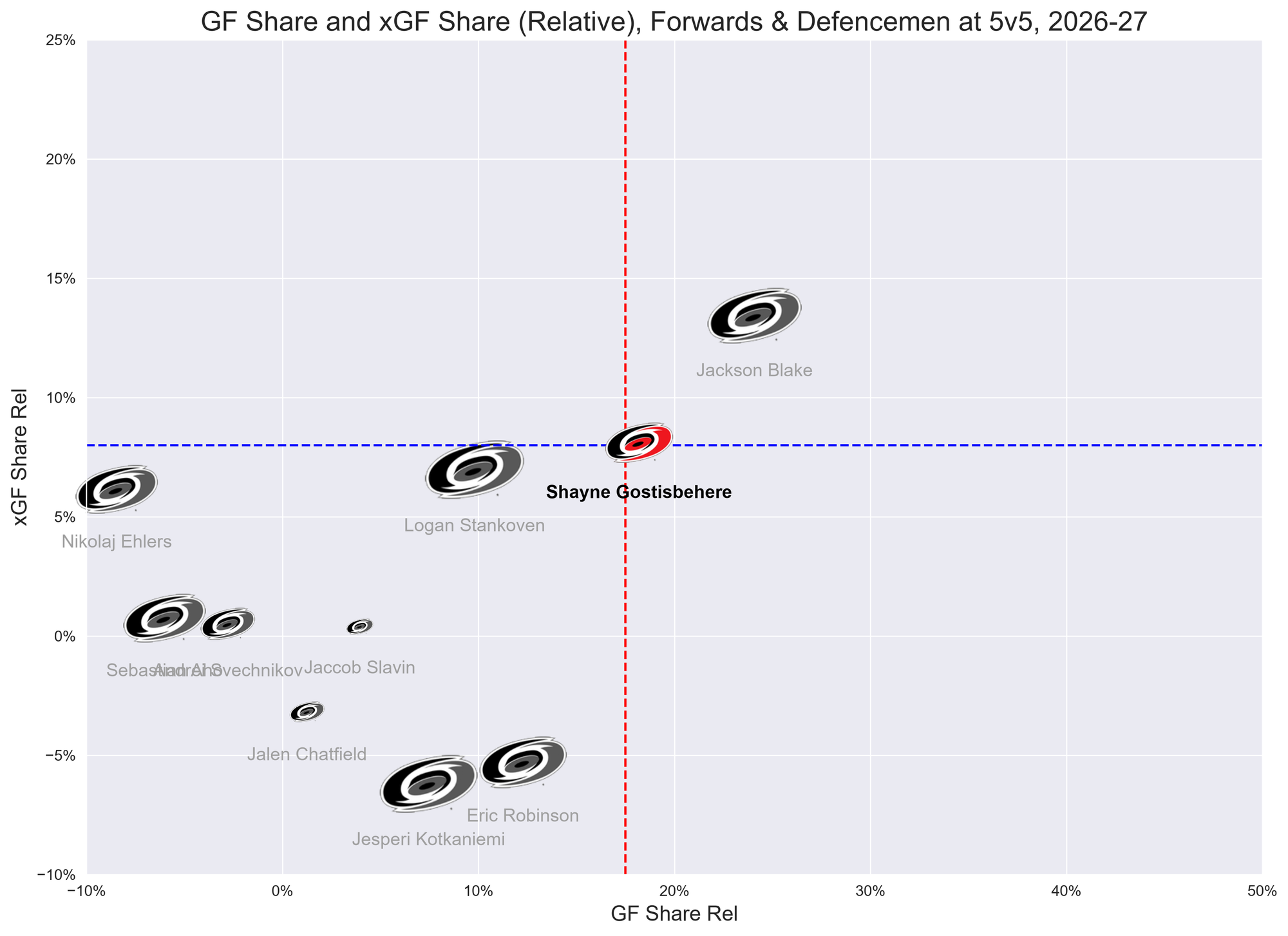
Whether the defence partner is Mike Reilly or Juuso Välimäki, the Hurricanes have had outstanding 5-on-5 results with Gostisbehere on the ice. His 5-on-5 production is down about 22% from the last two years, but still that of a mid-top-pair option, and the team will trade the points for great goal and xG differentials. I’m sure he would, too.
Until next week.