10 Interesting (To Me) Stats For This Week - July 14, 2026
Welcome back to another week of ’10 Interesting (To Me) Stats’. Over the last few weeks, I started my series on the evolution of NHL defencemen. This week’s edition reviewed changes in tracking data, and a big takeaway being how much playmaking from defencemen has grown. It got me wondering which defencemen have seen the biggest playmaking improvements over the last four seasons.
*Reminder: This newsletter will move to Ghost in the coming months, so to ensure you keep getting them, be sure to subscribe there. Just follow this link.
Using 5-on-5 tracking data from All Three Zones, and evaluating changes relative to each season’s average among defencemen, we are going to evaluate four playmaking categories:
· Scoring Chance Assists (assists on a teammate’s scoring chance)
· Rush Assists (assists on shots off the rush)
· Cycle/Forecheck Assists (assists on shots off the forecheck/cycle)
· High-Danger Passes (passes from behind the net or across the slot)
We are going to use a pair of two-season samples, the first covering 2022-23/2023-24 and the second covering 2024-25/2025-26. The sample is limited to defencemen with at least 400 tracked minutes in each pair of seasons, and that gives us 128 rearguards.
1 – Travis Sanheim (Philadelphia Flyers)
It can be hard to stand out offensively on a team that isn’t very good offensively, which is why Sanheim may be a bit of a surprise. He saw improvements across the board with a big leap in high-danger passes:
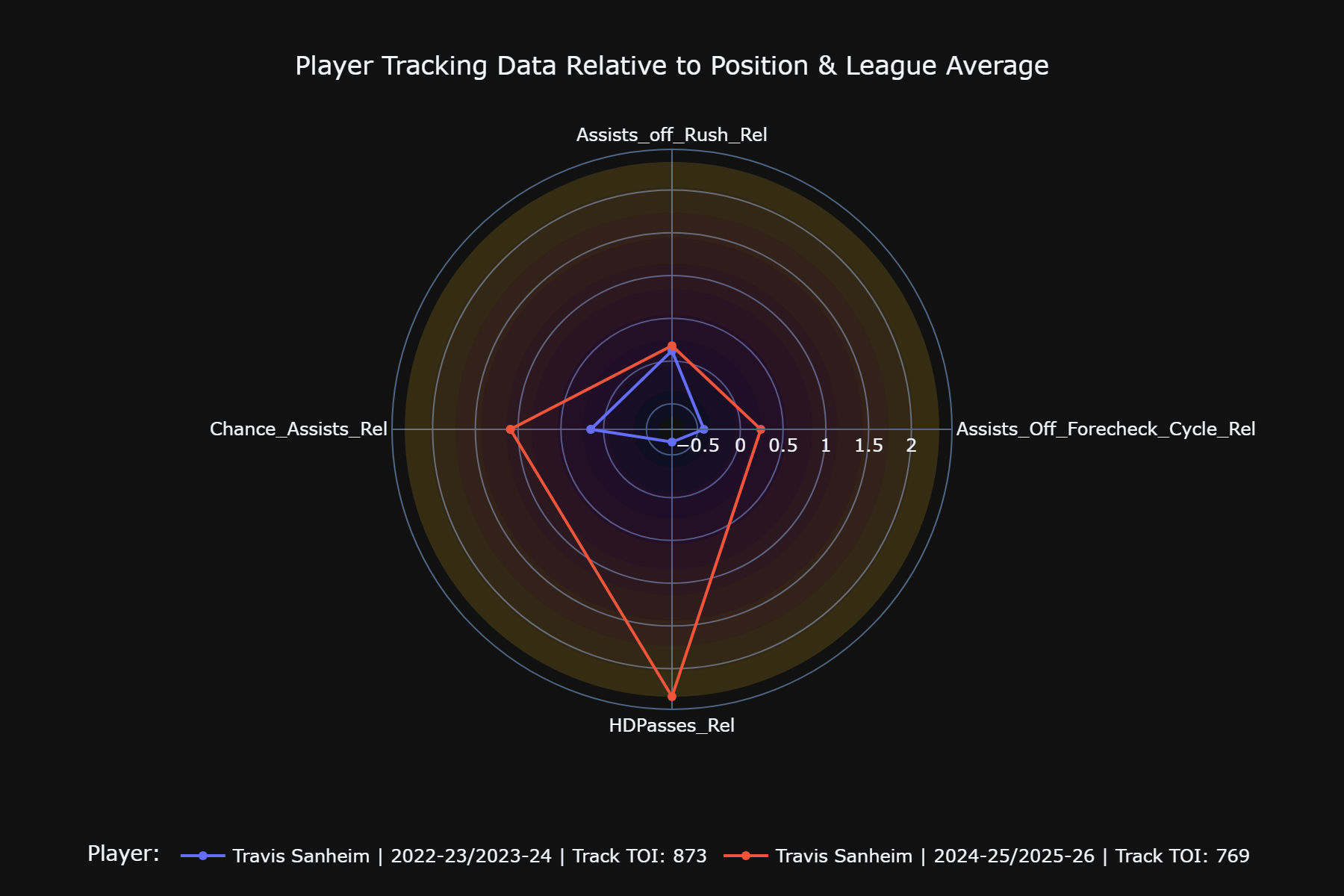
Comparing the seasons, Sanheim did see a drop in 5-on-5 assists per 60 minutes, but it’s because he assisted on fewer than 15% of goals scored with him on the ice back in 2024-25. He typically assists around 30% of goals, and had he been at that rate, his two-year 5-on-5 assist rate would improve by 13%. His assist totals won’t pop until the Flyers’ forwards increase their scoring, but he can pass the 30-assist mark for the first time since 2023-24.
2 – Jake McCabe (Toronto Maple Leafs)
Despite being known more for his defensive play, and considering the additions of Darren Raddysh and Emil Andrae, it is notable that McCabe has also demonstrated some very good playmaking improvements:
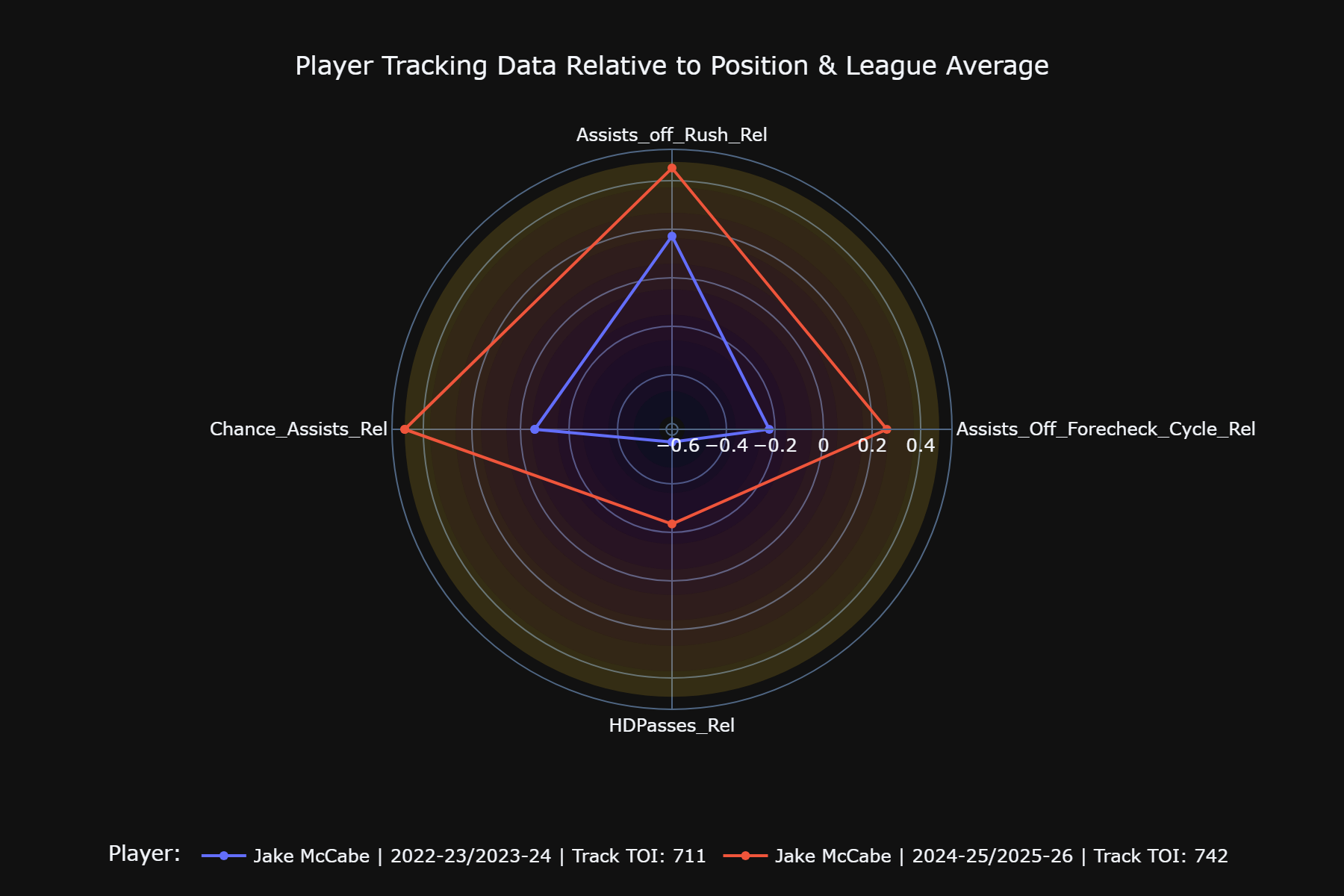
He isn’t an elite passer or anything, but being nearly 50% above the league average of scoring chance assists over the last two seasons gives the Leafs another blue liner who can make plays for his teammates. Raddysh and Andrae will give Toronto a new look on the back end, but McCabe should be able to help the forwards when those new faces aren’t on the ice.
3 – Brett Pesce (New Jersey Devils)
We do have to be careful about sample sizes and Pesce is one such case. The graph below will show a massive improvement in high-danger passes, but notice how his total tracked ice time from 2024-2026 is less than half what it was from 2022-2024:
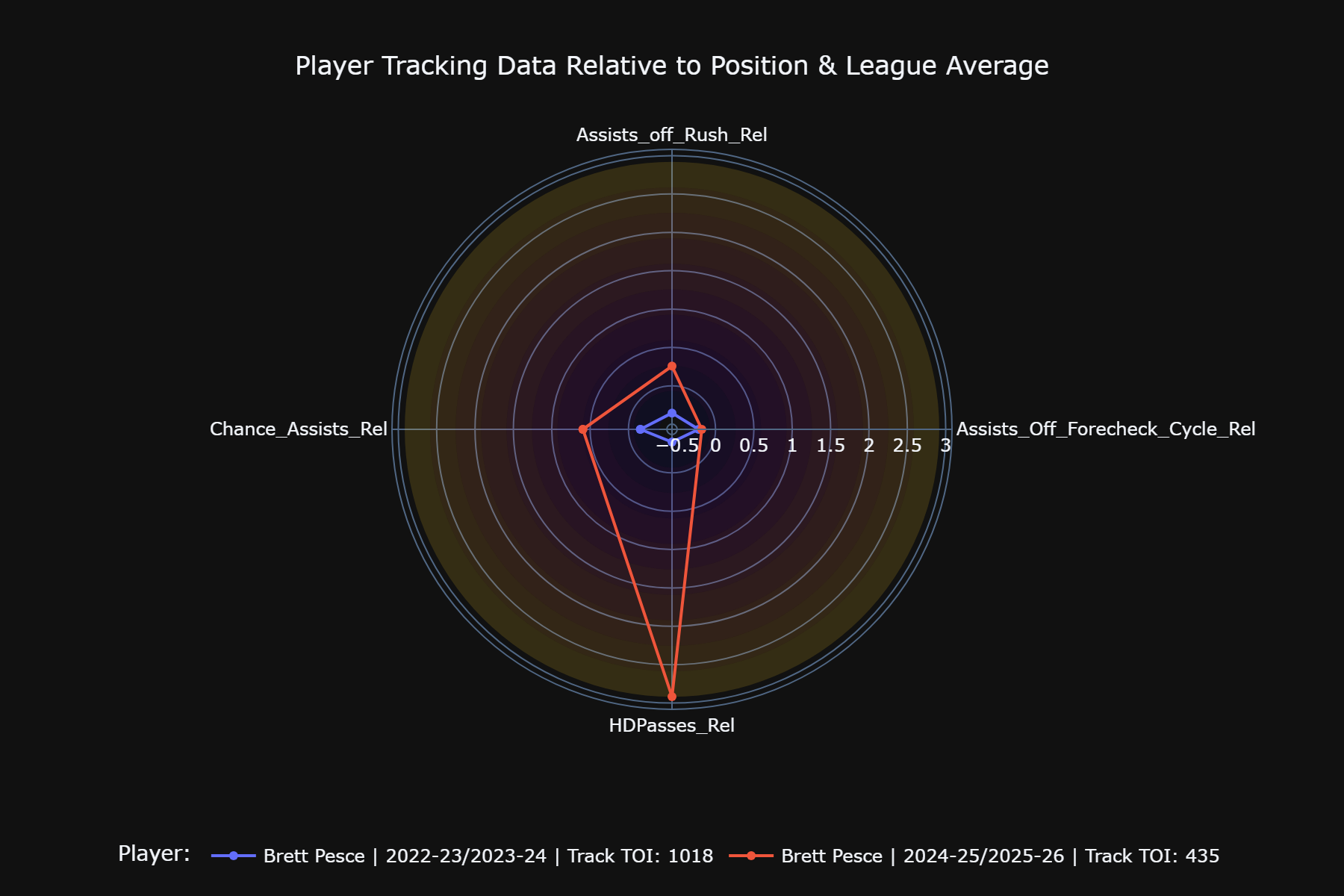
The good news is that there are improvements in the other three areas, so it does seem as if he’s made a genuine effort to revamp his offensive game. Pesce missed over half of the 2025-26 season and turns 32 years old in November, so there will be some pressure on him to regain his form from his Carolina days, even if he’s not the same defenceman he was with the Hurricanes.
4 – J.J. Moser (Tampa Bay Lightning)
Here we have a player who went from an offensive liability to an asset. In our first pair of seasons, Moser was below average in all four playmaking areas, but the second pair show improvement in each of those stats:
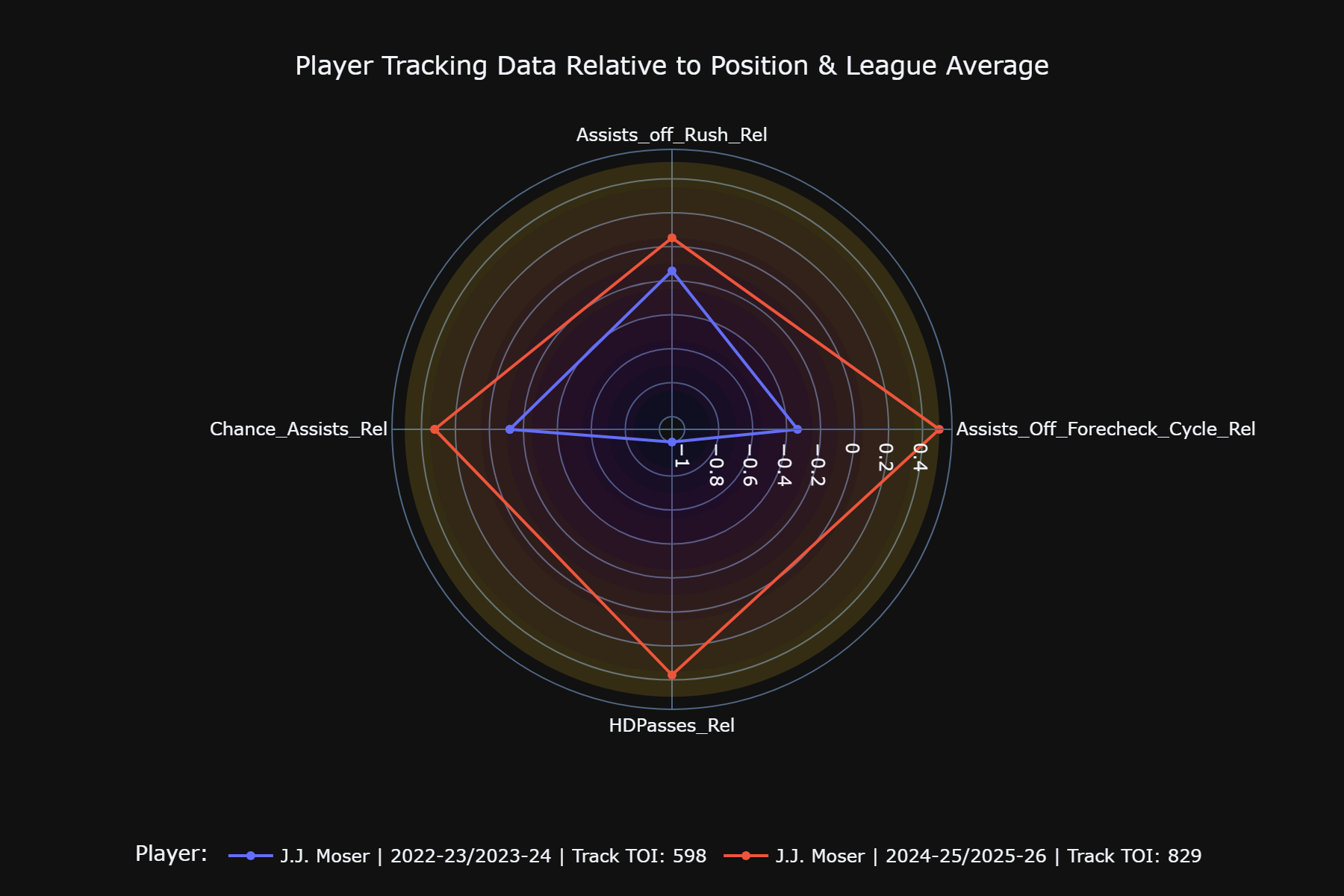
Maybe the term ‘asset’ is a bit strong to describe Moser’s offensive game because he’s above-average and not great in these areas, but across-the-board increases do matter. Often, success at the NHL level isn’t about being great in key metrics like this, but about not being outright bad. That more accurately describes Moser, and being solid defensively makes him a two-way asset for the Lightning.
5 – Mike Matheson (Montreal Canadiens)
Anyone who watches Matheson knows how much he loves having the puck on his stick, so it’s no surprise that as teams have relied more on their defencemen to create offence, Matheson’s playmaking rates have increased, with one exception:
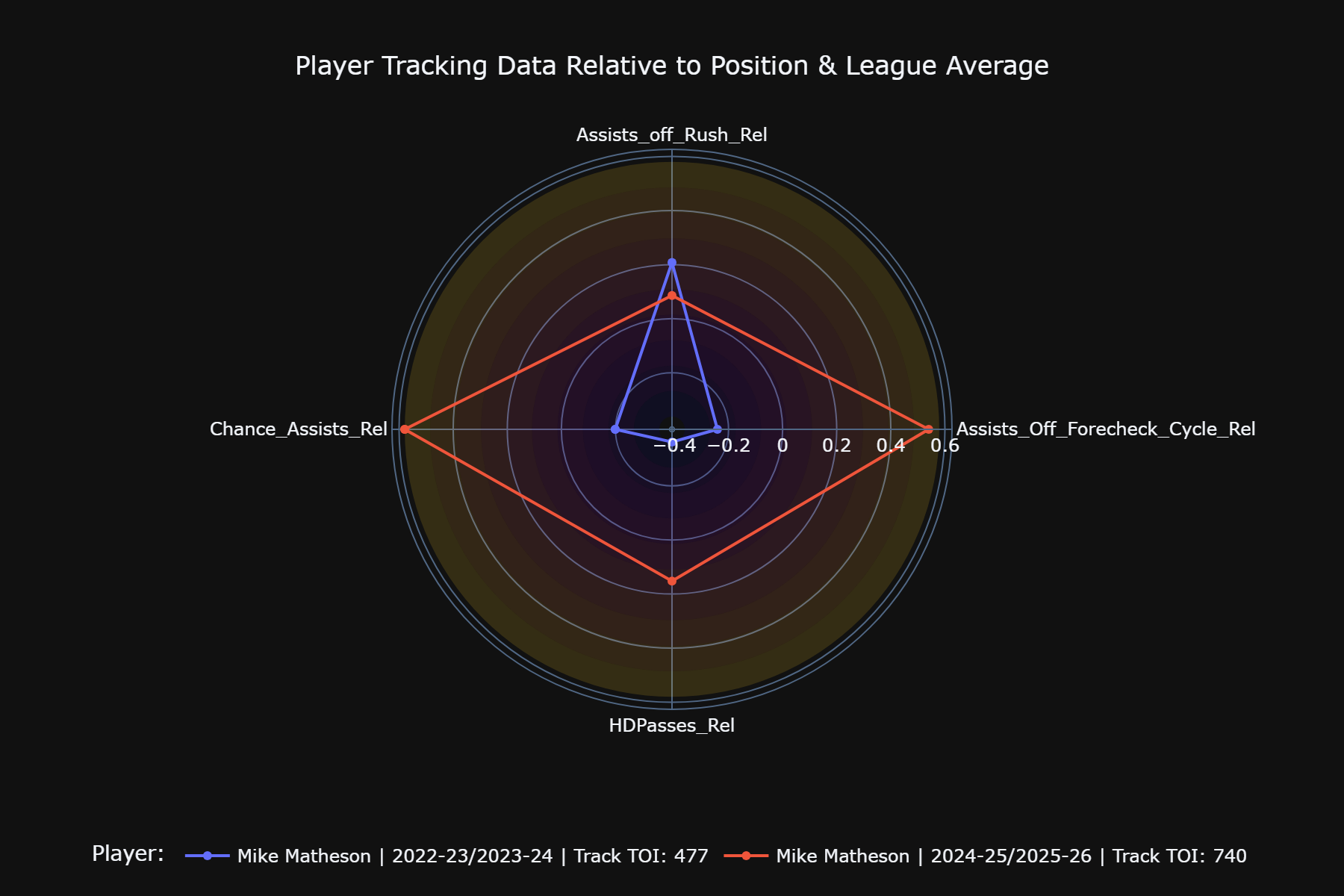
What is especially notable is the assists off the cycle/forecheck went from a mid-tier bottom-pair rate from 2022-2024 to a mid-tier top-pair rate from 2024-2026. At that level, his assists off the cycle/forecheck are similar to a middle-of-the-roster forward. Again, this would not be a surprise to anyone who watches Matheson as he often functions as a fourth forward once the puck is in the offensive zone.
6 – Brandon Montour (Seattle Kraken)
Though he has seen increases in all four areas, what is notable for Montour is that he went from a one-dimensional playmaker in his last two years with the Florida Panthers, focusing solely on jumping in the rush, to becoming a more well-rounded playmaker in Seattle:
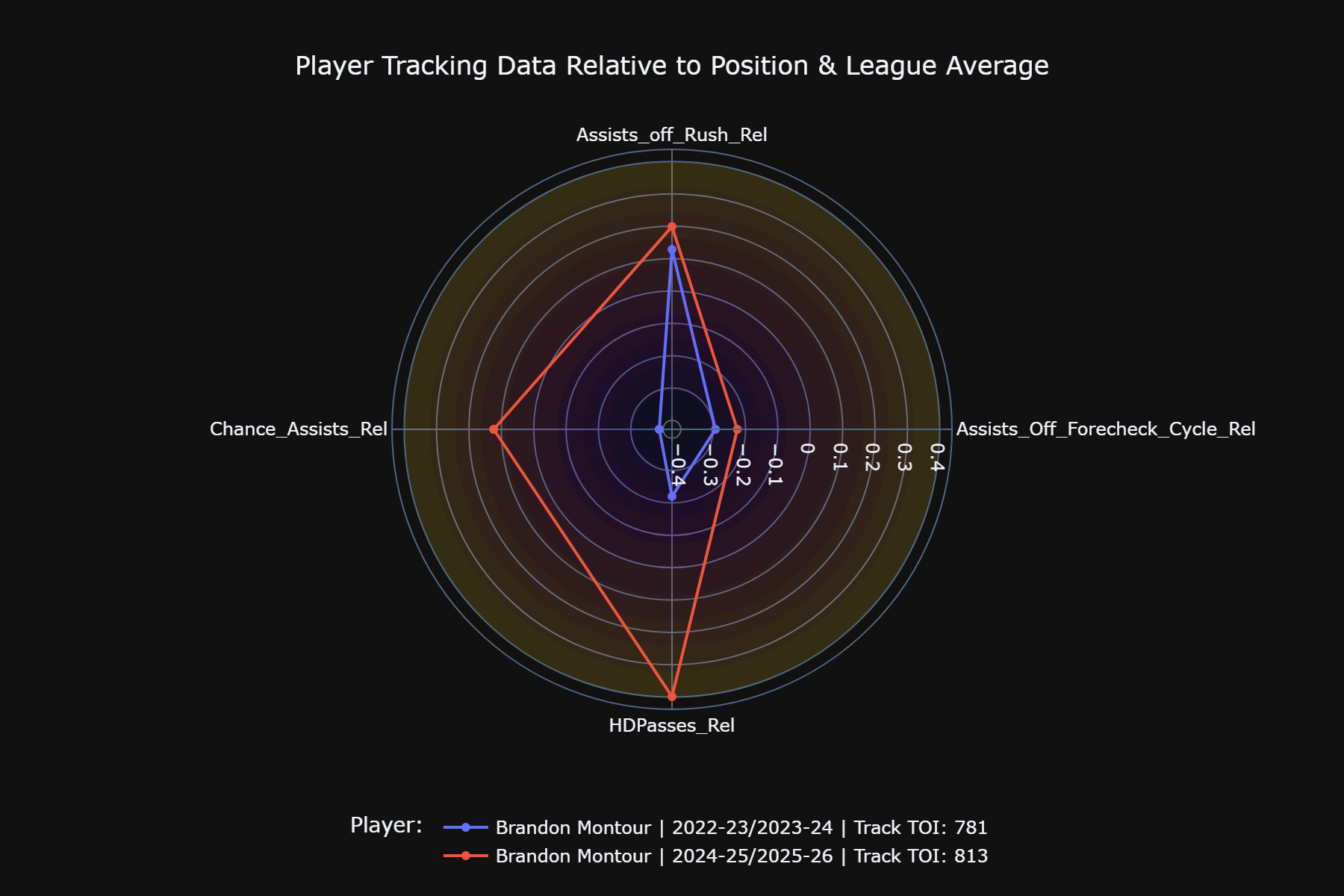
What hurts Montour is that the Kraken are a bad 5-on-5 team, scoring 2.0 goals per 60 minutes at 5-on-5 with him on the ice over the last two seasons (2.37 goals per 60 minutes overall, which is 23rd in the league). As with Sanheim, until the forwards in front of Montour improve, he won’t come close to replicating the offensive success he had in Florida, but it isn’t for lack of trying on his part.
7 – Quinn Hughes (Minnesota Wild)
What does it look like when one of the best defencemen in the world, who has a Norris Trophy in his cabinet, adds even more playmaking skills to his profile? Glad you asked:
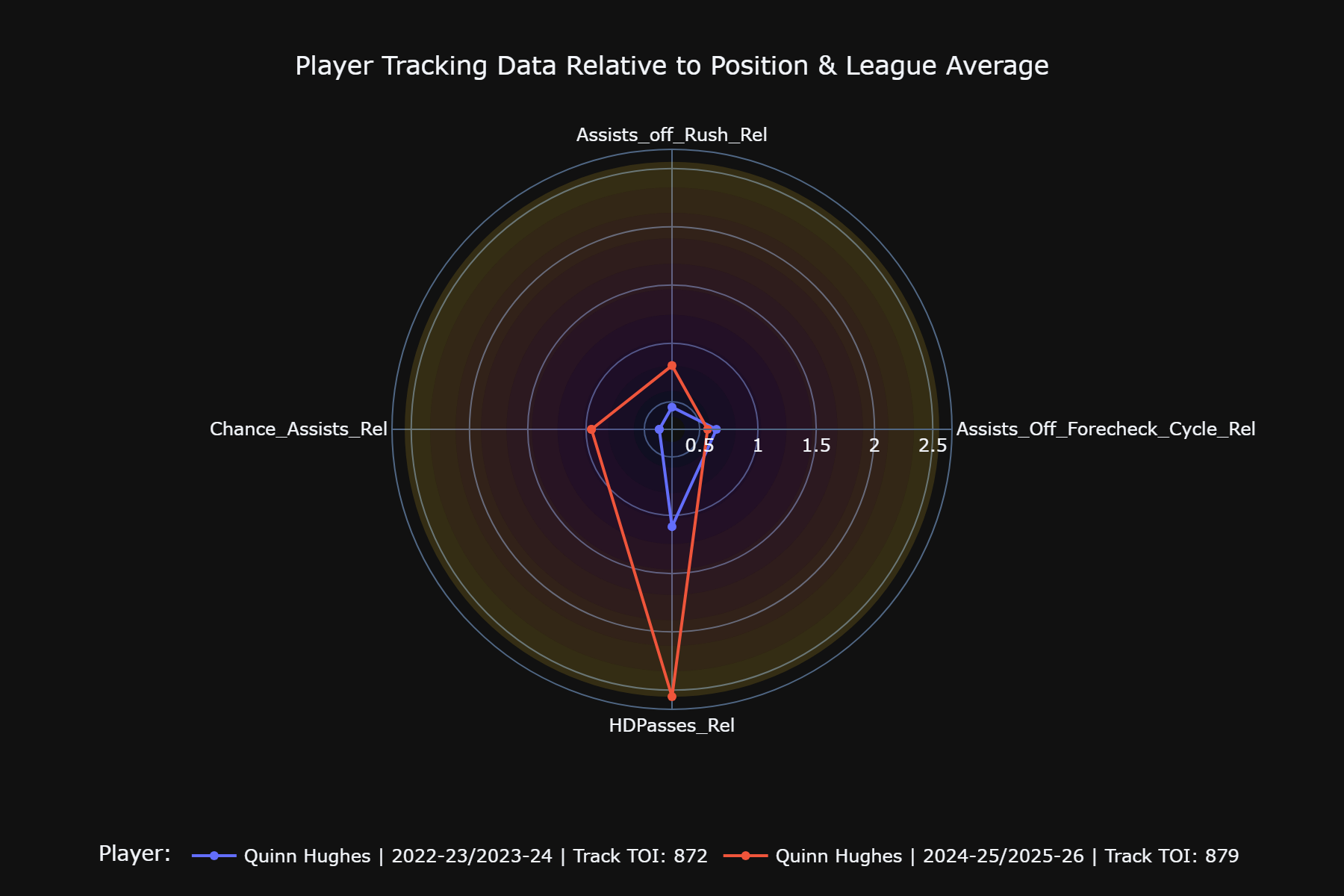
This is also a case where the assist rate doesn’t tell the whole story. In our first pair of seasons, Hughes managed 1.2 assists per 60 minutes at 5-on-5, and that fell to 1.13 in the second pair of seasons. However, the first pair of seasons saw him register an assist on 34.7% of goals scored with him on the ice, and that rose to 36.8% in the second pair. Arguably the best defenceman in the world just keeps upping his profile, and there’s a reason the best stay the best.
8 – Dylan Samberg (Winnipeg Jets)
It is hard to overstate what a revelation Samberg has been for the Jets, turning from a second-round pick to a top-pair defenceman. It takes a variety of skills to accomplish this, but Samberg’s playmaking has increased nearly across the board over the last two seasons:
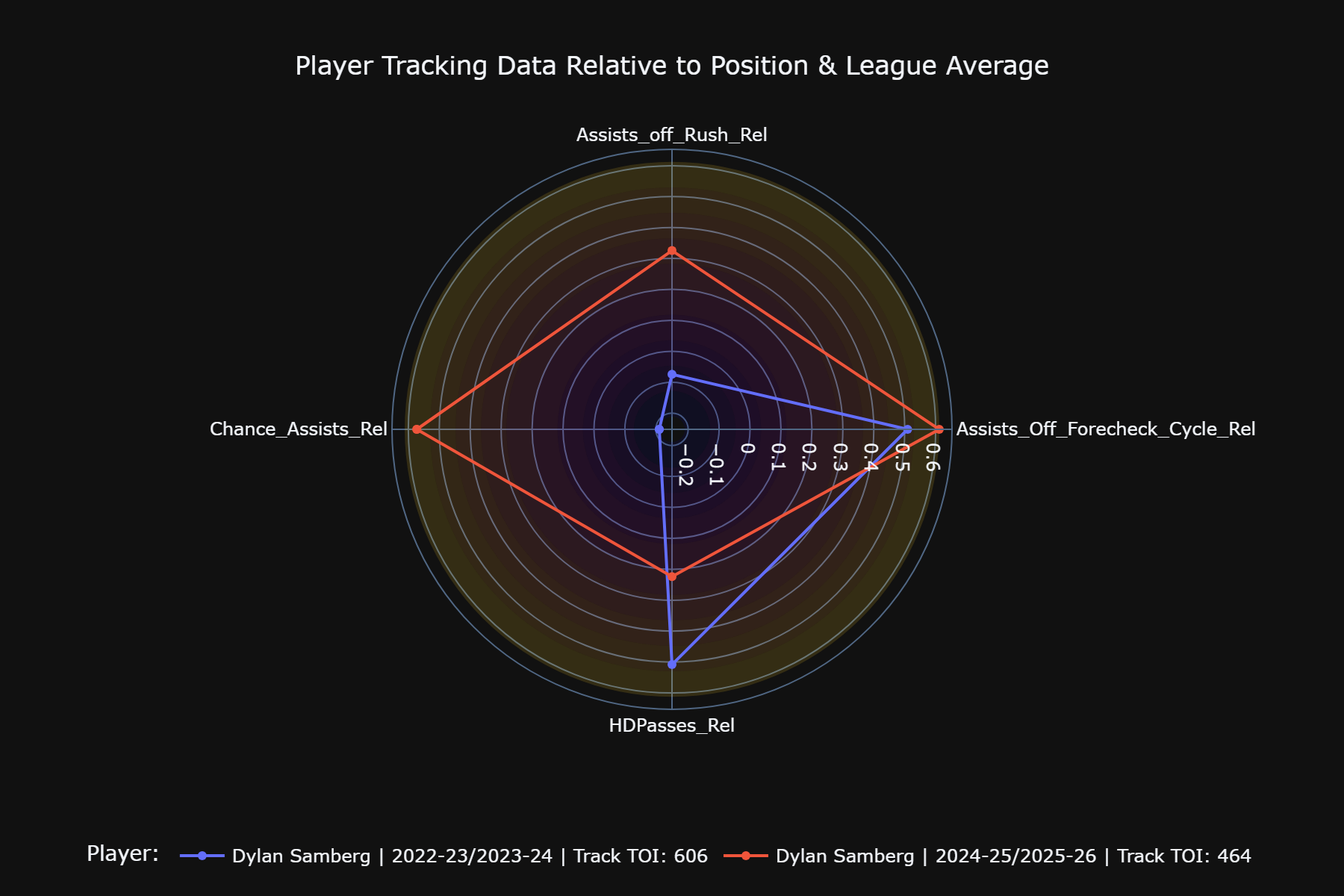
The assist rate isn’t high, but he’s not on the ice with Winnipeg’s top line very much (about 27% of his 5-on-5 ice time over the last two years). Additionally, the depth Jets forwards like Cole Perfetti and Nino Niederreiter typically have far lower goal rates without Samberg on the ice, so it’s arguable (I would say likely) that Samberg’s low assist rates are a function of his forwards in front of him and not a problem with his game.
9 – Rasmus Dahlin (Buffalo Sabres)
Dahlin had a big increase in his scoring chance assists, but it’s the high-danger passing rate that stood out more than just about anything from our sample of defencemen:
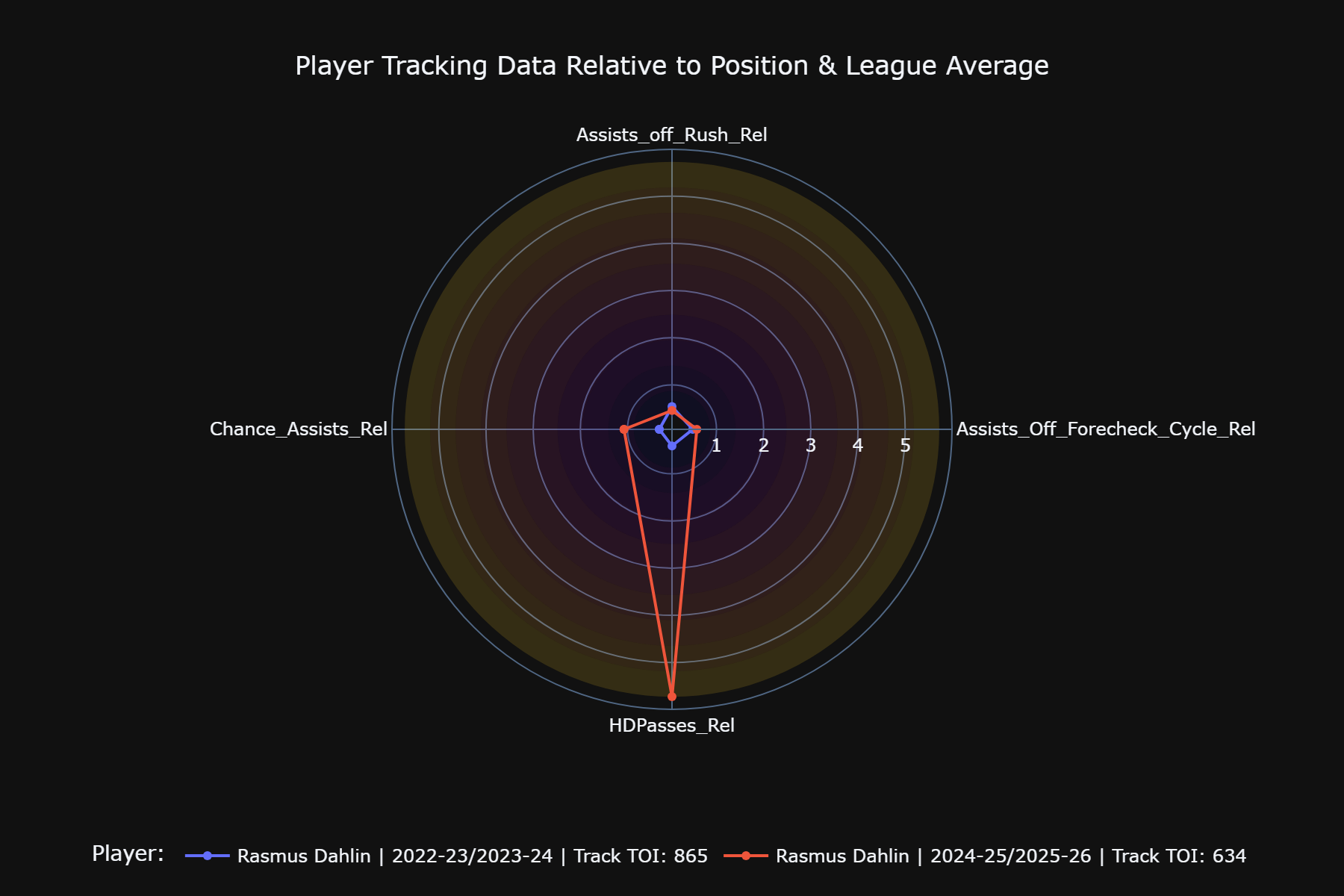
Overall, Dahlin’s 1.42 high-danger passes per 60 minutes over the last two years leads the league, is nearly 20% higher than the next closest rearguard (Adam Fox), and is 65% higher than the third-highest defenceman (Charlie McAvoy). Dahlin’s high-danger pass rate is nearly identical to winger Lucas Raymond. There is a reason Dahlin’s 5-on-5 assist rate leads all NHL defencemen over the last two years.
10 – Brayden McNabb (Vegas Golden Knights)
My favourite players on this list are guys we wouldn’t expect to see huge playmaking improvements from, and McNabb fits that bill. He is often tasked with a shutdown defensive role, but he has added some playmaking ability to his profile:
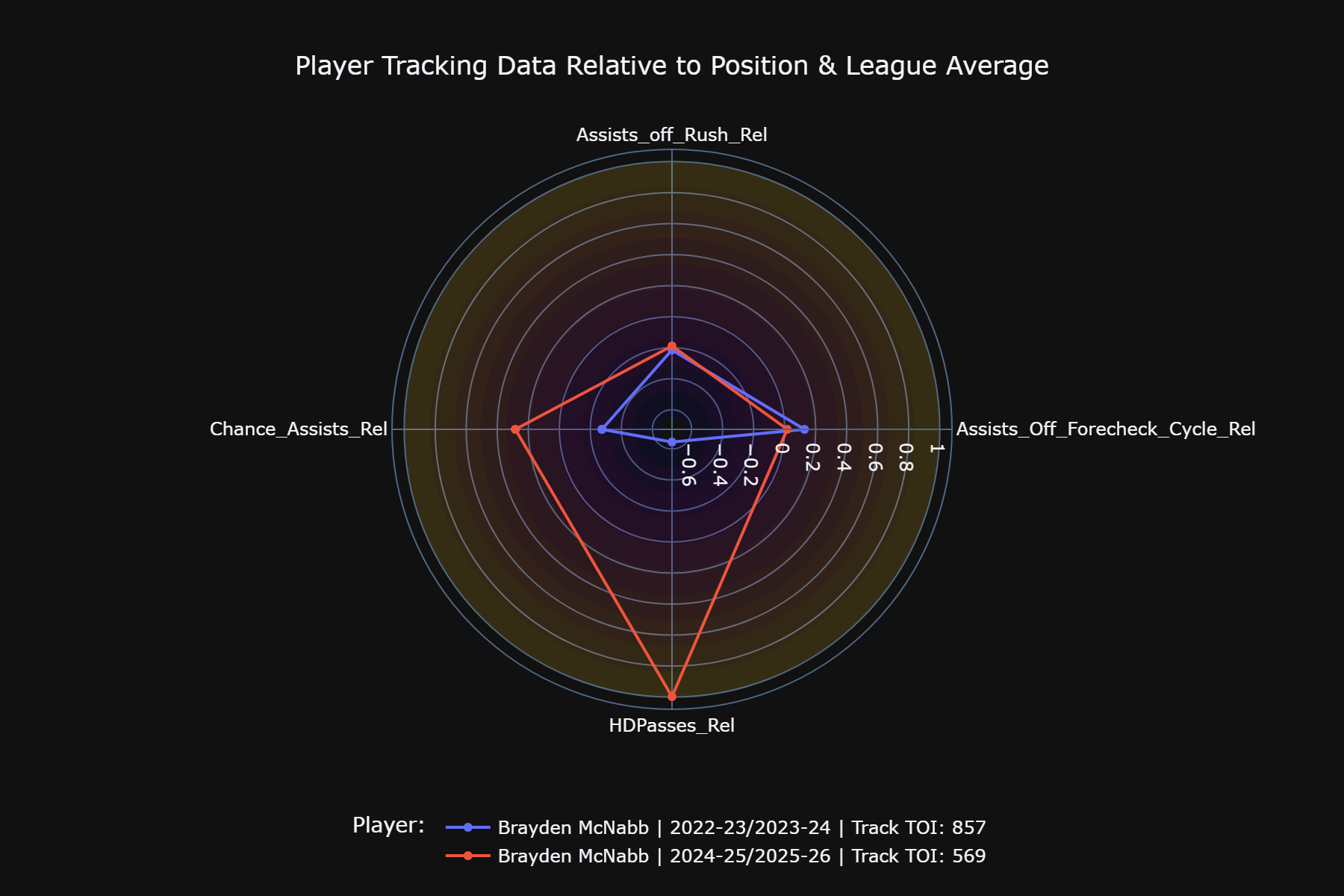
Depth forwards from Vegas like Tomas Hertl and Keegan Kolesar saw higher goal-scoring rates with McNabb on the ice than without him, showing his value to the team beyond just being a good defensive defenceman. His role and ice time totals mean he’ll never have big assist totals, but he is a difference-maker at both ends of the ice, making him one of the most well-rounded non-top-pair defencemen in the league.
Until next week.