10 Interesting (To Me) Stats For This Week - December 16
We are nearing the end of the calendar year, and that means an important date is on the horizon as countries need to declare their Olympic hockey rosters by December 31st. Today’s article will go over some players on the bubble for Team USA and the case for each.
Countries had to name their first six players to the roster back in the summer, and USA has Auston Matthews, Brady Tkachuk, Matt Tkachuk, Jack Eichel, Charlie McAvoy, and Quinn Hughes already added. We will assume there are a handful of other players – health permitting – that are locks like Jack Hughes, Zach Werenski, Jaccob Slavin, and Connor Hellebuyck. Countries can bring 14 forwards, eight defencemen, and three goalies.
Player data is from Evolving Hockey and tracking data is from All Three Zones.
1 – Jason Robertson
Robertson was not on the roster for the Four Nations Faceoff back in February, but it seems impossible to leave him off the Olympic roster. He started slowly in 2024-25, coming off a foot injury in training camp, but Robertson is 1 of 3 players with at least 50 goals and 100 points since December 1st, 2024 – the others are Leon Draisaitl and Nathan MacKinnon. In fact, since the start of the 2022-23 season, here are his comparables by goals and assists per 60 minutes:
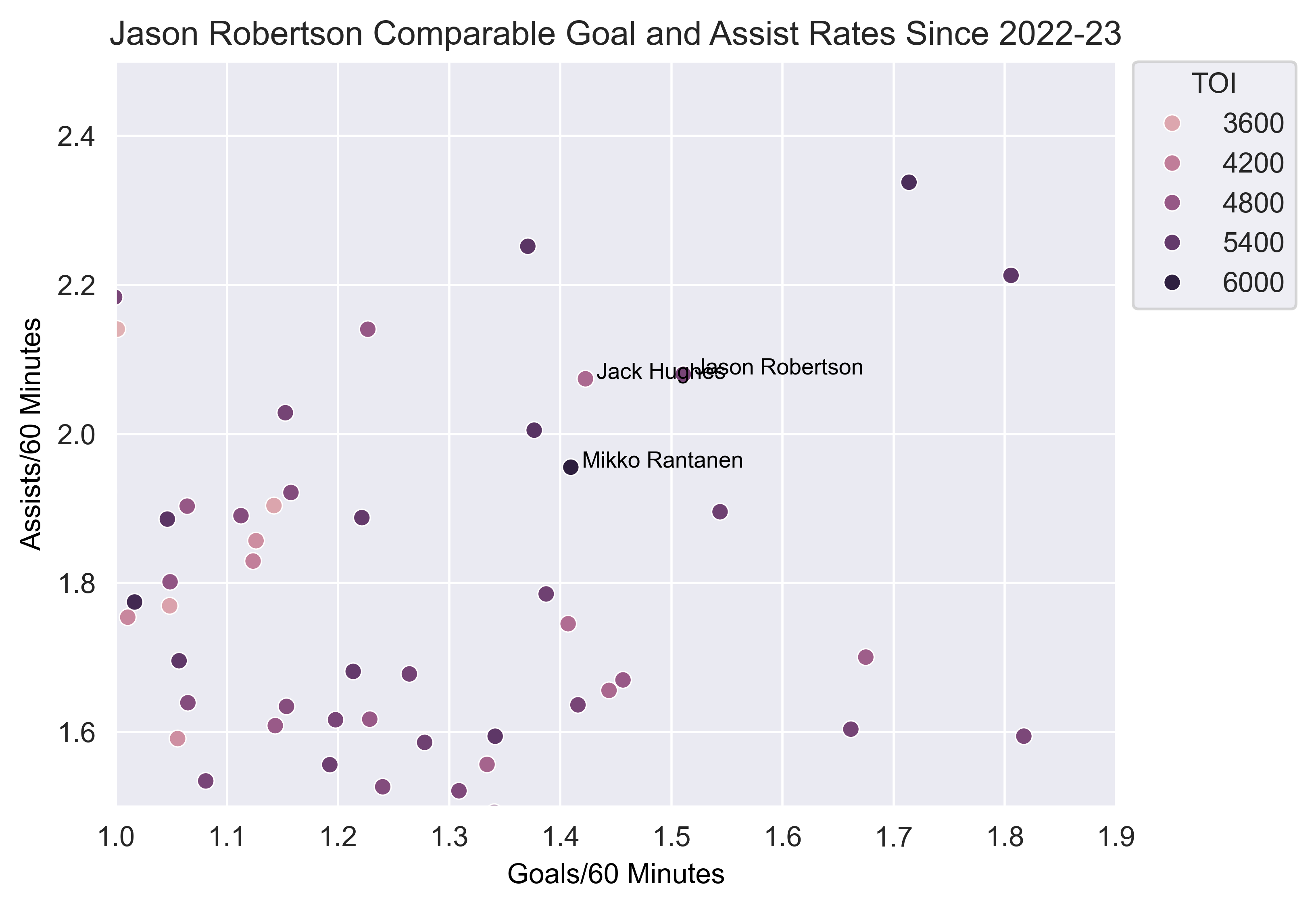
Sometimes it’s easier not to overthink things and ‘should we bring the guy out-producing Mikko Rantanen and Jack Hughes’ is a question with a resounding ‘yes’ as the answer.
2 – Alex DeBrincat
Some of DeBrincat’s tracking data took a hit in his first couple of years with Detroit but have rebounded in a big way in 2025-26. In fact, here are the names with:
· Between 11.5 and 14 Chance Contributions (individual chances and assists on chances) per 60 minutes
· Between 26 and 34 combined shots and assists off the rush/cycle per 60 minutes
· At least a 60% carry-in rate on zone entries
· At least 100 tracked minutes
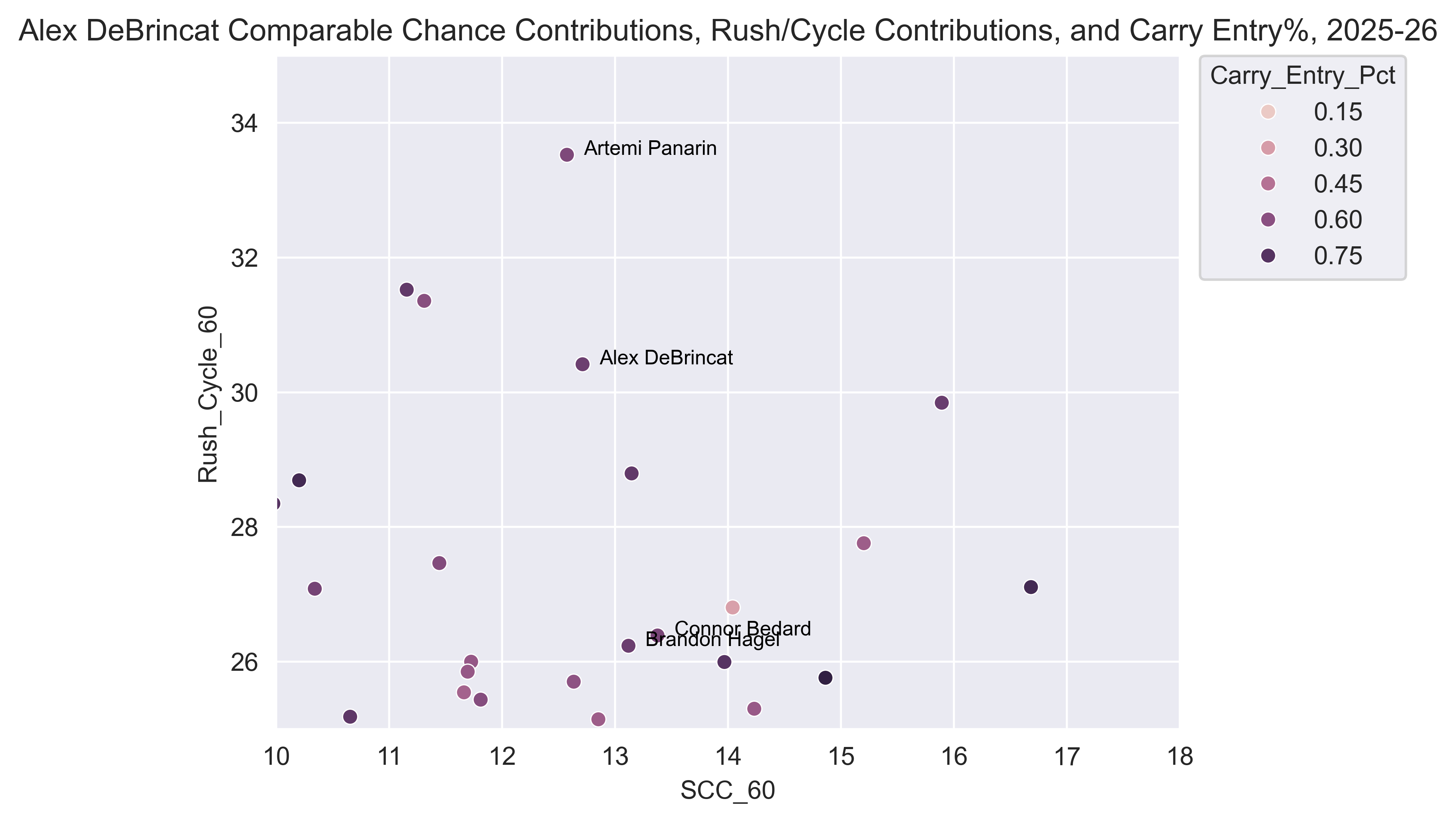
That is DeBrincat alongside Artemi Panarin, Connor Bedard, and Brandon Hagel. DeBrincat is on a 45-goal, 92-point pace with high-end tracking data. It isn’t only good production – he’s having a legitimate all-star season under the hood.
3 – Matthew Knies
Chemistry is important in a short tournament like the Olympics, and Knies has spent the majority of his career skating next to Auston Matthews. He scores, can dish the puck, and is physical. In fact, here are the players with at least a 70th percentile rate of goals, assists, and hits per 60 minutes since the start of last season:
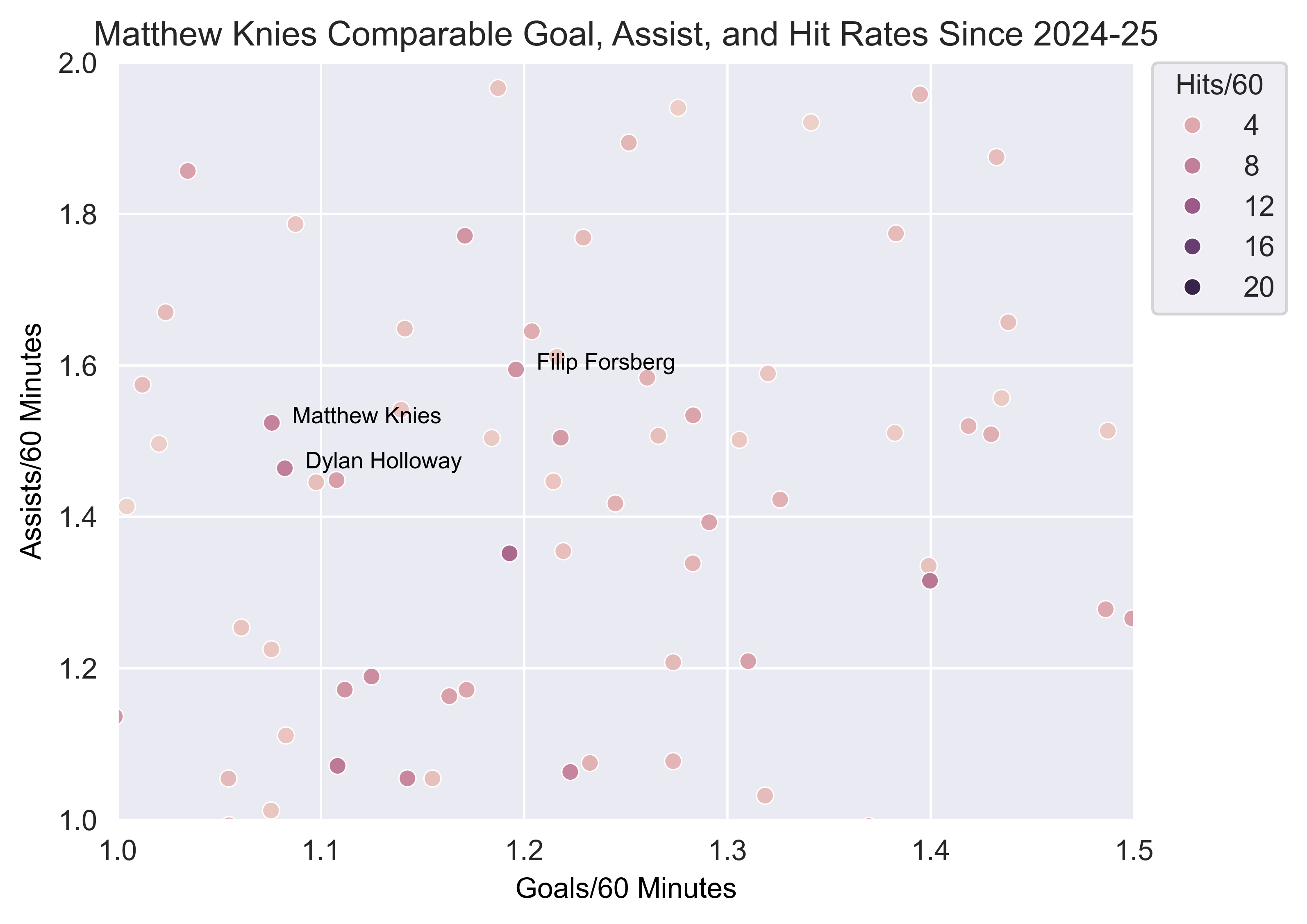
There aren’t many that fit the bill and while no one might be clamouring for Dylan Holloway to make Team Canada, Filip Forsberg will skate for Team Sweden, and Knies has that familiarity with Matthews. If Team USA wants another offensive forechecking-type, Knies is at-or-near the top of the list.
4 – Cole Caufield
Whether it’s size or his winger-only status, there are always reasons for people not to include Caufield on USA’s roster. The fact is that Caufield is a very versatile winger, capable of contributing in ways other than goal scoring. Here is the one comparable forward since the start of last season by offence created both off the rush and cycle, and scoring chance assist rate:
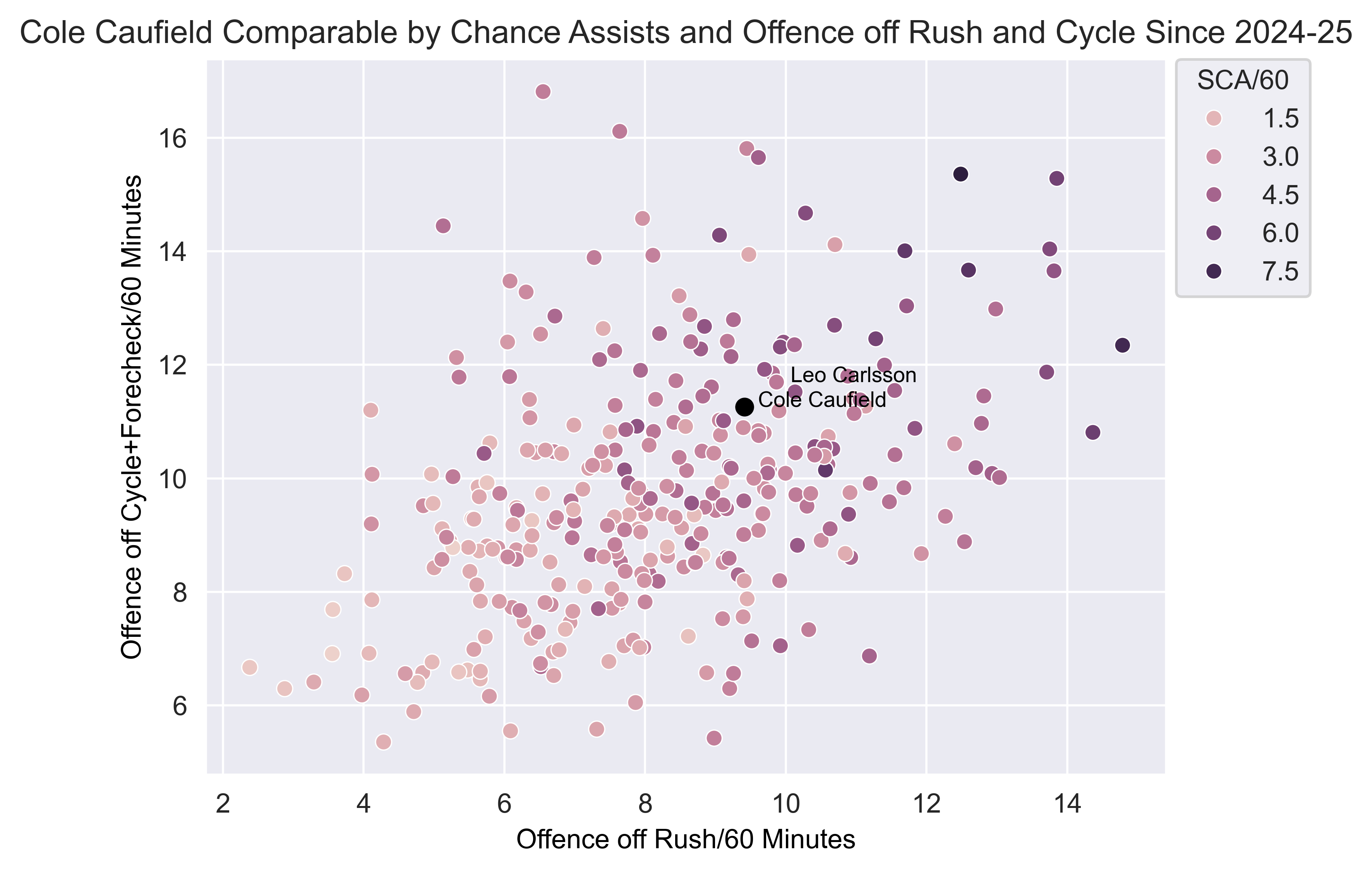
Leo Carlsson looks like he may be Sweden’s top-line centre at the Olympics, if not at least a key cog in the team. Caufield is known as a goal scorer, but he is a solid playmaker who is good on zone entries, too. There is more to his game than just his shot.
5 – J.T. Miller
Four months ago, there would have been no question about J.T. Miller’s inclusion on the Olympic roster. With a stagnant start to his second Rangers tenure, that is more of an open question. While the offence has been below his standards, Miller has done a lot of good work in the defensive end. Here are the comparable forwards by rate of zone exits and combined percentage of failed exits and botched d-zone retrievals:
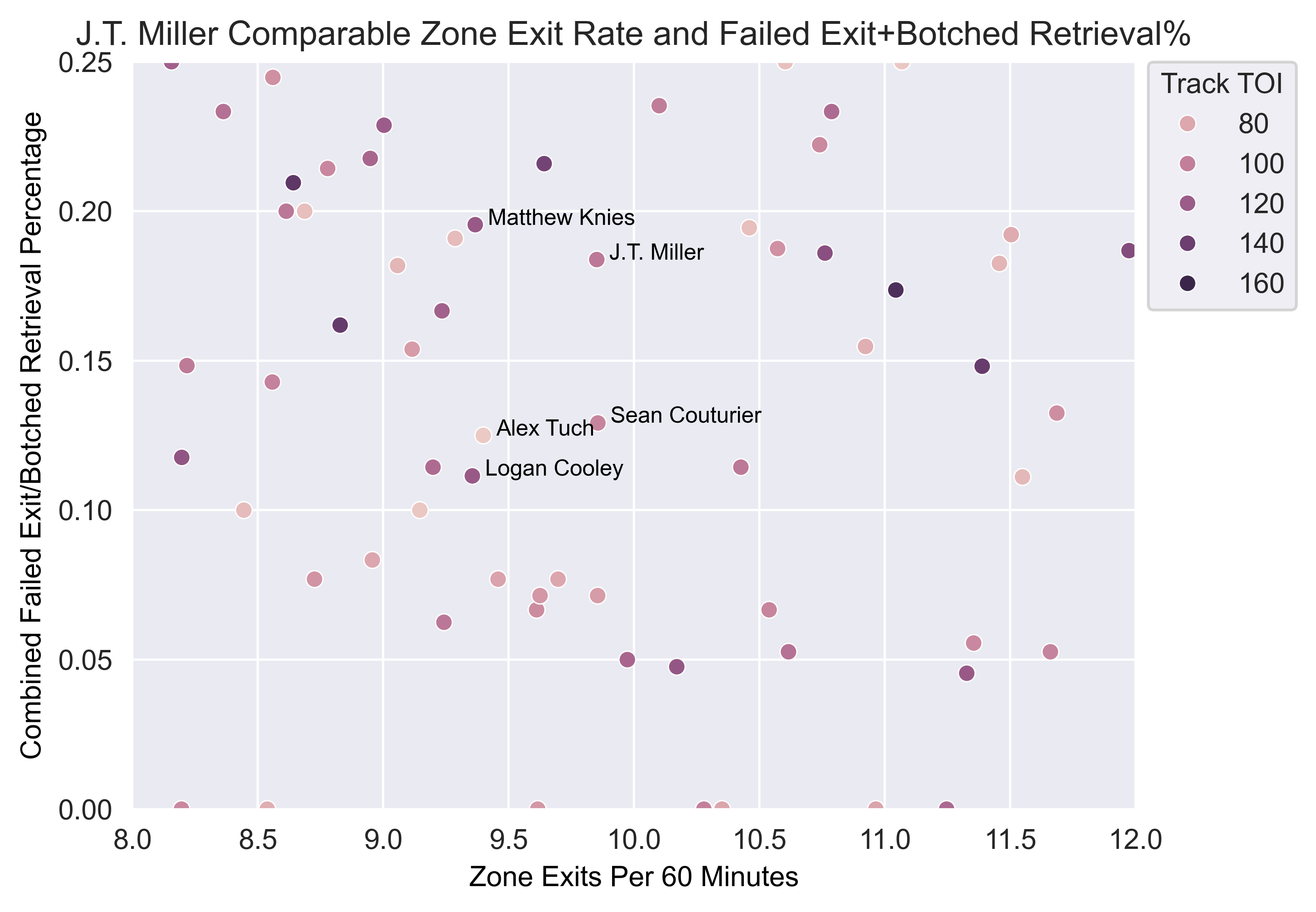
Sean Couturier is one of the best two-way centres of his generation and the other names are all in contention for the USA roster (health permitting). Miller isn’t producing points like he should, but it’s not as if he’s lagging in his own zone as a result.
6 – Cutter Gauthier
While he’s a long shot, Gauthier’s production and season has at least pushed his name into the conversation. There is a lot of good tracking data, too, as here are the comparable names so far in 2025-26 by scoring chance contribution rate and rate of combined offence off the rush and cycle (shots and assists):
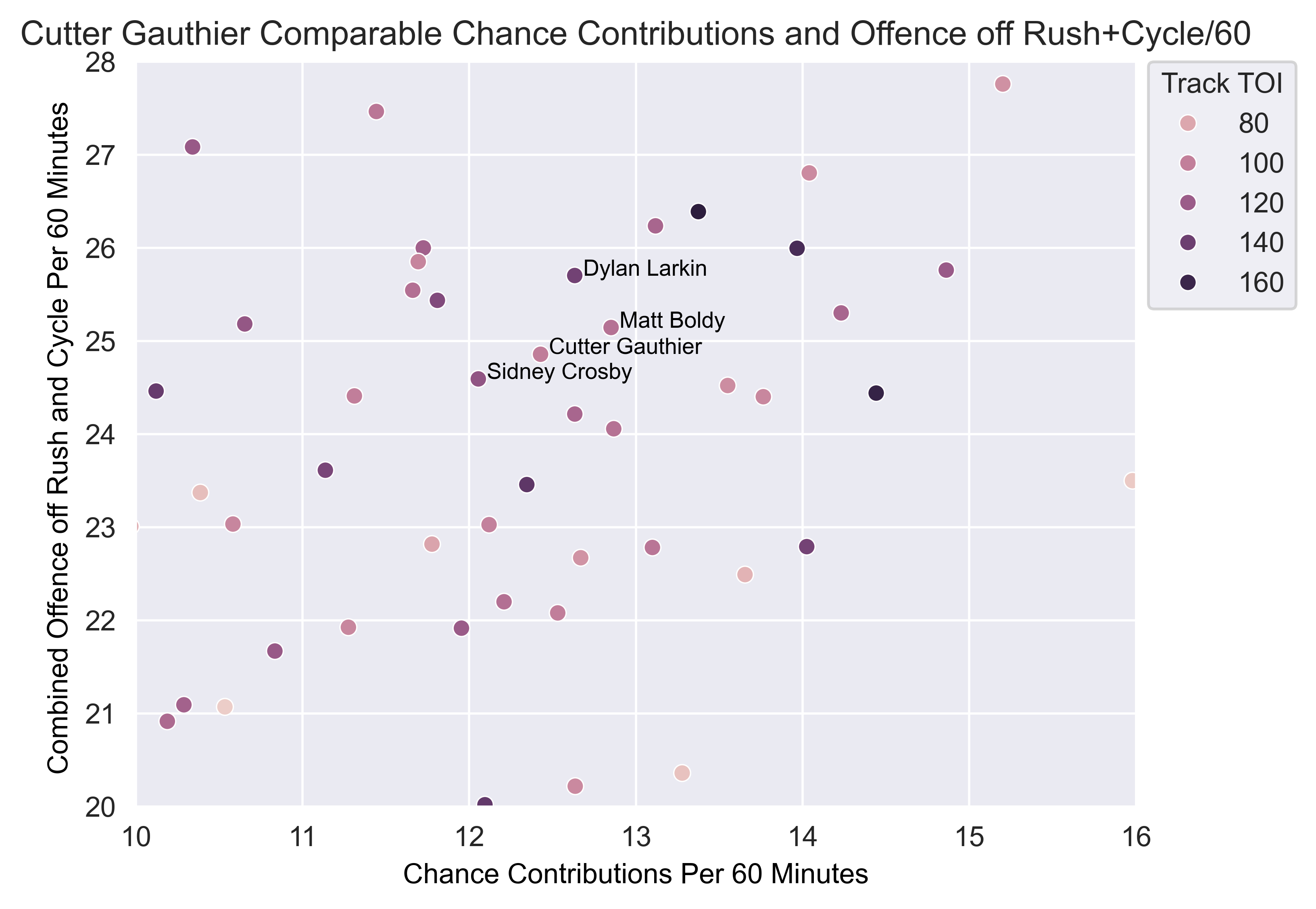
Dylan Larkin and Matt Boldy will be on Team USA and Sidney Crosby will be on Team Canada. Gauthier isn’t just a one-trick pony – he’s contributing in a lot of areas, which is why he’s been able to produce so well at such a young age.
7 – Jackson LaCombe
Staying in Anaheim, no one has ascended more from the blue line over the last 1.5 seasons than LaCombe, going from a third-pair defenceman at the start of 2024-25 to a top-pair anchor for a seemingly playoff-bound Ducks squad. Using the same parameters we did for J.T. Miller – zone exit rate and combined botch+fail percentage – here are LaCombe’s comparable defencemen over the last two seasons:
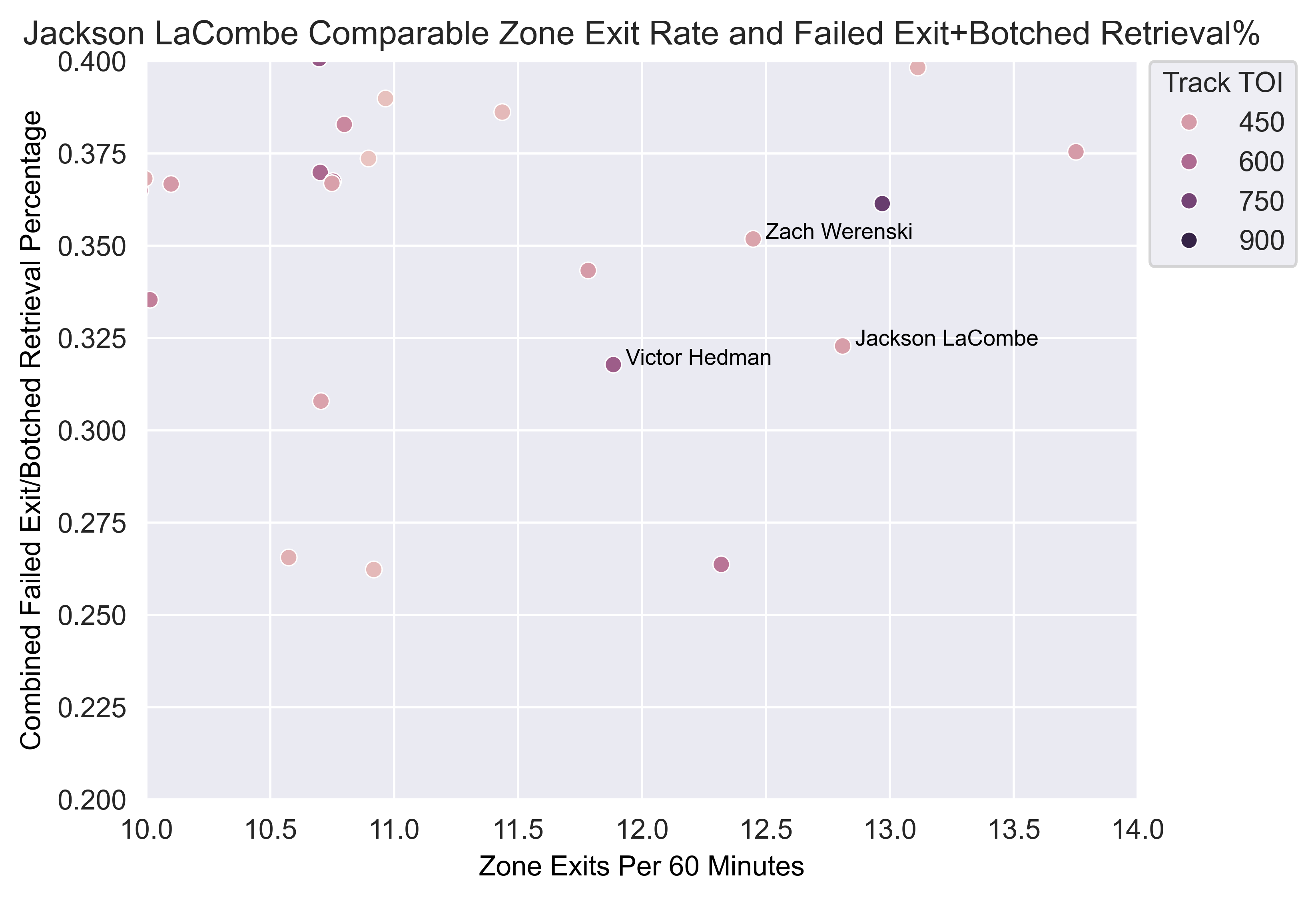
Zach Werenski and Victor Hedman are locks for their respective countries, the former possibly heading towards another Norris nomination and the latter to the Hall of Fame. Team USA has an elite blue line from top to bottom, but LaCombe should get heavy consideration for one of the final two roster spots.
8 – Seth Jones
With Team USA having such a deep blue line, it will be hard for former mainstays like Seth Jones to be a lock on the roster. Jones may not be having the tremendous season fantasy players were hoping for from him, but one thing he’s done is not been a turnover machine in his end. Of the 143 defencemen with at least 90 tracked minutes, here are the closest names to Jones by number of defensive zone puck touches per 60 minutes and failed exit percentage:
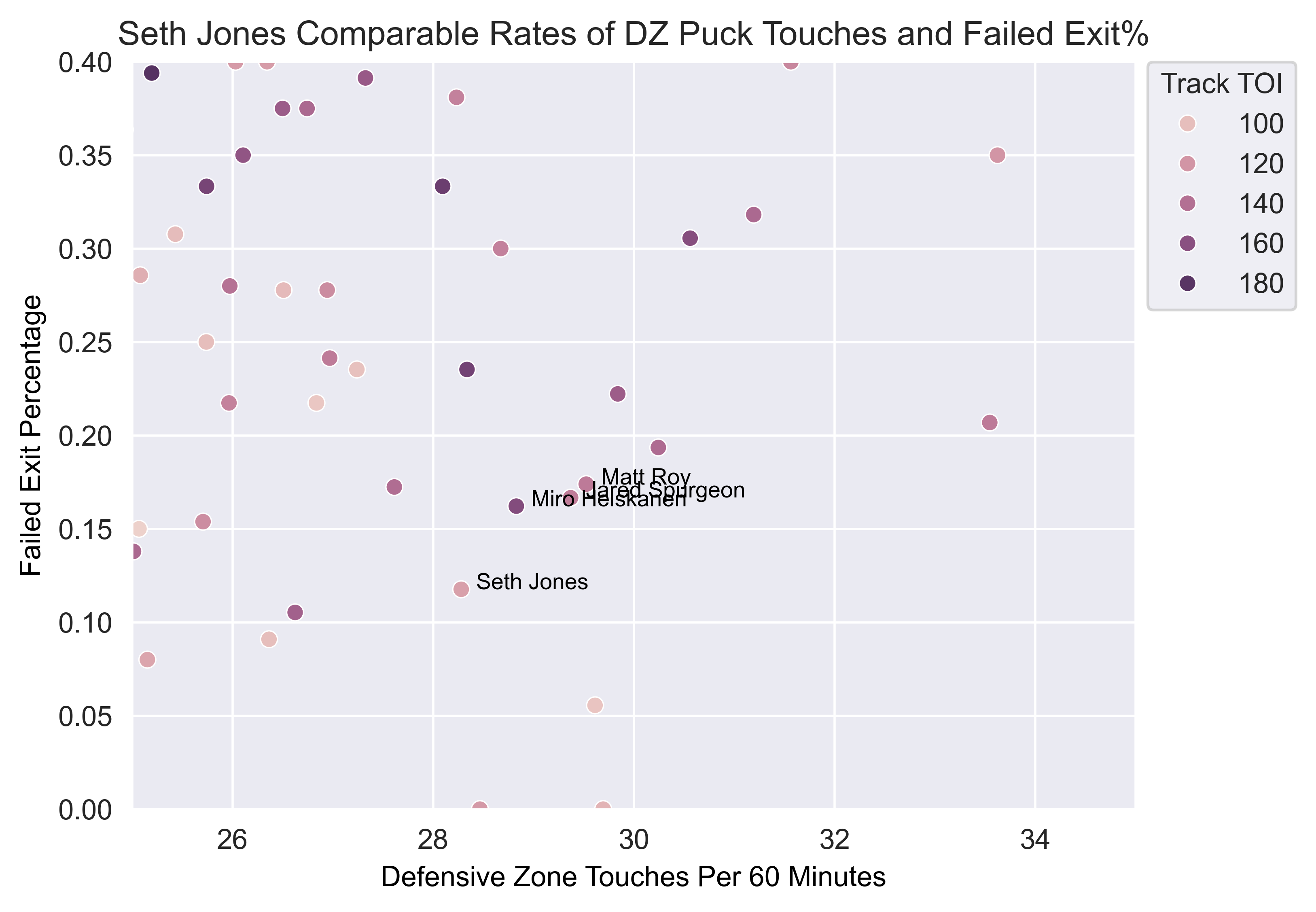
Miro Heiskanen may be on track for a Norris Trophy nomination while Matt Roy and Jared Spurgeon are two of the steadiest defencemen in the league over the last decade. Jones’ offence may not be standing out, but limiting the danger against certainly has.
9 – Thatcher Demko
Assuming health, it seems likely Connor Hellebuyck and Jeremy Swayman are on the Team USA roster. Jake Oettinger makes sense as the third, but there is at least a conversation to be had here. Since the start of the 2023-24 season, here are the comparable goalies to Demko by Goals Saved Above Expected/60 and Shots Against Per Expected Goal (lower numbers are better):
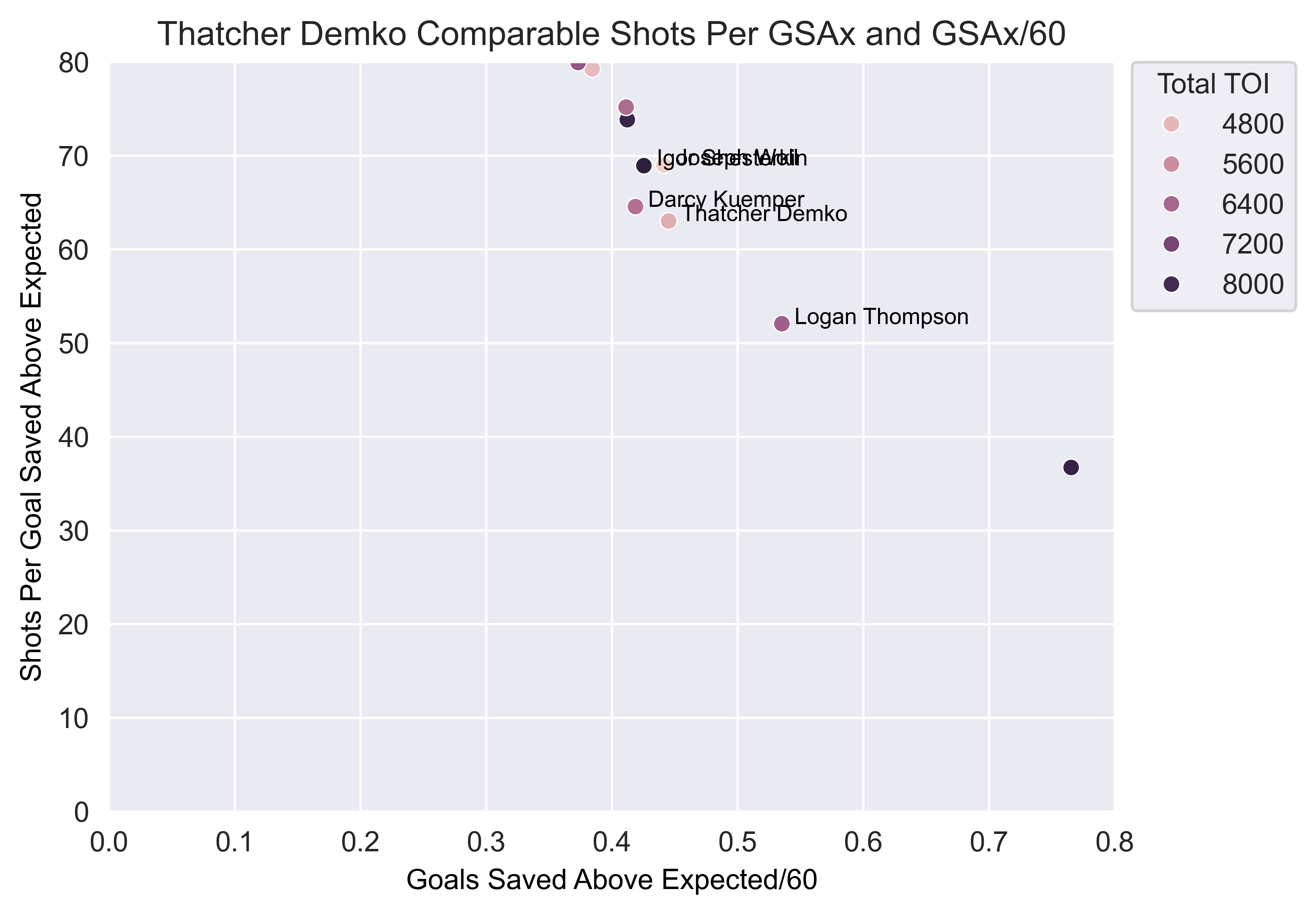
The overlapping names are Joseph Woll and Igor Shesterkin and then we see two goalies – Darcy Kuemper and Logan Thompson – that are potential netminders for Team Canada. When Demko is healthy, he’s one of the top goalies in the world, but it’s a matter of him staying healthy and Team USA having faith he’ll stay healthy for the tournament.
10 – Dustin Wolf
After a poor start to the 2025-26 season, Wolf has posted a .912 save percentage over his last 20 starts, a top-10 mark among starting goalies. Since the start of the 2024-25 season and using the same measures we just used for Demko, here are the goalies with comparable performances to Wolf:
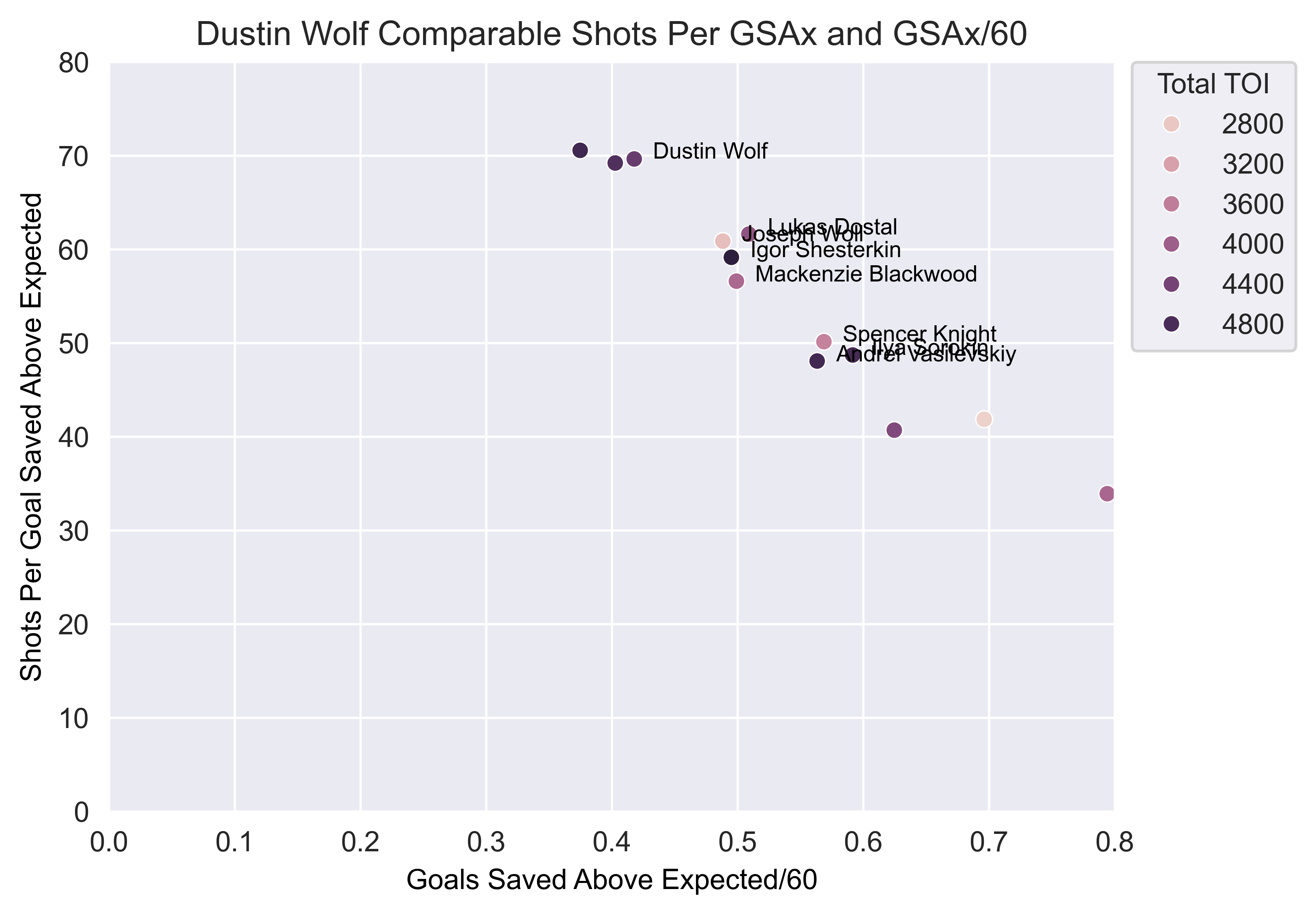
We see Woll and Shesterkin again, a few top goalies over the last five years like Ilya Sorokin and Andrei Vasilevskiy, and a couple top young netminders like Lukas Dostal and Spencer Knight. Wolf is a long shot to make the roster given USA’s depth in goal, but he’s certainly put his best foot forward, and doing this for another four years will have him firmly in the conversation in 2030.
Until next week.