10 Interesting (To Me) Stats For This Week - December 2
Welcome back for another week of ’10 Interesting Stats’ as we enter December and approach the one-third mark of the season. This year has seen no shortage of superlative efforts from top rookies so let’s look at what has made 10 different rookies so successful, or show so much promise, through the early portion of the 2025-26 campaign.
Player data is from Evolving Hockey, tracking data is from All Three Zones, and this is all current as of the morning of Monday, December 1st.
1 – The Cream of the Crop
Matthew Schaefer, the super-rookie defenceman of the New York Islanders, is only 18 years old – as of Labour Day, 2025, he wasn’t old enough to vote in Canada. That is what makes what he’s doing so unbelievable, especially when looking at zone entries and percentage of those entries carried in. Here is how he has fared in those two measures compared to other defencemen from each of the last five seasons (minimum of 100 tracked minutes):
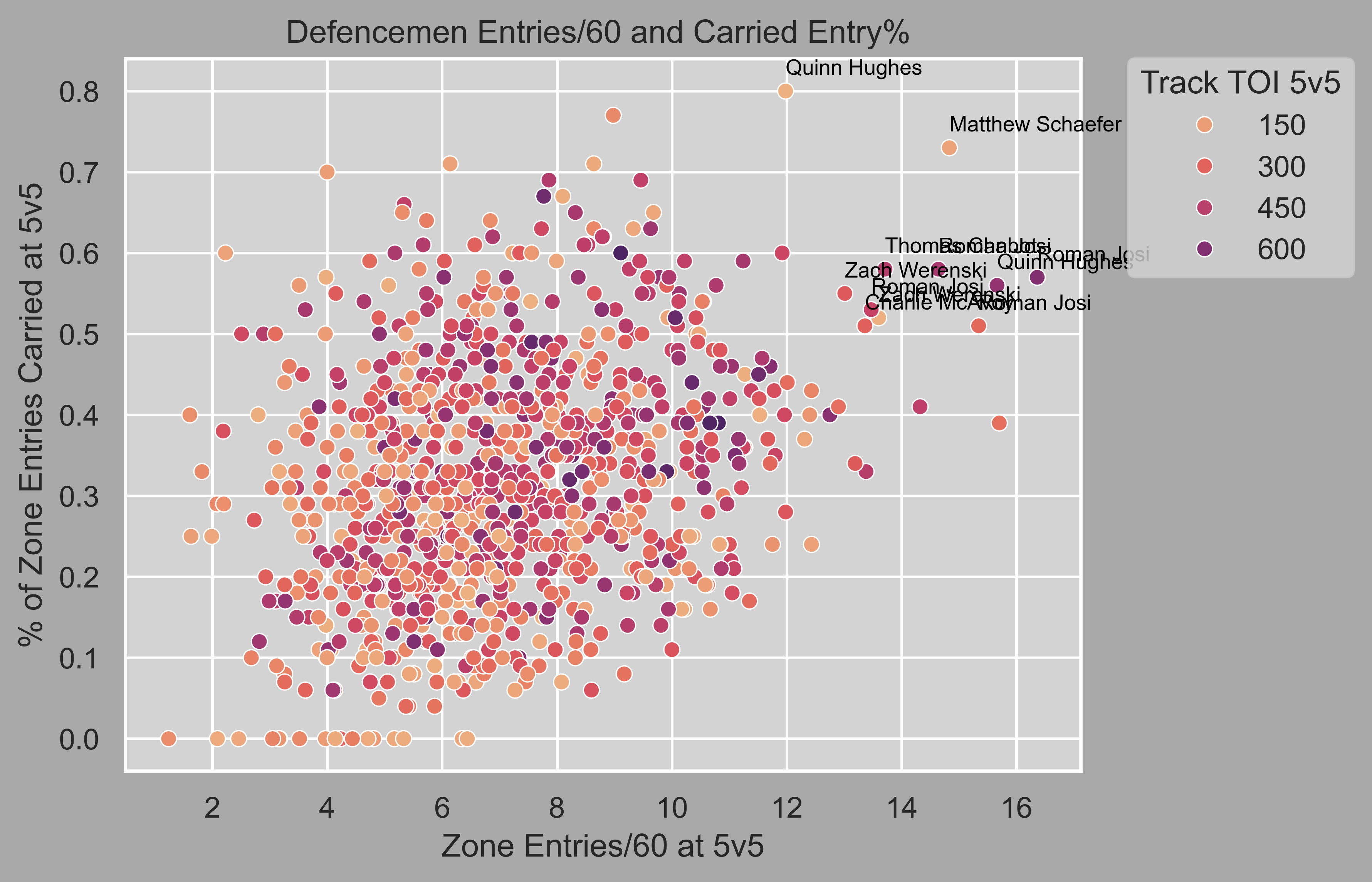
Some of the names overlap, but we have Roman Josi four times, Quinn Hughes and Zach Werenski twice each, Charlie McAvoy and Thoms Chabot once each, and Schaefer. That is the company for transition play that this just-turned-18-year-old is keeping. It is truly a rookie performance on another level.
2 – Top Guy Status
Last week, this column covered how Montreal winger Ivan Demidov was off to a start that was far too hot by team shooting percentage. All the same, we should highlight the company he’s keeping by goals/60 minutes and primary assists/60 minutes at 5-on-5 this season:
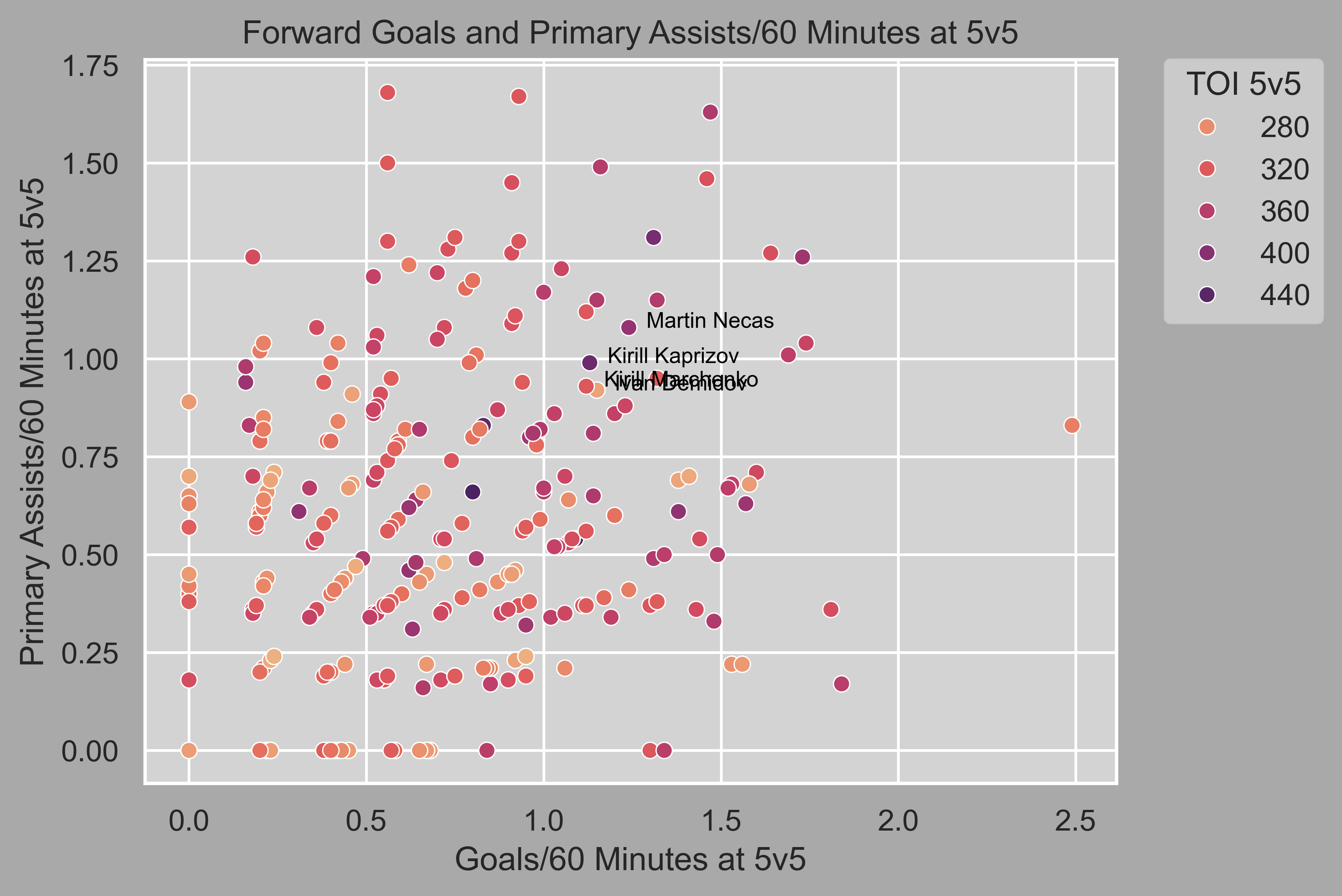
Again, some of the names overlap, but they are: Martin Nečas, Kirill Kaprizov, Kirill Marchenko, and Demidov. Maybe there’s some regression to come, but it may be more the players he’s skating with than his own play, and it certainly seems he’s announced himself as a fearsome offensive force.
3 – So Much Fun-ikkah to Celebrate Sennecke
Anaheim winger Beckett Sennecke has had the good fortune of having Cutter Gauthier as his left winger for nearly three-quarters of the season, but that doesn’t take away from the fact that Sennecke’s rate of zone entries and the percentage of those entries being carried in compares to two of the best transition forwards in the league:
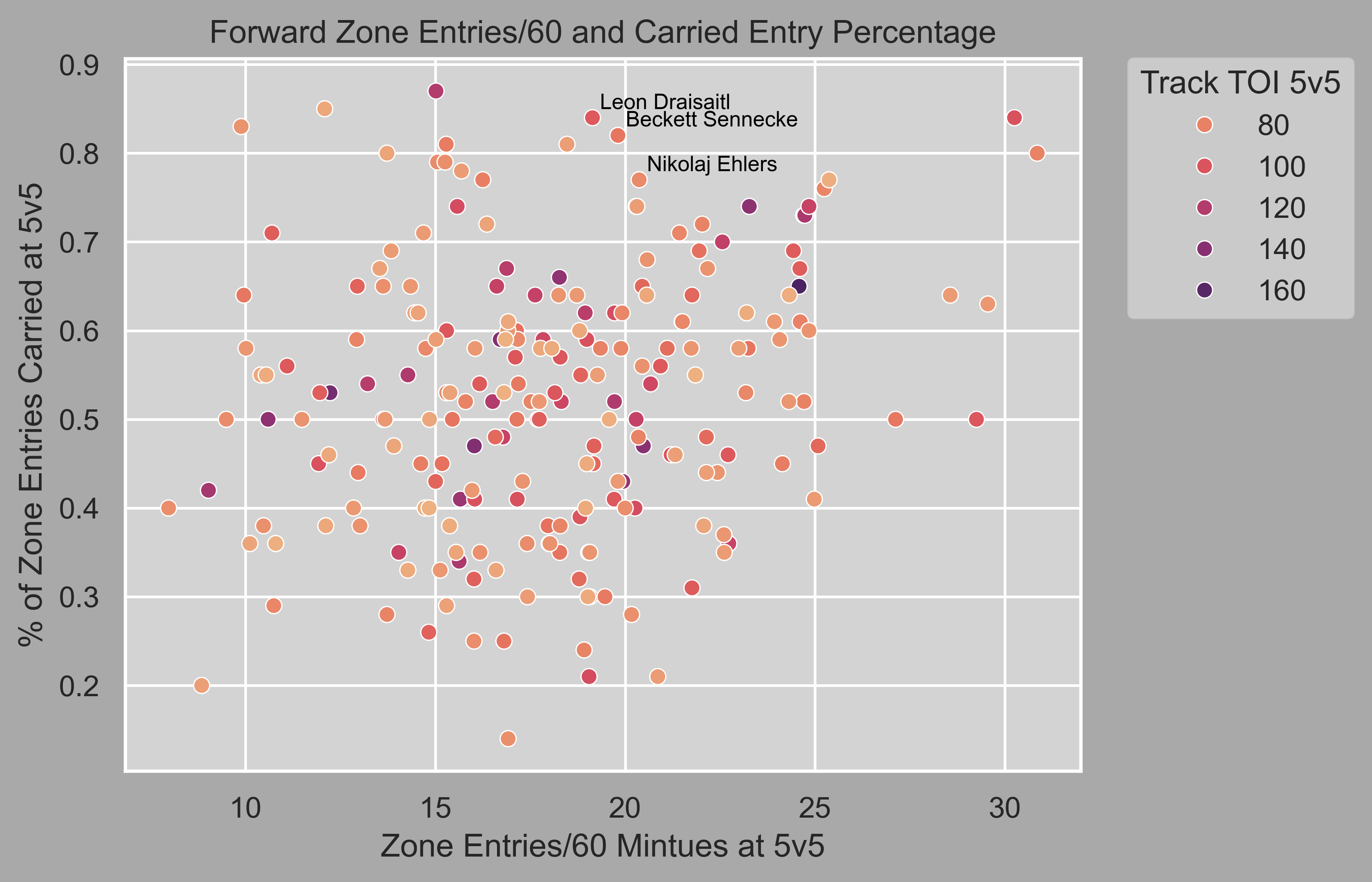
The sample isn’t large here – a little over 80 minutes – so let’s not run wild with conclusions just yet. All the same, that Sennecke has done this through the first third of his rookie season is to be commended. This level of play will make him a pillar of this Ducks roster for the next decade-plus.
4 – Lighting a Fire
Pittsburgh has had a great start and rookie Ben Kindel has been a big part of it. Below is a visual that shows top-6 forwards and their respective expected goals-for and expected goals-against play-driving at even strength. Those in the bottom-right quadrant are better than average in both respects:
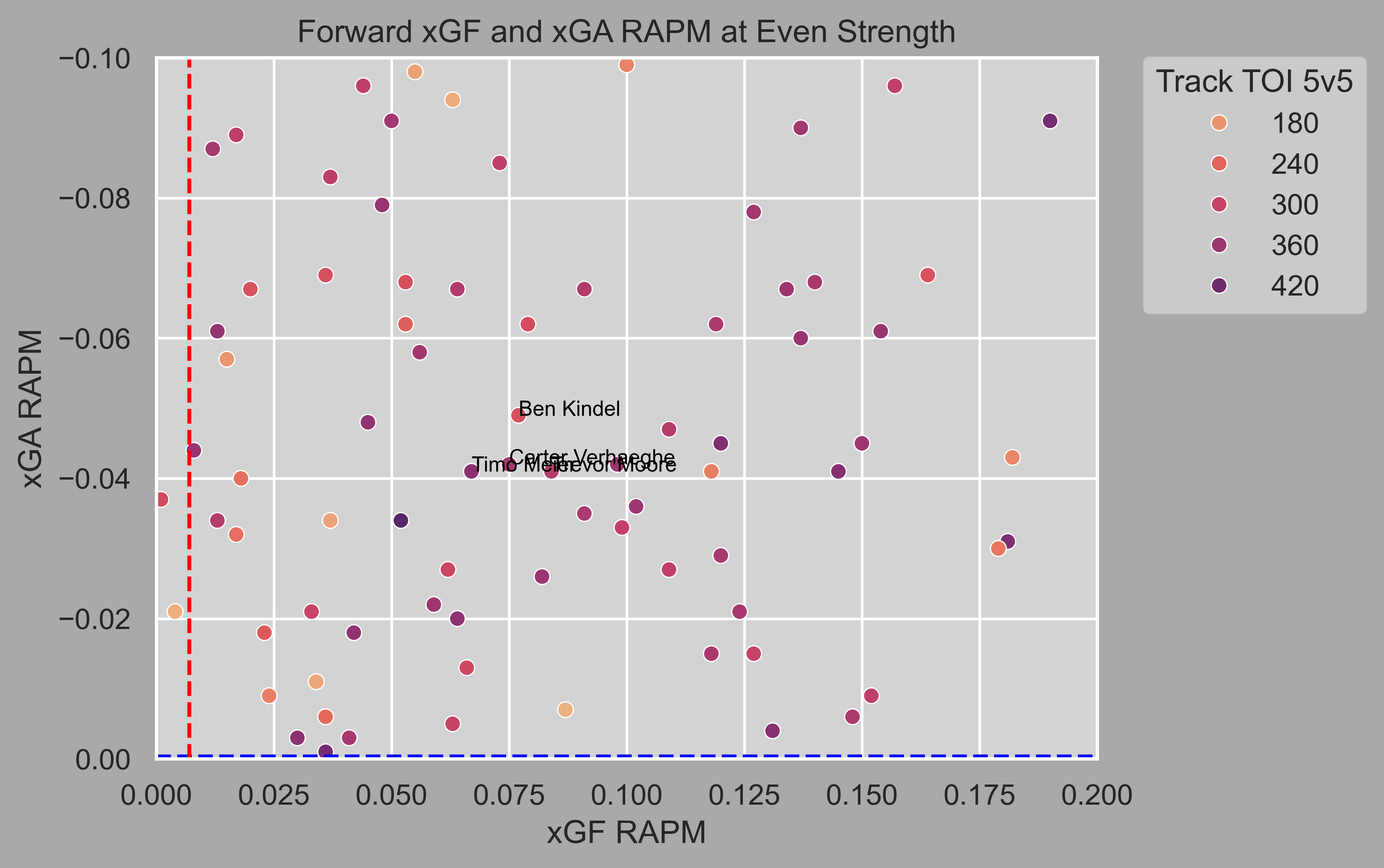
We have overlapped names but they are: Timo Meier, Trevor Moore, Carter Verhaeghe, and Kindel. That Kindel is doing this as an 18-year-old 11th overall for a team that finished in the bottom-10 of the league last year is a testament to just how good he’s been.
5 – Lev-itating
Improved play from the Chicago Blackhawks’ blue line has been a big reason why they’re in the thick of the playoff race, and rookie Artyom Levshunov has been an important part of that improvement. Players in the top-right quadrant of the visual below are above average by both percentage of zone exits with possession and exits off defensive zone retrievals:
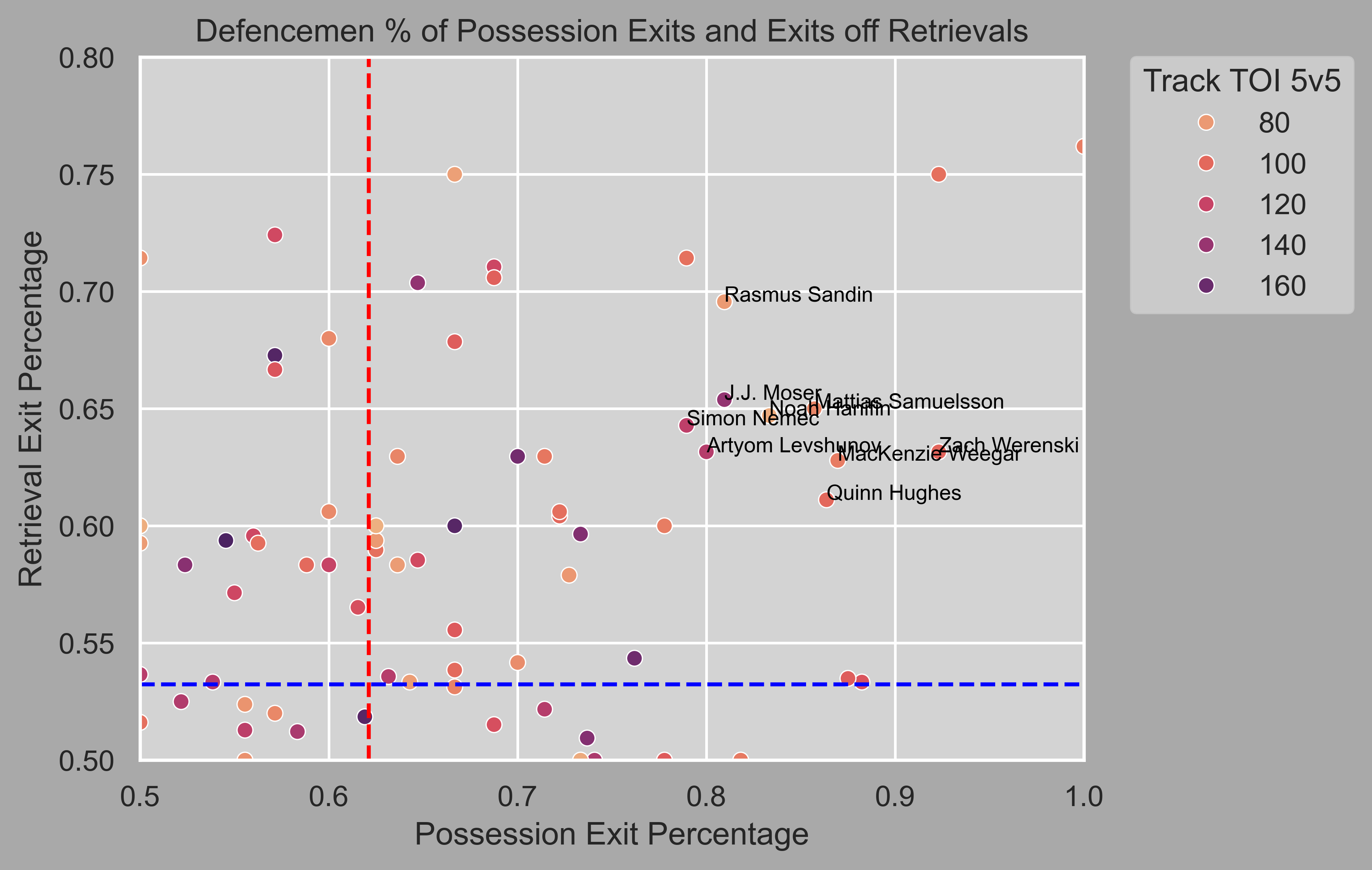
These are the comps to Levshunov: Rasmus Sandin, JJ Moser, Simon Nemec, Mattias Samuelsson, Zach Werenski, MacKenzie Weegar, and Quinn Hughes. They range from breakout seasons to reliable puck-movers, to superstars. All in all, it’s pretty good company to keep for Levshunov’s rookie year.
6 – The Grit Factor
New Jersey winger Arseny Gritsyuk has six goals and six assists in 25 games while skating under 15 minutes a game. It is solid production for a rookie winger skating middle-6 minutes, but it also doesn’t show his play-driving prowess thus far. Like we saw with Kindel, Gritsyuk has been above average in both expected goals-for and against play driving, only to a greater degree:
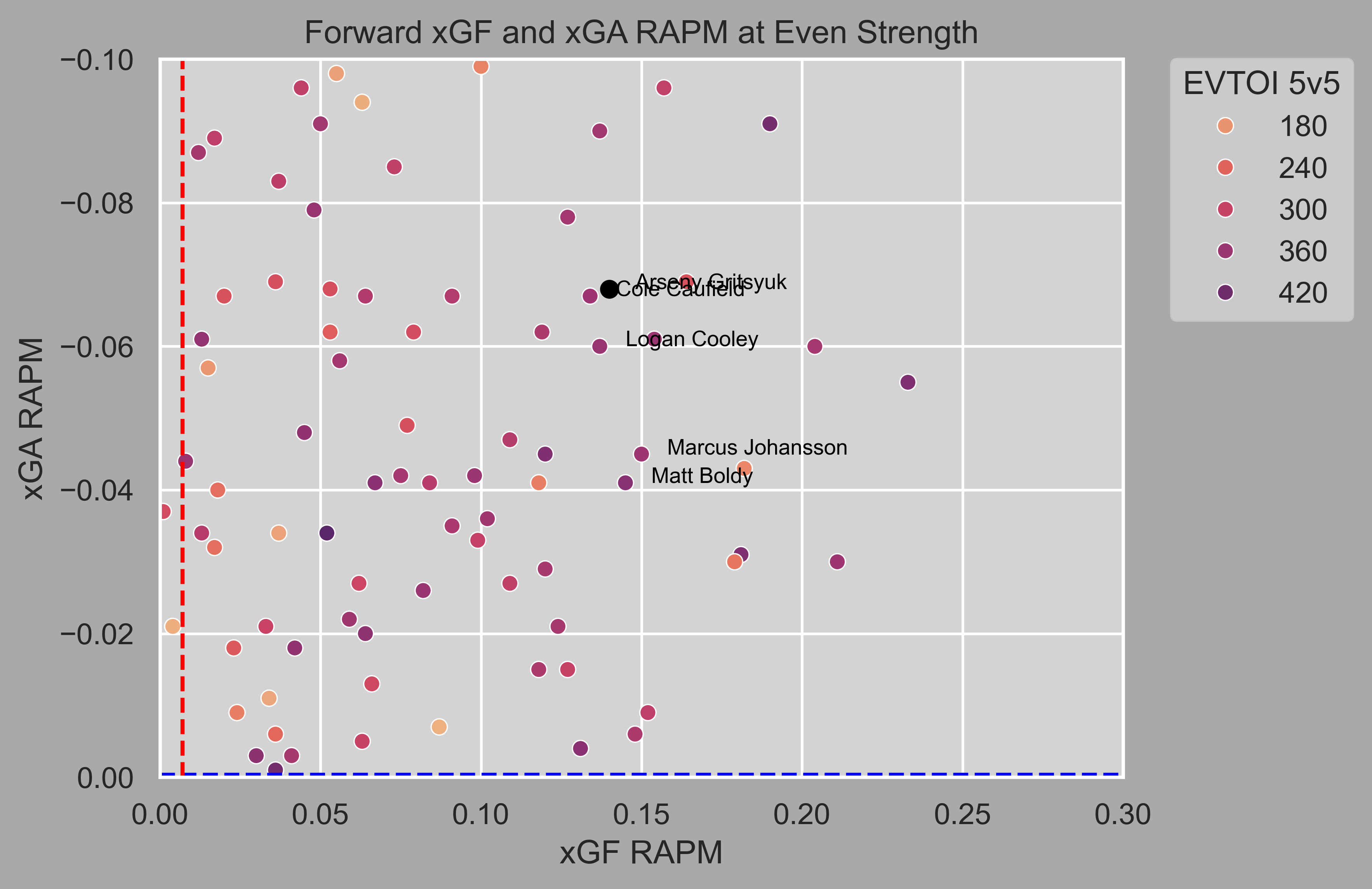
Included in Gritsyuk’s name by these measures are Minnesota wingers Matt Boldy and Marcus Johansson, Utah’s Logan Cooley, and Montreal’s Cole Caufield. It is pretty good company for the young winger, and it helps give New Jersey even more scoring depth when the entire roster is healthy.
7 – Dual Threat
Though Gritsyuk and Kindel have driven play well, they’ve been around-or-below average in driving goal differential. That hasn’t been the case for Toronto winger Easton Cowan who has been able to drive both very good expected goal and goal differentials at even strength, being well above average in both regards:
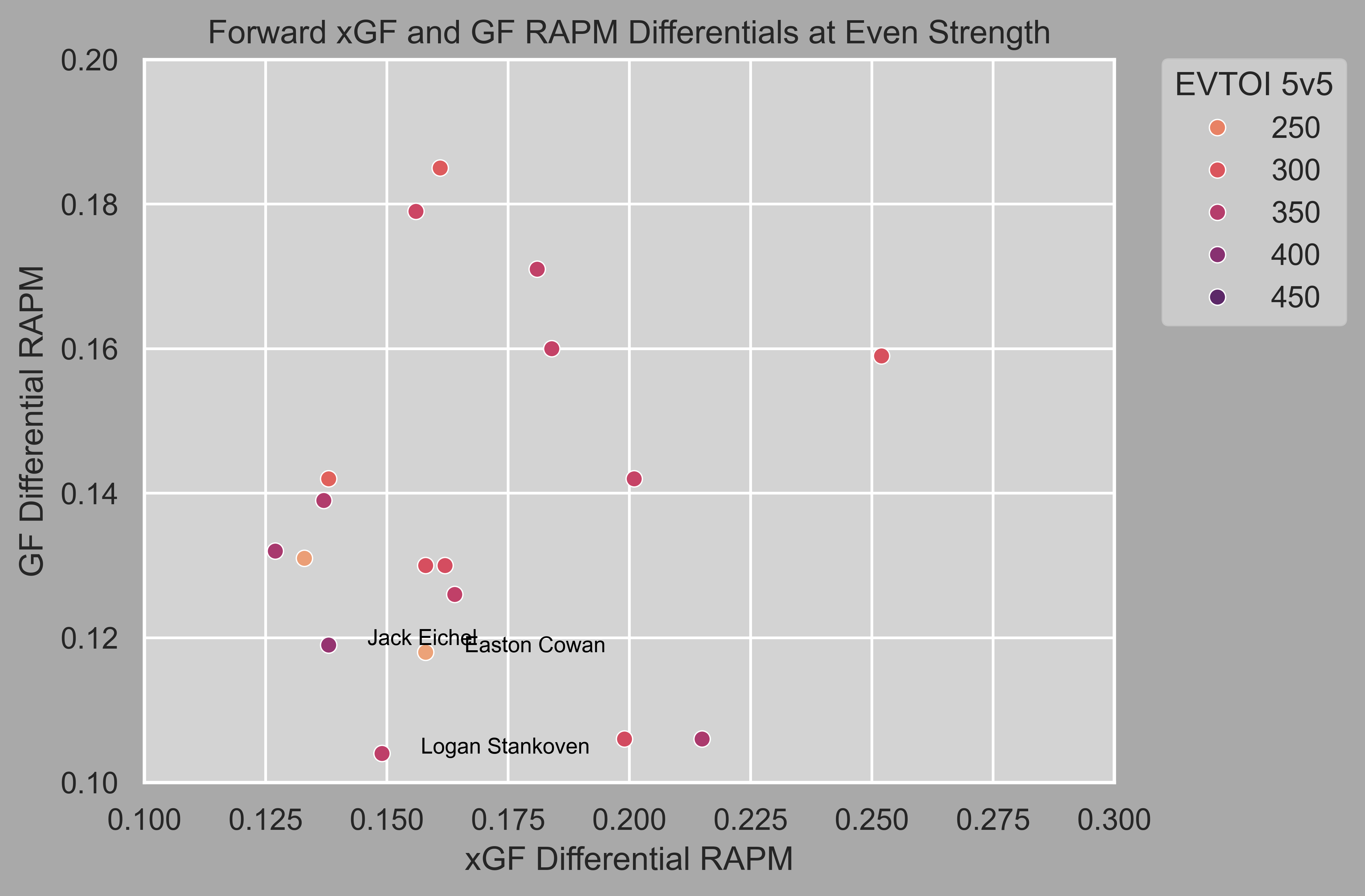
Those dots are all players who are around or above a top-line rate in both these two measures, and the player labels are those closest to Cowan. Being in the company of Jack Eichel,and Logan Stankoven seems like a very good start to the career of young Cowan though, like all these players listed today, we have to see how this goes over the next four months, and four years.
8 – Out of Nowhere
Making the NHL as a 7th-round pick is an extreme longshot, but doing so two years after being drafted and skating on the team’s top line is basically unheard of, which is what makes Finnie stand out. What also makes him stand out is his shooting efficiency. Among forwards with at least 250 minutes at 5-on-5 who are skating top-6 minutes and have taken at least 50 shot attempts, this is his company in shot attempts required per expected goal generated:
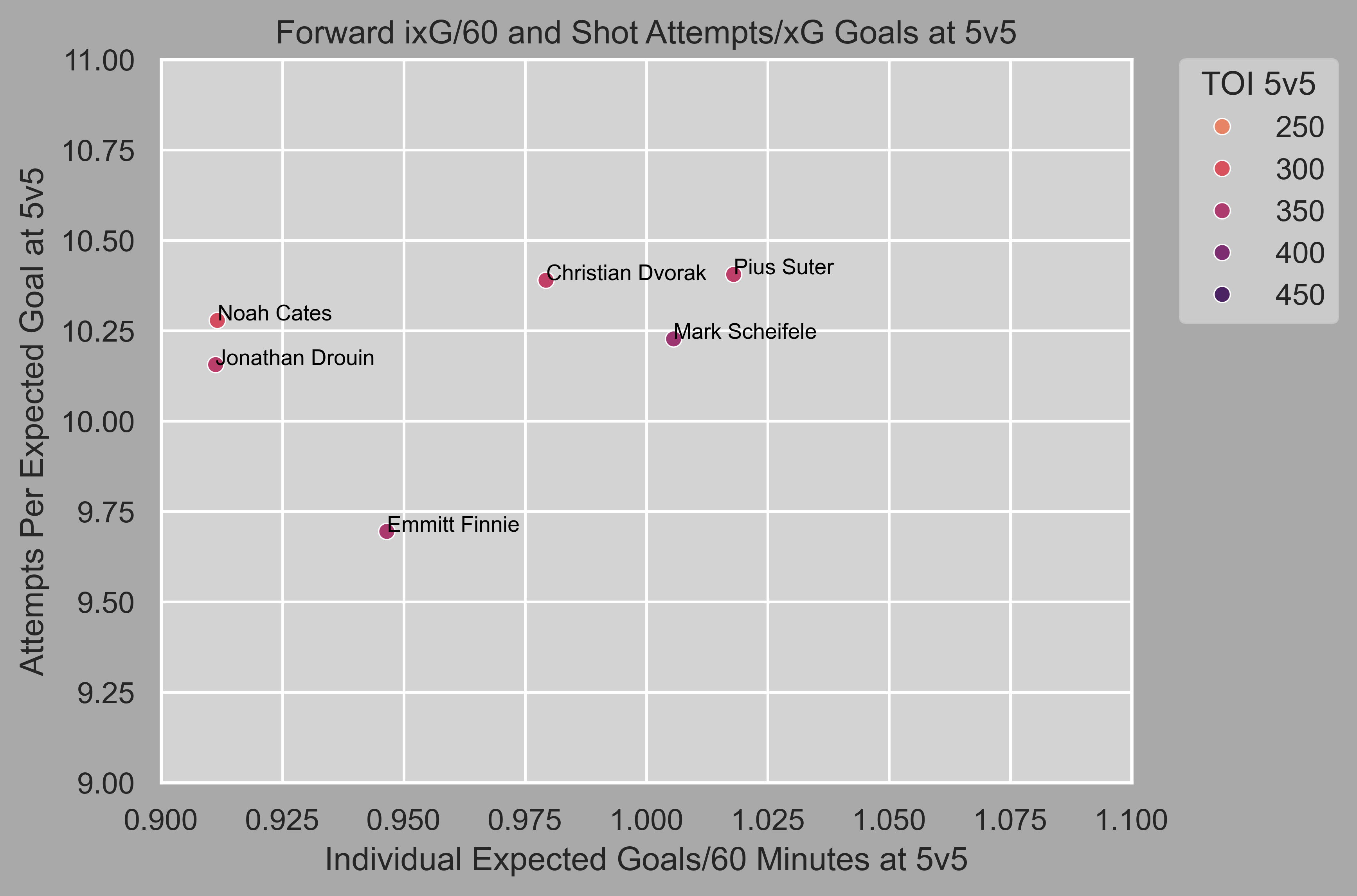
It is a mix of other guys with good slotting – Christian Dvorak and Jonathan Drouin – options that are typically good play-drivers – Pius Suter and Noah Cates – and a star in Mark Scheifele. Finnie has the good fortune of skating often with Dylan Larkin, but that Finnie has been able to largely remain on that line is a credit to him being able to play with top talent, which many rookies can’t do.
9 – The Next Top Guy
The headlines in Washington will feature their top options, but it shouldn’t overshadow how productive winger Ryan Leonard has been this season. Among forwards with at least 250 minutes at 5-on-5 this season, here are his comparable names by primary points per 60 minutes (goals and first assists) as well as shot attempt rate per 60 minutes:
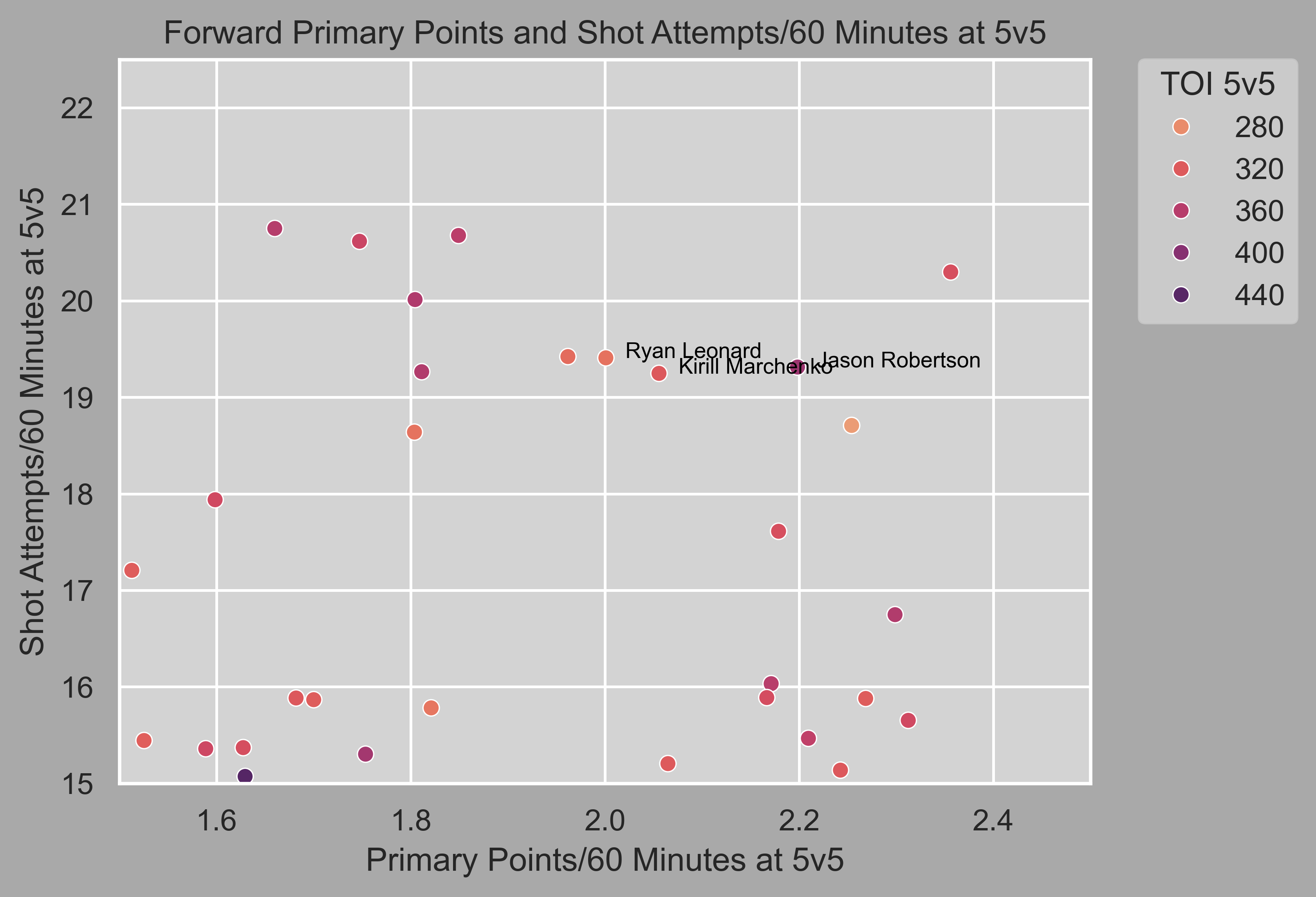
The two names closest to Leonard in these measures are two true star wingers in the league (pun intended in Jason Robertson’s case). With the depth the Capitals have, Leonard won’t be used as a top winger just yet, but he certainly has the look of a top winger for years to come.
10 – I’m Not Making a Pun-ny Headline for This Guy’s Name
San Jose defenceman Sam Dickinson, like Kindel, Gritsyuk, and Cowan earlier, has been one of the rookies who has been able to drive the play at both ends. Across the league, here are Dickinson’s rearguard comparables so far this season by expected goals-for and against differentials at even strength:
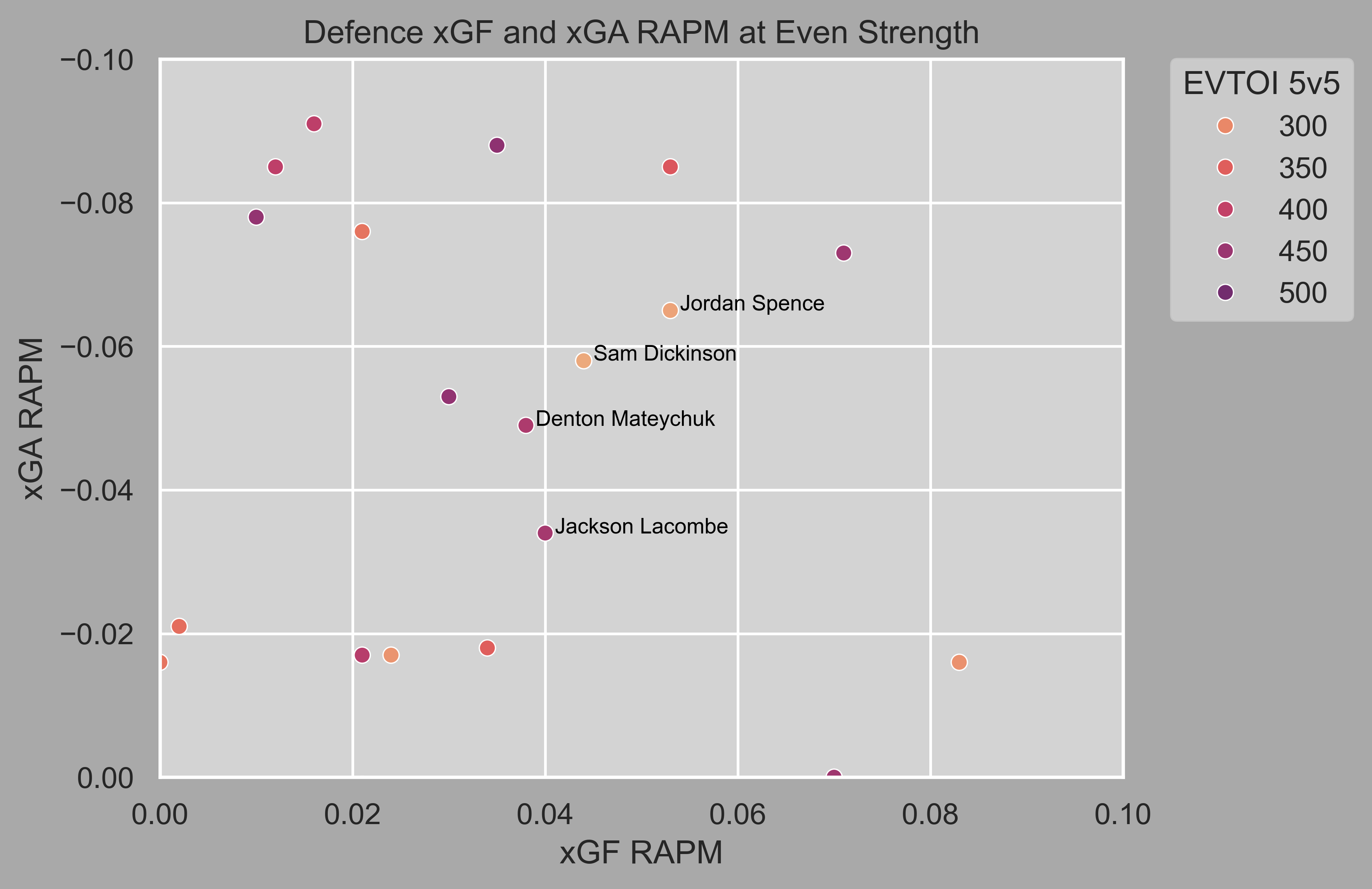
Columbus defenceman Denton Mateychuk has been very good in his own right this season, Jordan Spence is perennially undervalued, and Jackson LaCombe is anchoring the blue line for a playoff team. Dickinson hasn’t had to skate a big role just yet for the Sharks, but he’s done very well in the sheltered role he’s been given so far. Seeing as he’s supposed to be a big part of the team’s future, it’s a good start for Dickinson.
Until next week.