10 Interesting (To Me) Stats For This Week - November 18
Back in September, I had a thread on BlueSky about defencemen botching defensive zone retrievals and failing to exit the zone at 5-on-5. The crux was how it impacted a team’s goal-scoring ability, but how its utility was looking at defence groups at the extremes of being good/bad in these areas. There was also a post in this column touching on the subject.
Let’s take today to see whether botching defensive zone retrievals and failing to exit the zone at 5-on-5 is impactful on offence in 2025-26, and the teams/players we should be keeping an eye on.
All tracking data is from AllThreeZones and team scoring data is from Evolving Hockey. Data is current as of the morning on November 17, 2025. We are limiting to defencemen with at least 55 tracked minutes, which gives us 129 blue liners. In the viz, the red/blue lines denote league averages.
1 – Yes
Whether there is still an impact of defencemen botching retrievals and failing to exit with their team’s goal-scoring rate is both a yes and no. For the ‘yes’ part: The five teams with the lowest combined percentage of botched retrievals and failed exits are Carolina, Tampa Bay, Columbus, Washington, and Colorado:
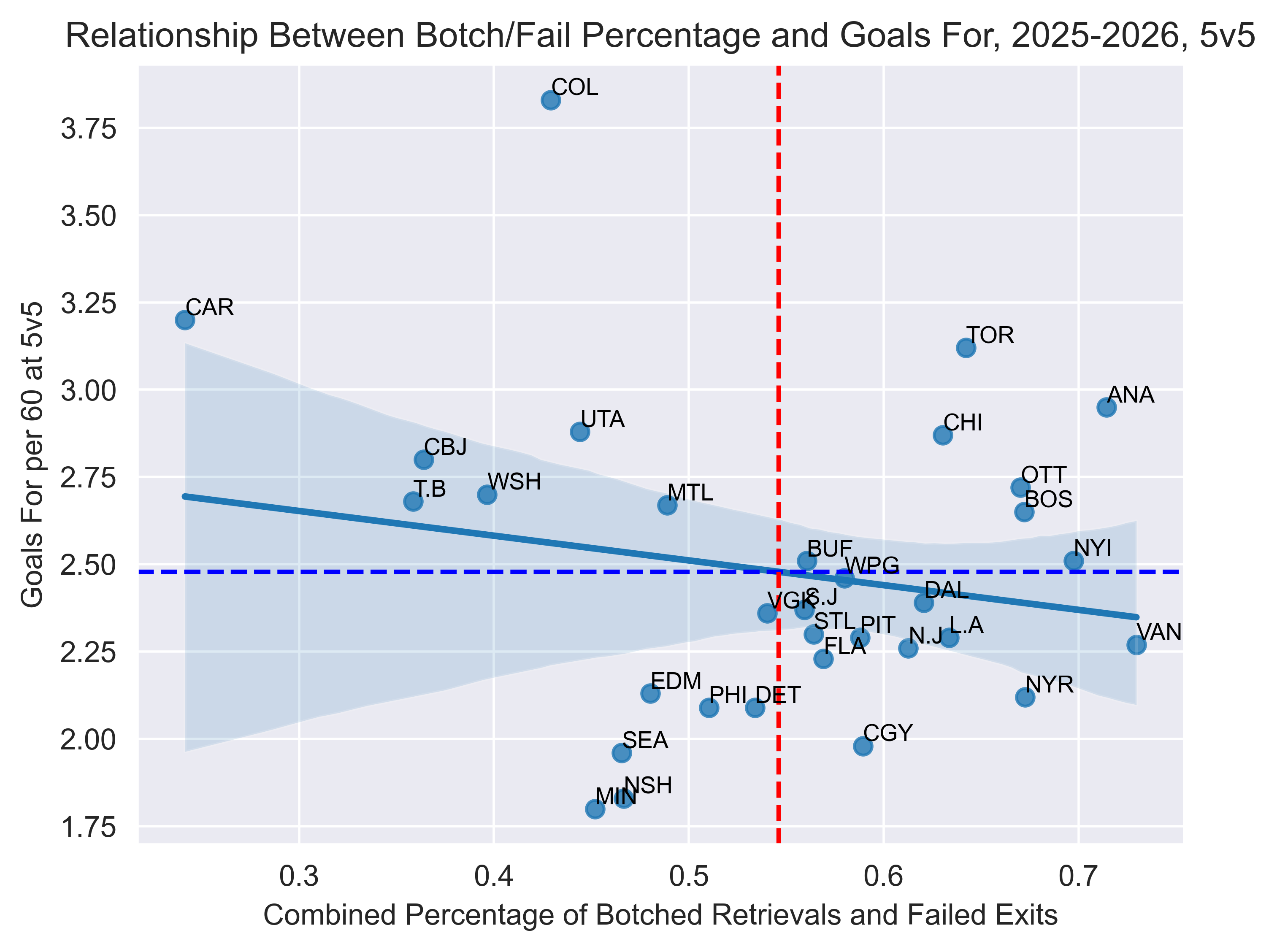
All five teams are top-10 by goals/60 at 5-on-5 so far this season and they’re averaging 3.05 goals/60 minutes against a league average of 2.47. As shown in the thread linked above, it seems as if there is still value at one extreme for low botch/fail percentages and goal scoring.
2 – No
As for the ‘no’ part, when looking at all 32 teams, there isn’t a lot of value just yet. We are still less than 25% of the way through the season, so there are still small-sample issues to deal with, but the correlation between the combined botch/fail percentage and goals-for per 60 minutes at 5-on-5 is very low (red box):
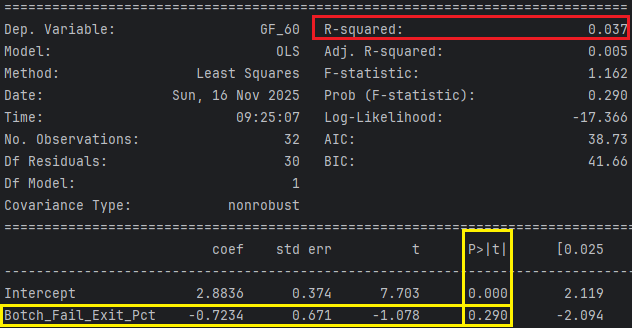
The yellow box is the p-value, and without going too deep, that number indicates that goal-scoring results based on botch/fail percentages are likely random. Again, this is where I believe the value is at the extreme because when looking at just the top/bottom teams, the correlation improves considerably.
3 – Worth Every Penny?
Montreal has been on a slide of late but that shouldn’t overshadow how good Noah Dobson has been to start the year. The Habs have outscored their opposition 17-10 and scoring 3.3 goals/60 minutes with him on the ice, he is often used against the opposition’s top forwards, and he has also posted the lowest combined botch/fail percentage of any defenceman in the sample:
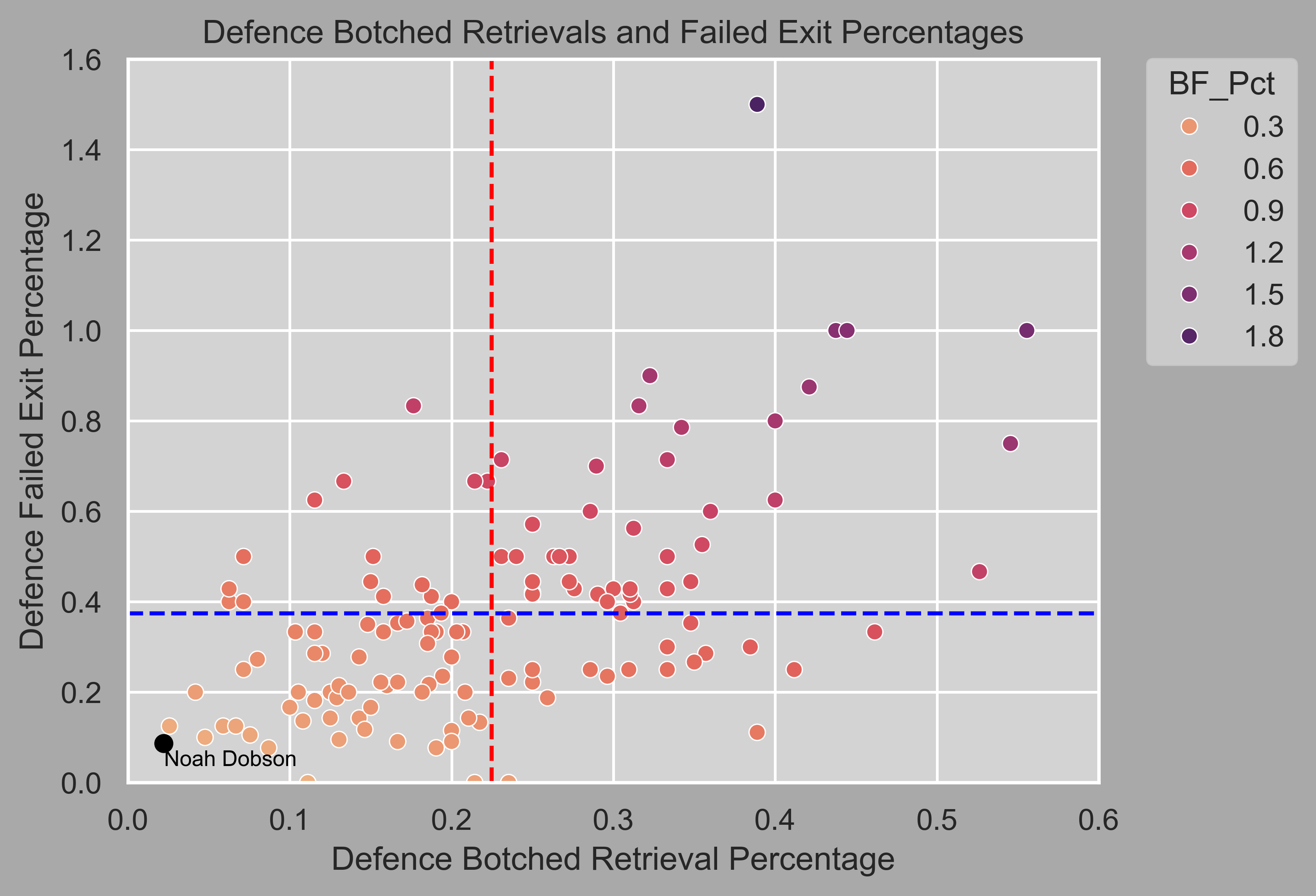
Even without top power-play time, Dobson is pacing for a 50-point season, too. All told, it’s hard to complain about his start to his Canadiens career.
4 – Welcome, Matt
Washington’s entire approach, both offensively and defensively, runs through their defencemen, so they need everyone on the blue line to contribute positively. Jakob Chychrun and John Carlson may get the most mentions, but Matt Roy has been excellent. The Caps aren’t scoring a lot with him on the ice (2.3 goals/60), but they are outscoring the opposition 12-4 at 5-on-5, and he has one of the lowest botch/fail percentages in the league:
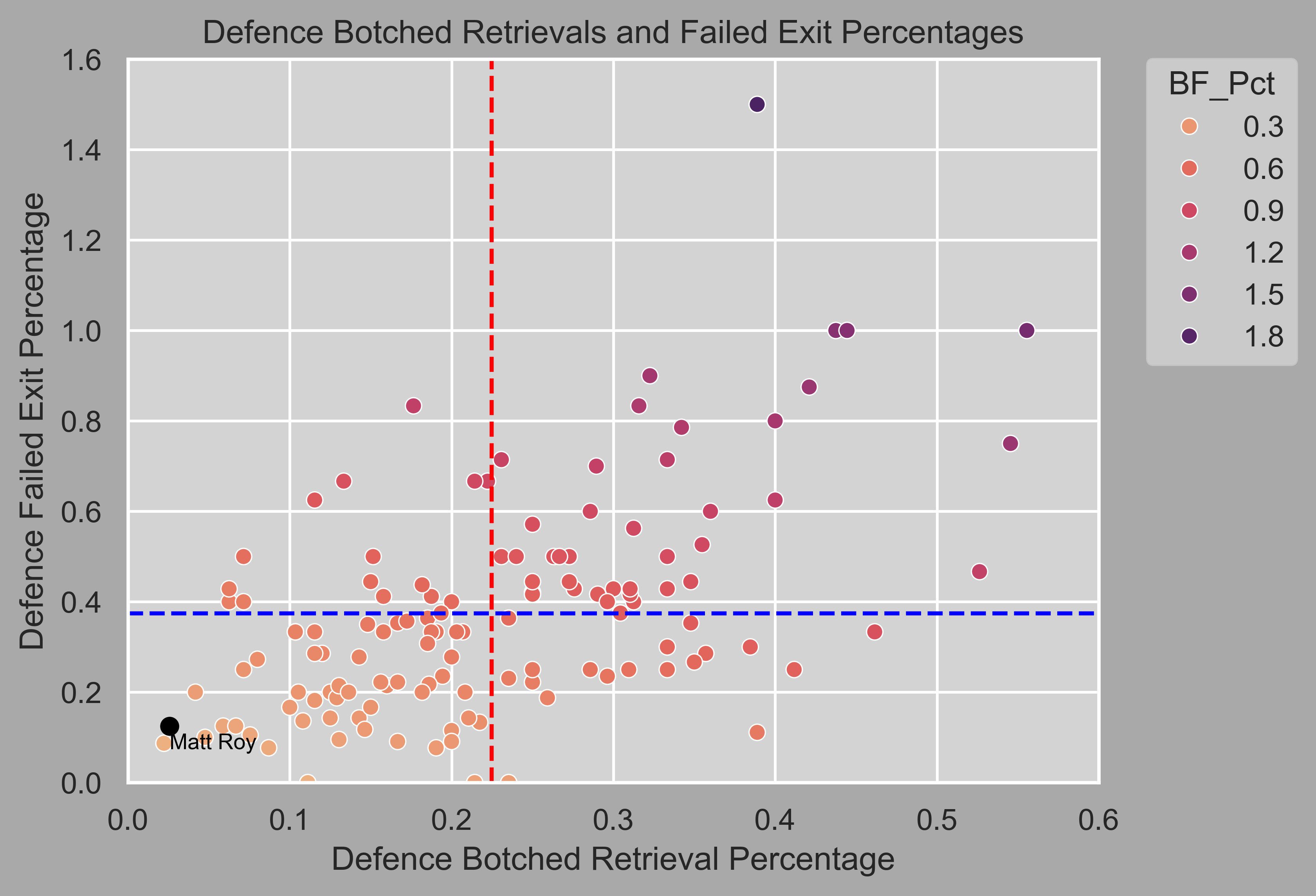
As mentioned earlier, the Caps are one of the best teams in this regard overall, but even in that context, Roy’s performance sticks out. He will never get much mention because he doesn’t produce many points, but he’s now working on his fifth straight season with a positive goal 5-on-5 goal differential and is one of the more reliable top-4 defencemen for the last half-decade.
5 – Is This the Year?
For years we’ve been hearing how Miro Heiskanen is a future Norris Trophy winner, but he has yet to finish top-5 in voting, let alone win. That may change this year as he has 17 points in 19 games, Dallas has outscored the opposition 13-10 with him on the ice, and he’s also among the best in the league at not botching retrievals or failing to exit the zone:
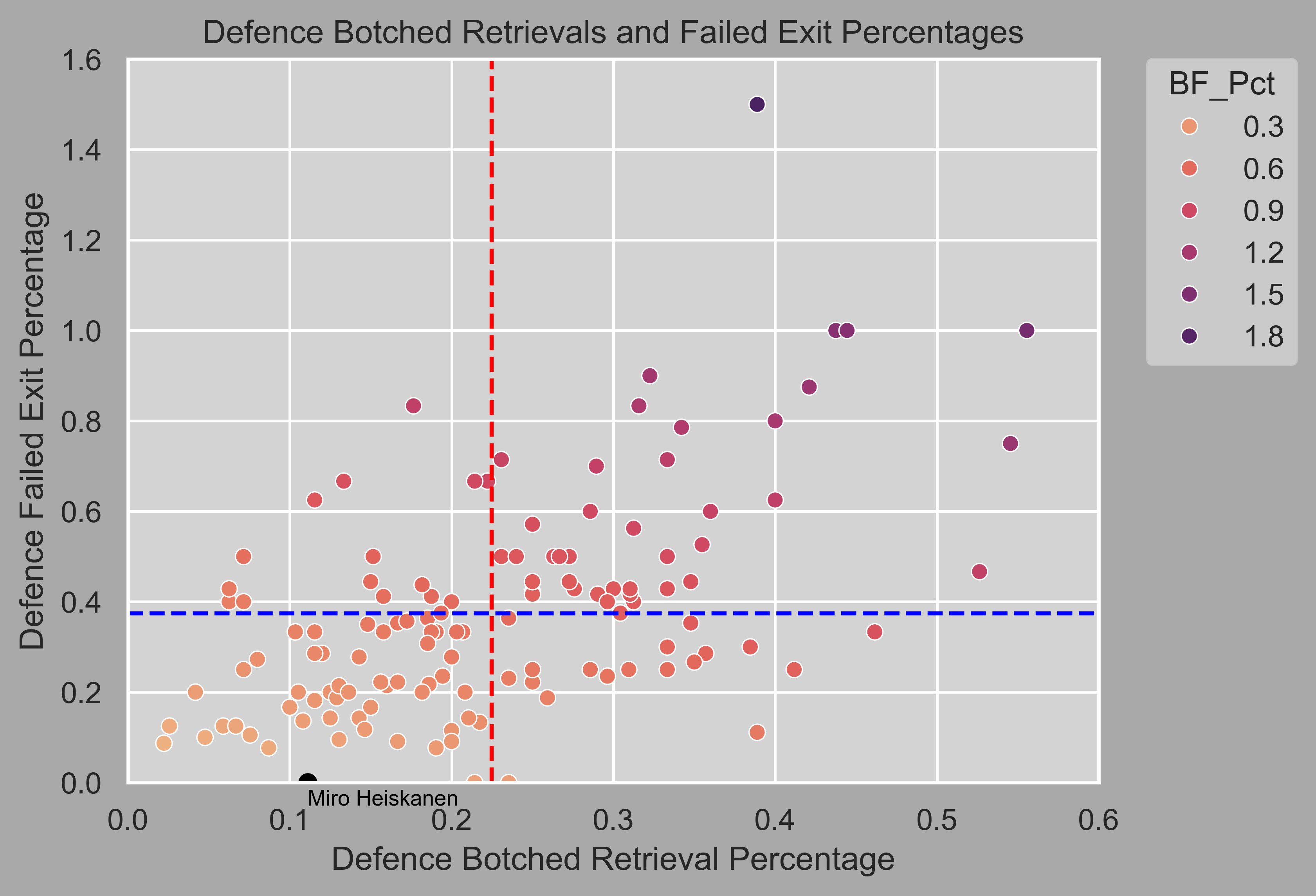
It may be hard to see, but that is Heiskanen way at the bottom, to the right of the 0.1 marker on the x-axis. That isn’t a mistake, either: he has yet to register a failed zone exit in his tracked game. In fairness, there are only three games in the tracking data, but zero failures and 15 successful exits are still wild stuff.
6 – The Ascension
Columbus’ Denton Mateychuk was one of the most highly touted defence prospects in the world a couple of years ago, and while his 2024-25 rookie season had some fine results, he also did that with a 103.5 PDO, which led all Columbus defencemen. That is combined shot/save percentage with him on the ice at 5-on-5, so there was some good luck (he had a -67 shot differential). That has not been the case in 2025-26 as he’s second in expected goal share by Columbus defencemen (behind Zach Werenski) at 56.1%, the team is outscoring the opposition 14-12 with him on the ice, and he has a great botch/fail percentage behind him:
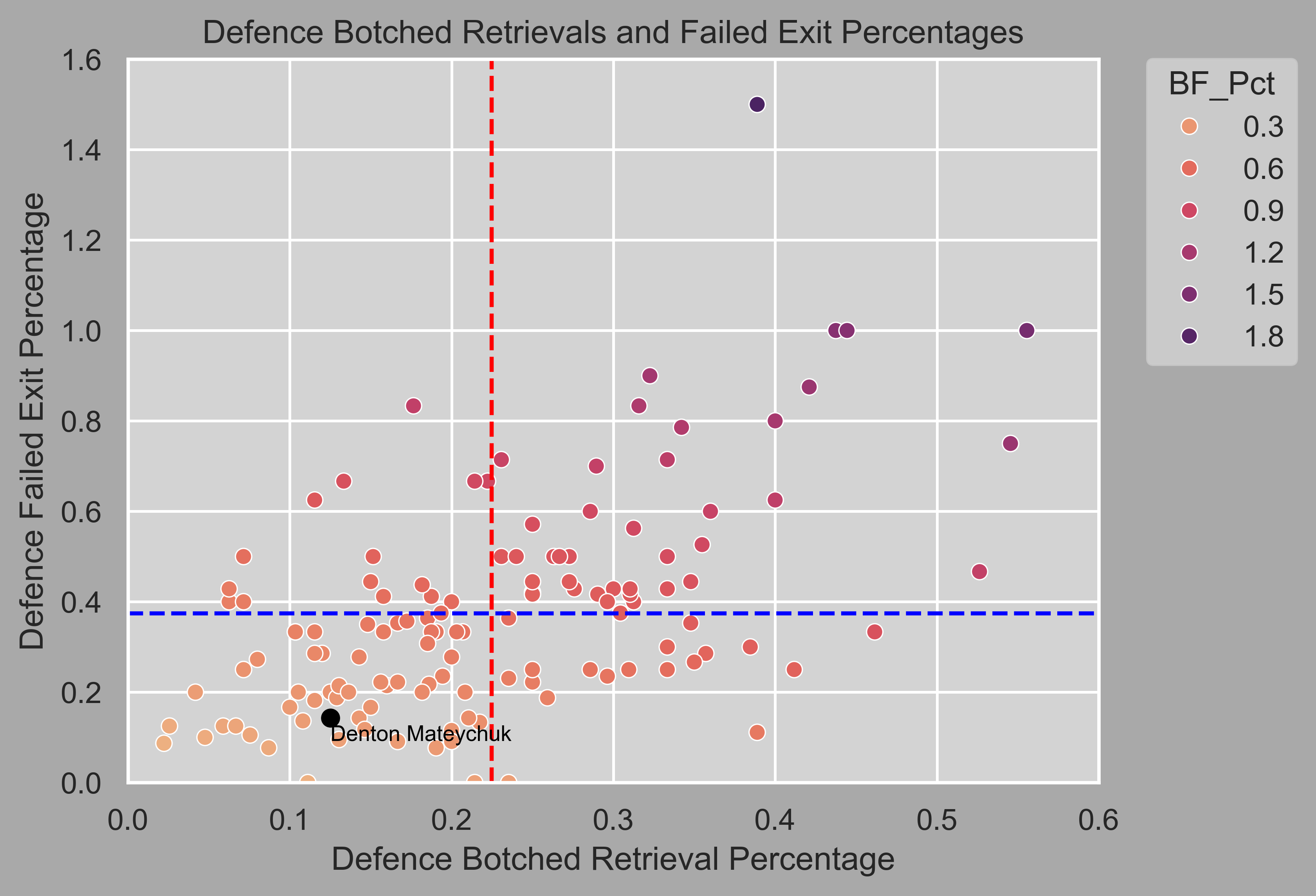
Importantly, Mateychuk’s expected goal share is still over 54% in his time without Werenski on the ice, so there are positives even without the Norris finalist from last year. Let’s see how this looks in four months’ time, but a very encouraging start to Mateychuk’s sophomore season.
7 – Down With The Grzelcyk
Spencer Knight has definitely been the story for the Chicago Blackhawks, but the performance of defenceman Matt Grzelcyk has been something else: After three straight years of poor play-driving numbers, he’s among the top defencemen at driving the play this season. Additionally, he’s thriving with a very low botch/fail percentage:
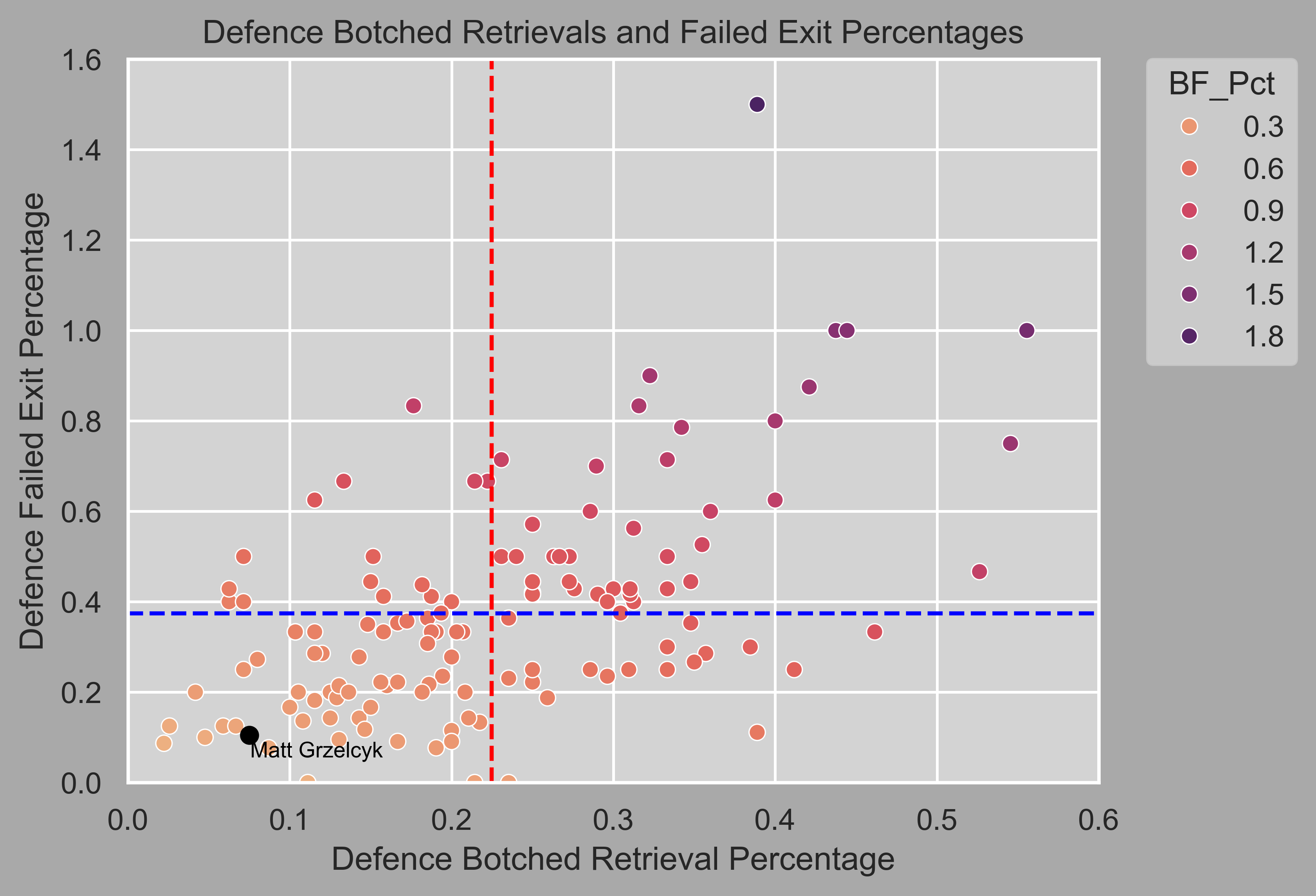
Grzelcyk has a sheltered role, rarely facing top opposition with lots of offensive zone faceoffs, so he’s being set up to succeed, but Chicago is +10 by goal differential with him on the ice at 5-on-5 so he’s crushing that role. There has been a bit of good luck, but there is also a tremendous performance underpinning that differential. Notably, he has the third-most ice time tracked in the sample at nearly 150 minutes, so this isn’t just a few games.
8 – Bert and Ernie
With over 235 minutes together, Brandt Clarke and Joel Edmundson have the most ice time as a Los Angeles defence pair by a wide margin. What makes that pairing so fun are the diametrically opposed totals of their respective botch/fail percentages:
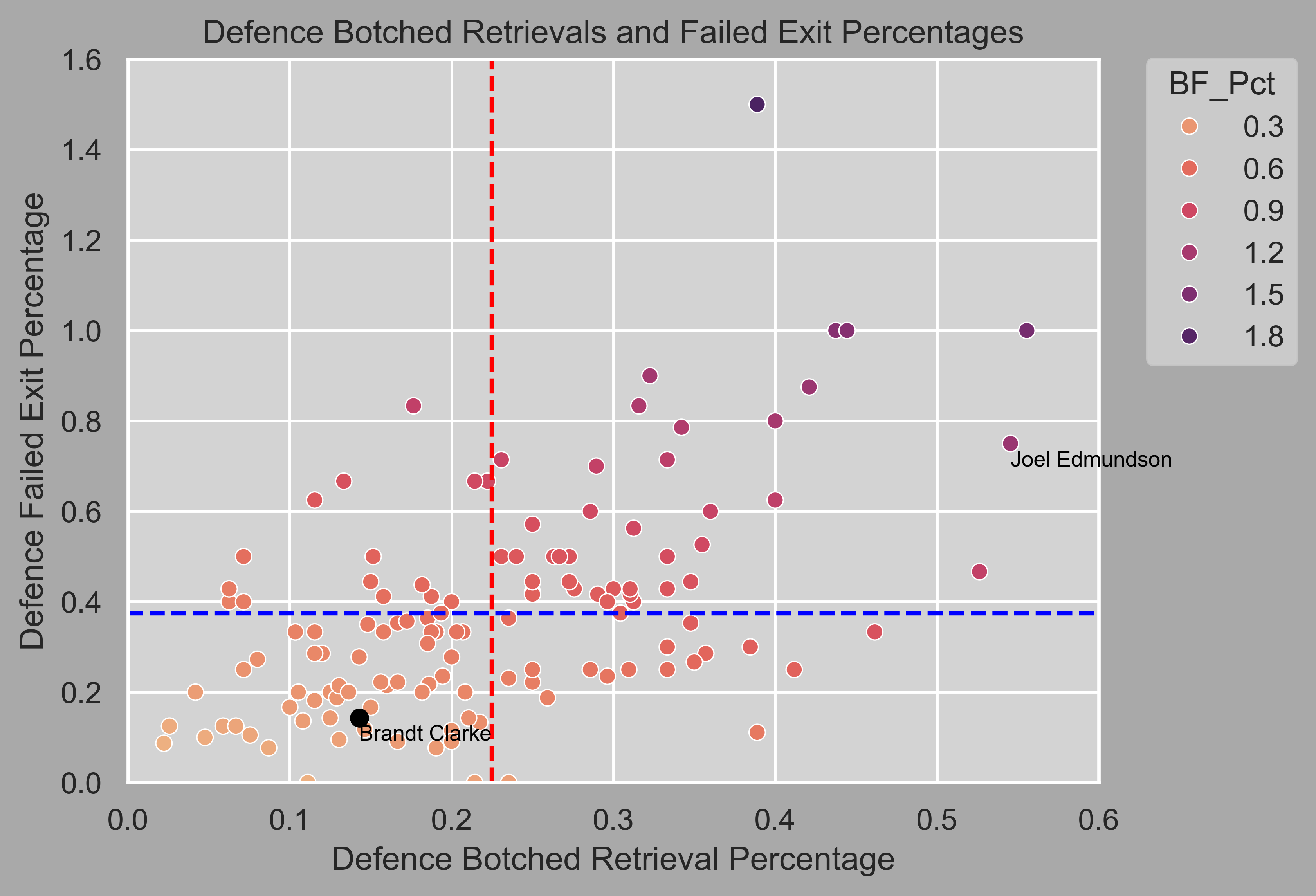
Clarke has a combined percentage of a low-end number-1 defenceman and Edmundson has the sixth-worst combined percentage of the 129 defencemen in the sample. With the injury to Drew Doughty on Saturday night, it will be very interesting to see how Los Angeles decides to use Clarke in the near-term because he has been the team’s best defenceman, but they rarely use him against the top competition of the opponent.
9 – End of the Road?
Ottawa is getting rolled over with defenceman Nick Jensen on the ice as they’re being outscored 17-11 in his 5-on-5 minutes, he is a distant last on their blue line by expected goal share, and he has one of the worst combined botch/fail percentages of the 129 defencemen in the sample:
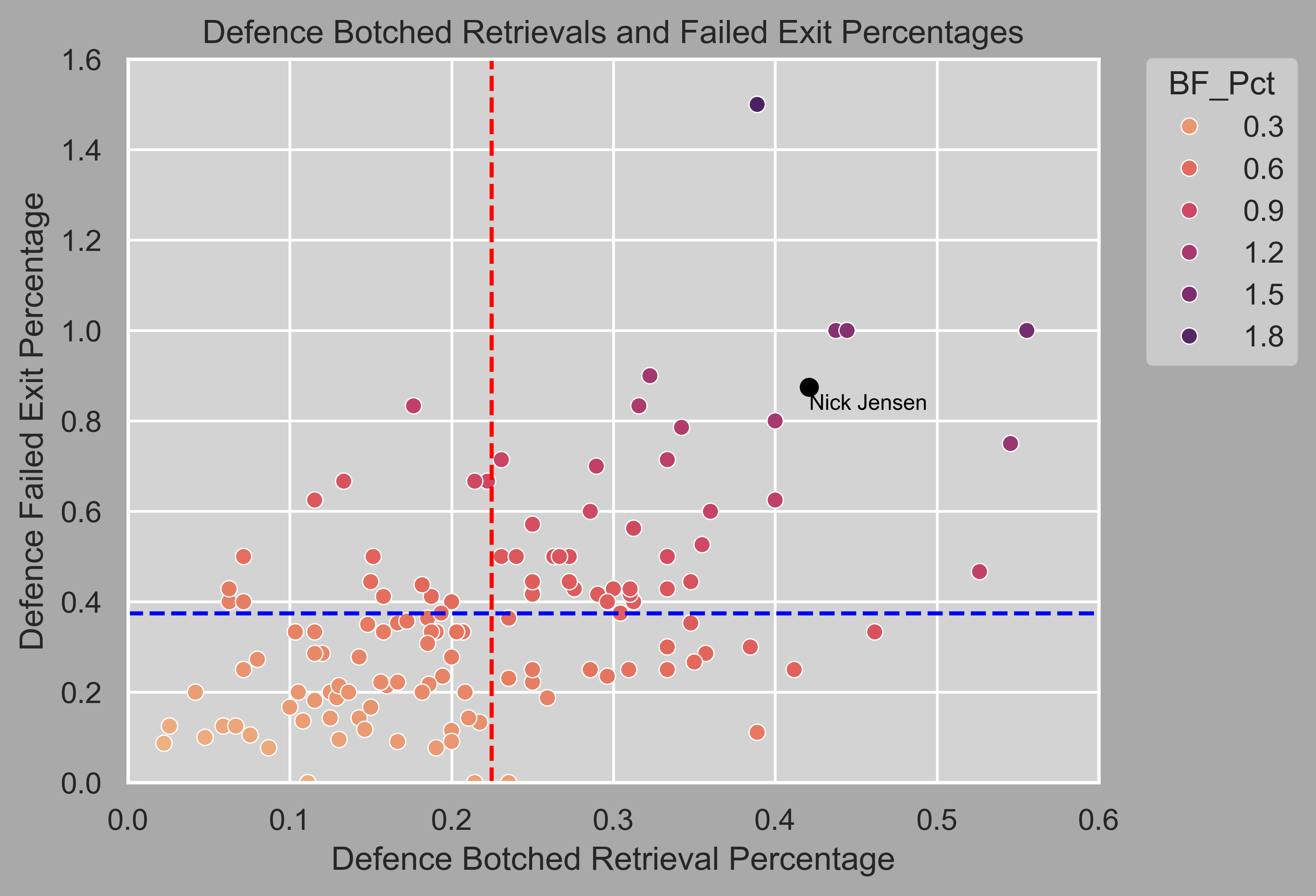
The Senators are in a tough spot because with Thomas Chabot injured, options are limited, but if Jensen can’t improve his play, they need to throttle back his minutes even more than they already have. It is just a question of whether they can, and whether they will.
10 – Reclamation Nation
The Florida Panthers have been one of the best teams at reclaiming the prior success of defencemen (Oliver Ekman-Larsson and Nate Schmidt come to mind), and they were hoping to do the same with Jeff Petry. Well, among their regular rearguards, he has the lowest on-ice goal rate (1.82), he’s the only one under a 50% expected goal share, they are minus-3 by goal differential in his minutes, and he is bottom-10 in the league by combined botch/fail percentage:
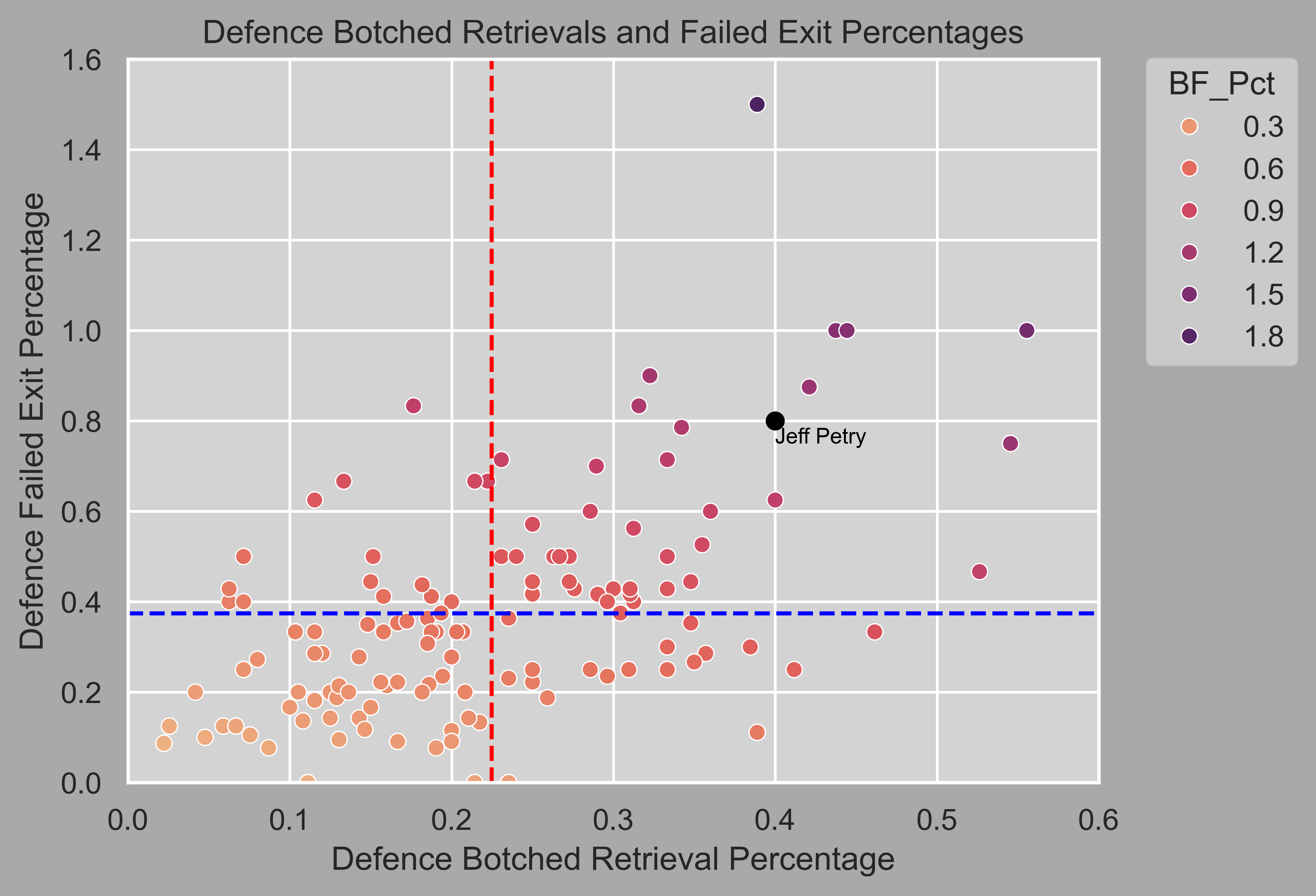
Petry is Florida’s number-6 defenceman, so he’s not going to make-or-break the whole roster, but without a big turnaround from here on out, they might have finally missed on a reclamation project.
Until next week.