10 Interesting (To Me) Stats For This Week - April 14
For teams to make deep playoff runs, they need contributions from the depth of their roster. Just think of Yanni Gourde for Tampa Bay’s pair of Cups, Bowen Byram’s outstanding postseason four years ago, or Evan Rodrigues in the 2024 postseason. Which depth players are poised to make a difference for their teams in the 2026 NHL Playoffs?
Because there are just 10 slots, we are going to take the top-5 teams from each Conference. It isn’t to say a team like Ottawa can’t make a run, but we only have so many spots.
Tracking data is from All Three Zones, and player data is from Evolving Hockey or Natural Stat Trick.
1 – Parker Kelly (Colorado Avalanche)
Kelly, who had 17 goals in 215 games from 2022-2025, might be the most unlikely 20-goal scorer this season. On top of the 20 goals is how important Kelly has been defensively. Using Evolving Hockey’s RAPM Model (adjusts expected goals for/against impact for usage, teammates/opposition, and so on), here are comparable forwards to Kelly this season among those who are on the ice for at least two minutes a game of short-handed TOI:
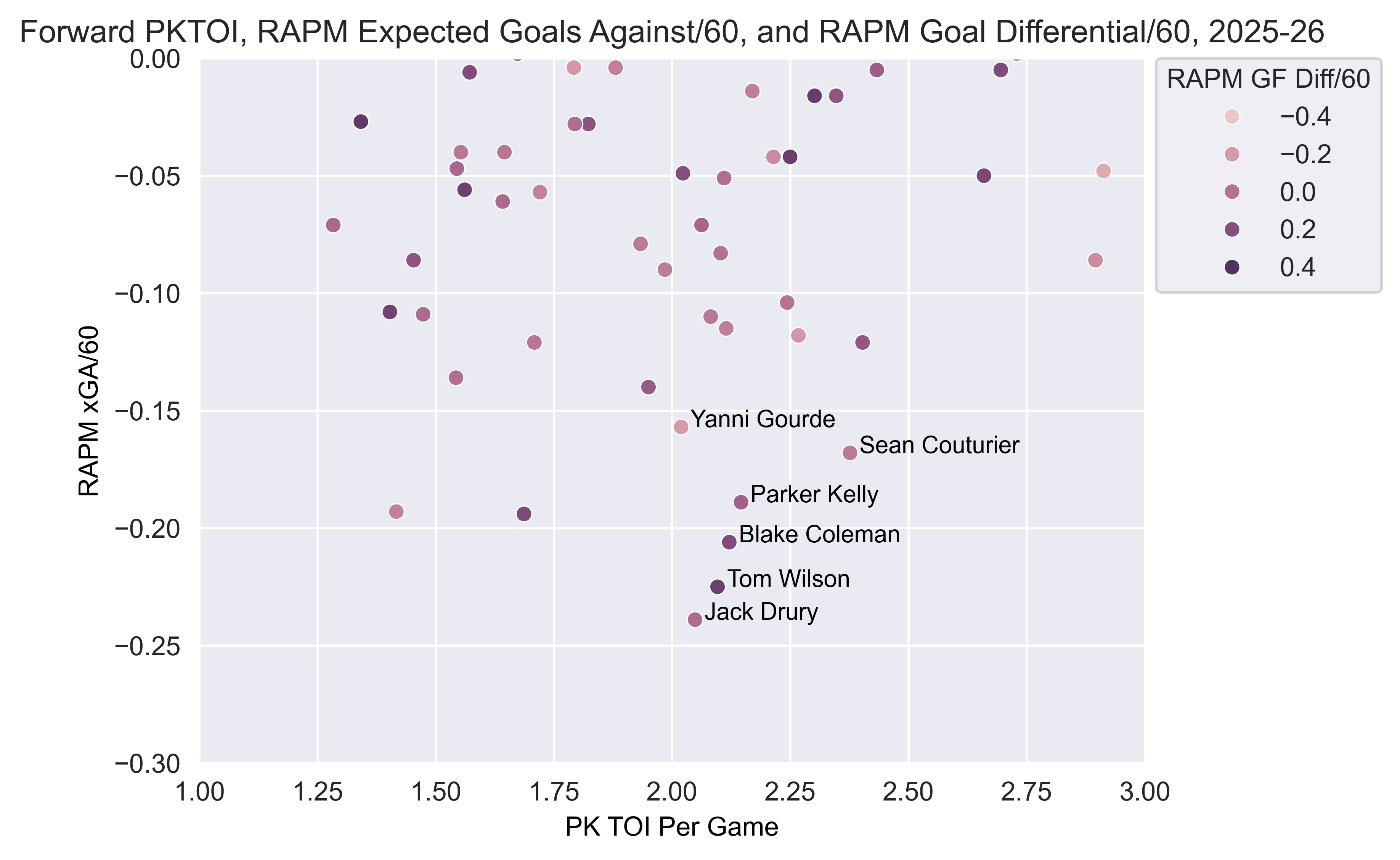
In fairness, Kelly’s goals against rates on the PK aren’t stellar, but he’s often on the first PK unit, which means facing the opposition’s top PP. If he can keep those units to league-average scoring rates, especially against top PP teams like Dallas or Minnesota, it’s a win for the Avs.
2 – Mark Jankowski (Carolina Hurricanes)
Jankowski plays for a Carolina team that thrives through its depth, and he’s brought stability to the fourth line. Among forwards with at least 1 minute per game of PKTOI, here are his comparables by expected goals and actual goals against per 60 minutes at even strength, and expected goals against/60 on the PK:
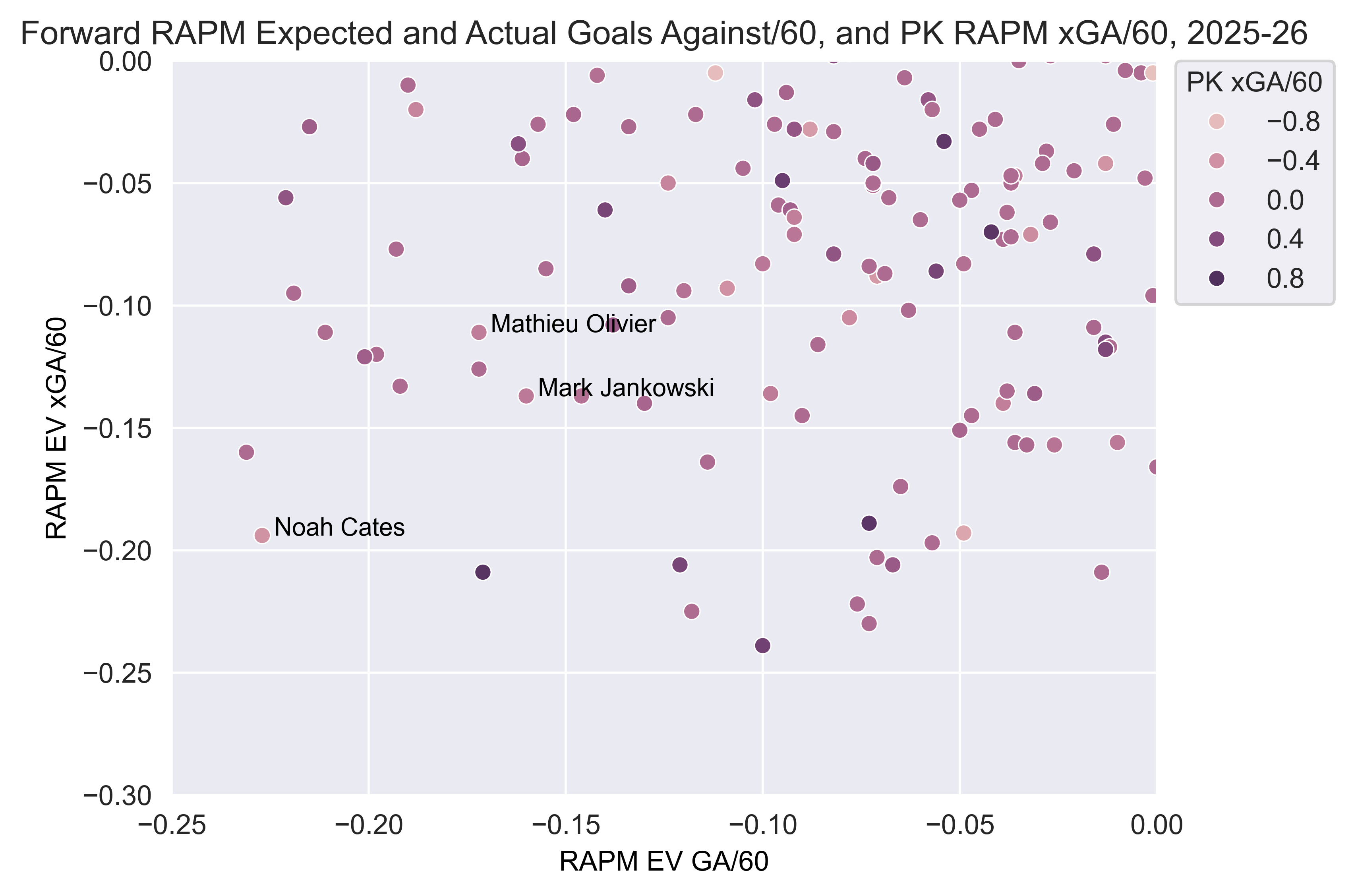
Carolina will need goaltending to not lose games to make a deep run. If they get that, they also need contributions from all four lines. The stability Jankowski brings to the fourth line can create positive impacts, and that can be the difference in a tight playoff series.
3 – Jamie Benn (Dallas Stars)
We know how good the top of the Dallas roster is, but Benn and his line mates will need to make the most of their limited role to help the Stars make a deep run. Benn has been one of the most efficient offensive forwards this season as he’s 1 of 6 attackers in the 84th percentile by fewest shot attempts per expected goal and goals per 60 minutes at 5-on-5 (minimum of 600 minutes):
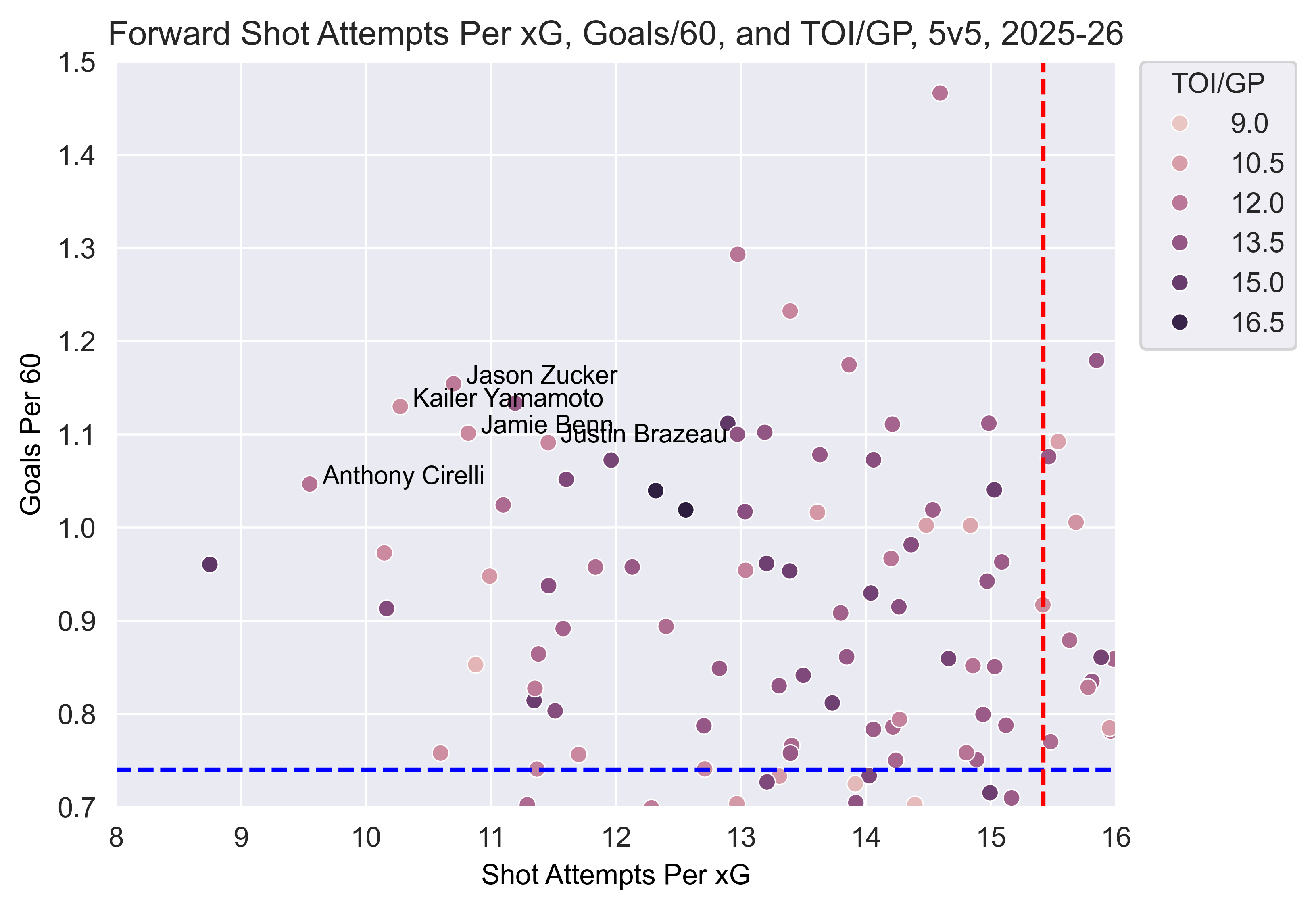
The other names are Anthony Cirelli, Jason Zucker, Justin Brazeau, and Kailer Yamamoto. All those players are from teams heading to the playoffs, and Benn (and his line mates) will need to produce in those limited minutes if/when the top guys go through a cold streak if the Stars want a Stanley Cup.
4 – Zach Benson (Buffalo Sabres)
Benson’s third season hasn’t gone to plan, and it’s been partly derailed by injuries. However, like Benn, he’s showed very good offensive efficiency with solid defensive play. Among forwards with a positive impact defensively by Evolving Hockey’s RAPM model, here are comparable names to Benson by shot attempts per expected goal and assists per 60 minutes at 5-on-5 (minimum 700 minutes):
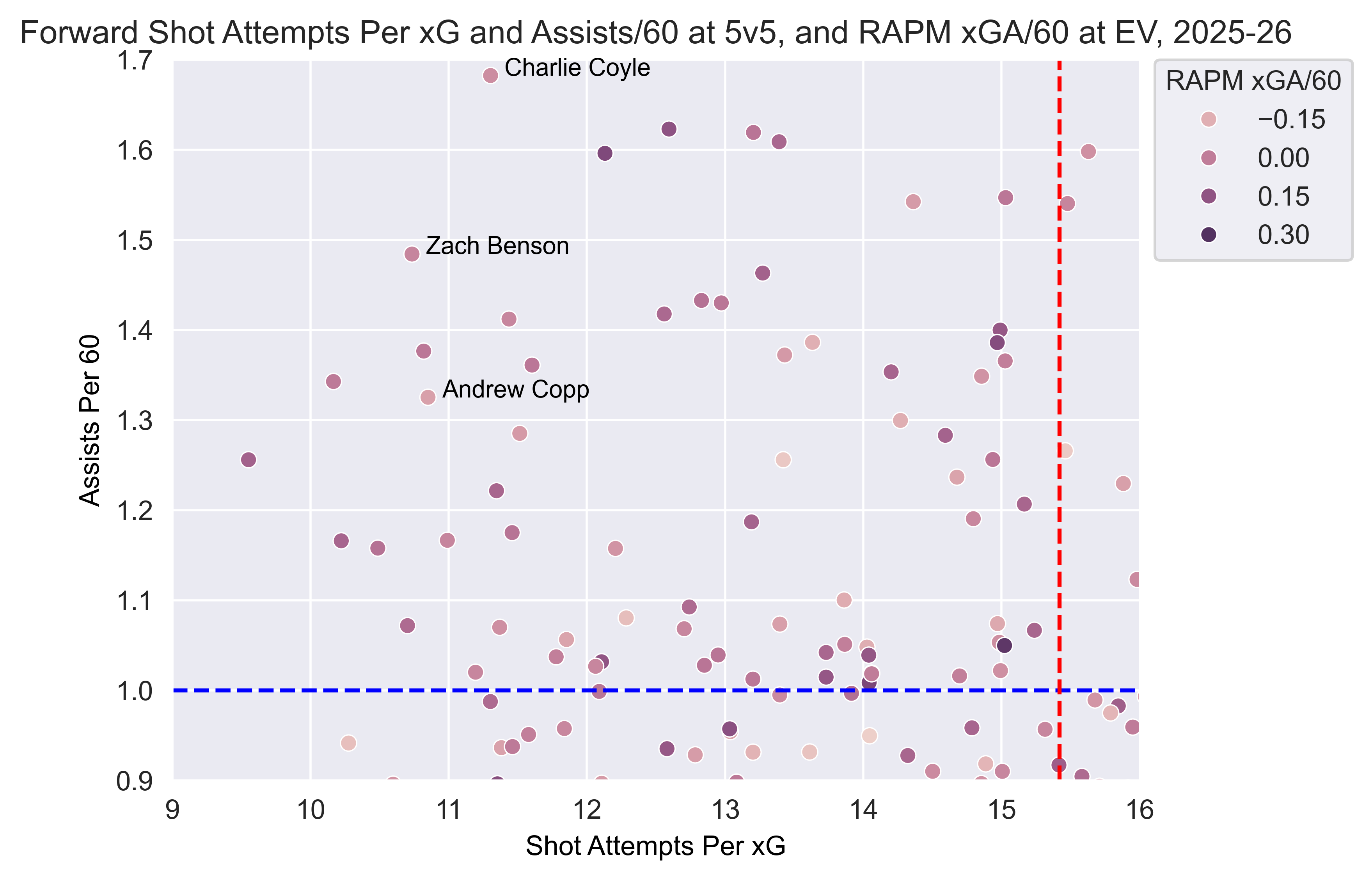
Remember that this is a down year for Benson and he compares to two of the better two-way depth forwards over the last couple of seasons. His performance has improved since the Olympic break, so maybe some rest did him good, because he can make a deep Buffalo forward group even deeper with that kind of play.
5 – Joe Veleno (Montreal Canadiens)
There are two things that are true about Veleno:
· He struggles to generate offence or create plays for his teammates.
· He is stellar defensively and is a good penalty killer.
Montreal tends to take a lot of penalties and typically does not have a good penalty kill. That is a problem when facing teams like Tampa Bay or Buffalo and is where Veleno can make a difference. Among forwards with 600 EV minutes, 80 PK minutes, and above-average expected goals against impact on the PK, here is where he ranks by the RAPM’s model of EV goals against/60 and PK goals against/60:
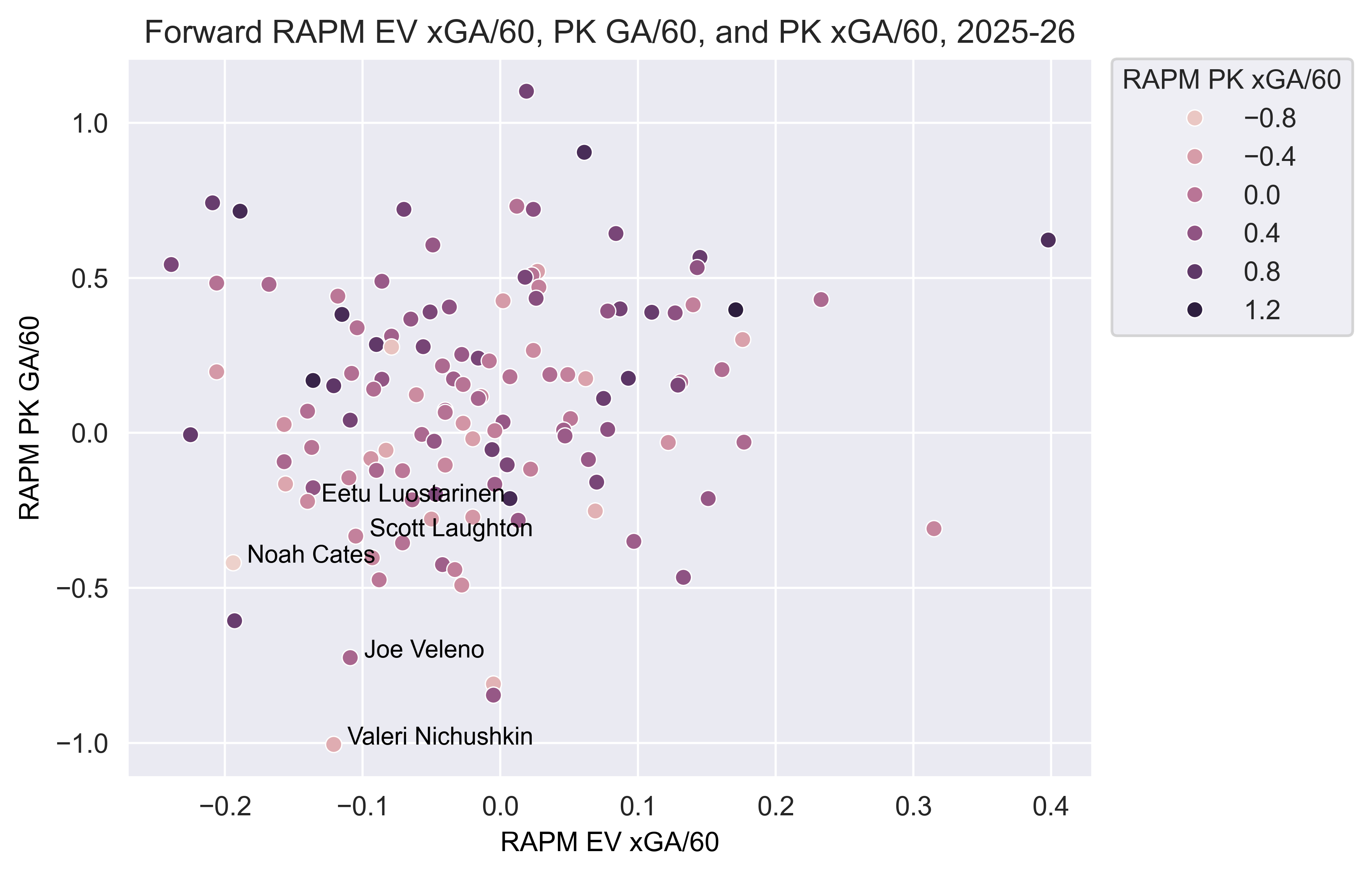
Being nestled somewhere between Valeri Nichushkin and Noah Cates is not a bad place to be defensively. If Montreal wants to go deep, they can’t bleed goals with their fourth line or PK on the ice, and Veleno can be impactful there.
6 – Charle-Edouard D’Astous (Tampa Bay Lightning)
D’Astous has been a revelation for the Lightning as their injuries on the blue line forced him into a regular role where he’s not only survived but thrived. Using the tracking data and isolating defencemen with an above-average rate of assists on teammate scoring chances, here are his comps by entries per 60 minutes and Botch+Fail% this season:
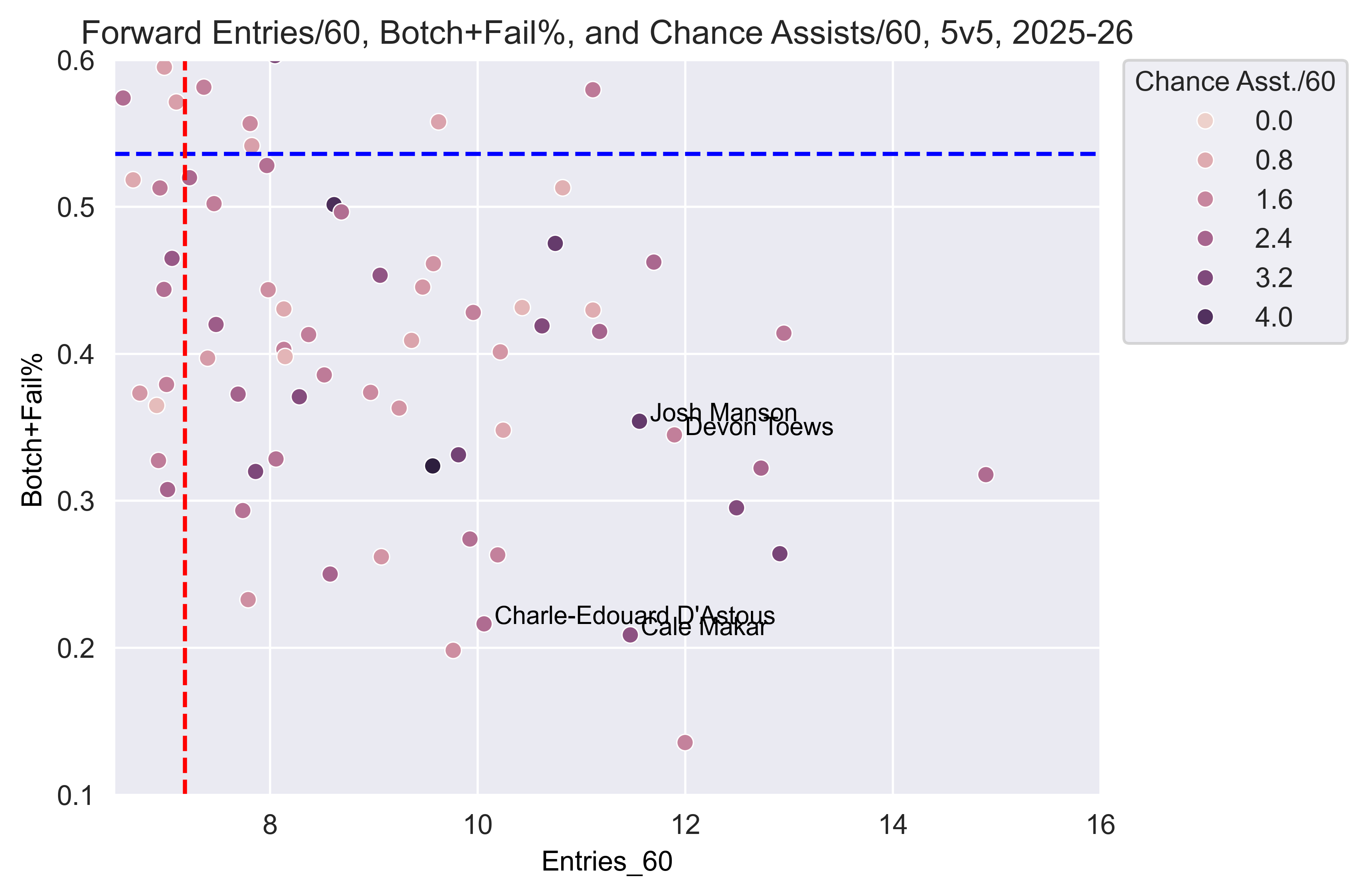
Low Botch+Fail% rates indicate defencemen who can help their team create offence, so being on a list with a bunch of Colorado defencemen shows a tremendous offensive season. If the Lightning want to create goals outside of their two lines, D’Astous will have to be an engine for the depth.
7 – Jared Spurgeon (Minnesota Wild)
The pair of Quinn Hughes and Brock Faber draw the most attention, but if Minnesota wants to survive their first two rounds, they need stellar contributions from Spurgeon’s second pair. The good news is Spurgeon and defence partner Jonas Brodin have been exceptional defensively:
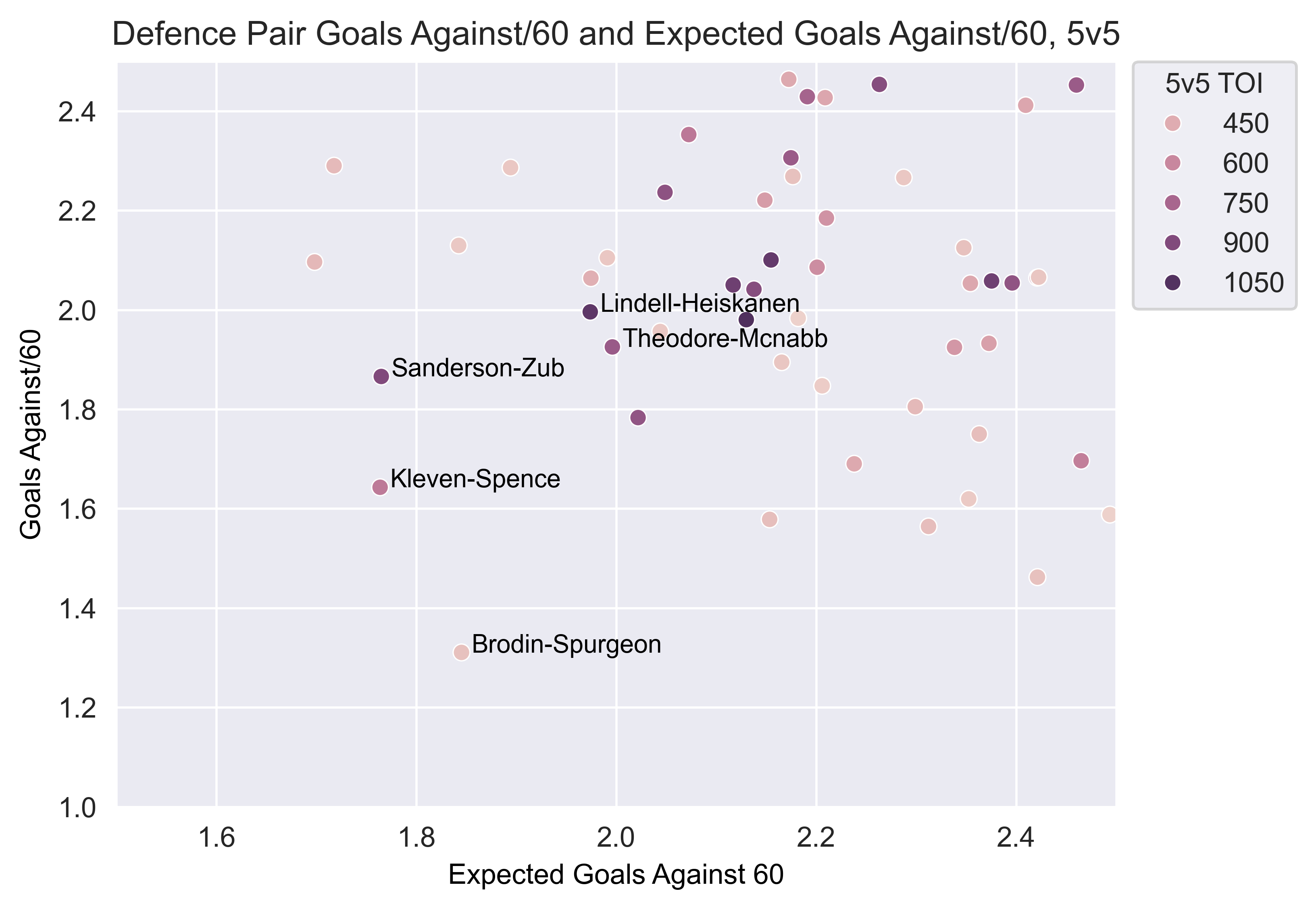
Those are all the defence pairs this season with at least 300 minutes together at 5-on-5 (116 pairs, per MoneyPuck) and are below 2.0 goals against/60 and 2.0 expected goals against/60. There is a pair from Vegas, two from Ottawa, the top pair from Dallas, and this pair from Minnesota. If they can shut down the top lines from Dallas and Colorado, it will go a long way to the Wild earning their deepest playoff run in over 20 years.
8 – Samuel Girard (Pittsburgh Penguins)
As he’s done for much of his career, Girard has been quietly going about his business since the trade to Pittsburgh. Post-Olympic break, here is where he stands by goal share and expected goal share relative to teammates at 5-on-5:
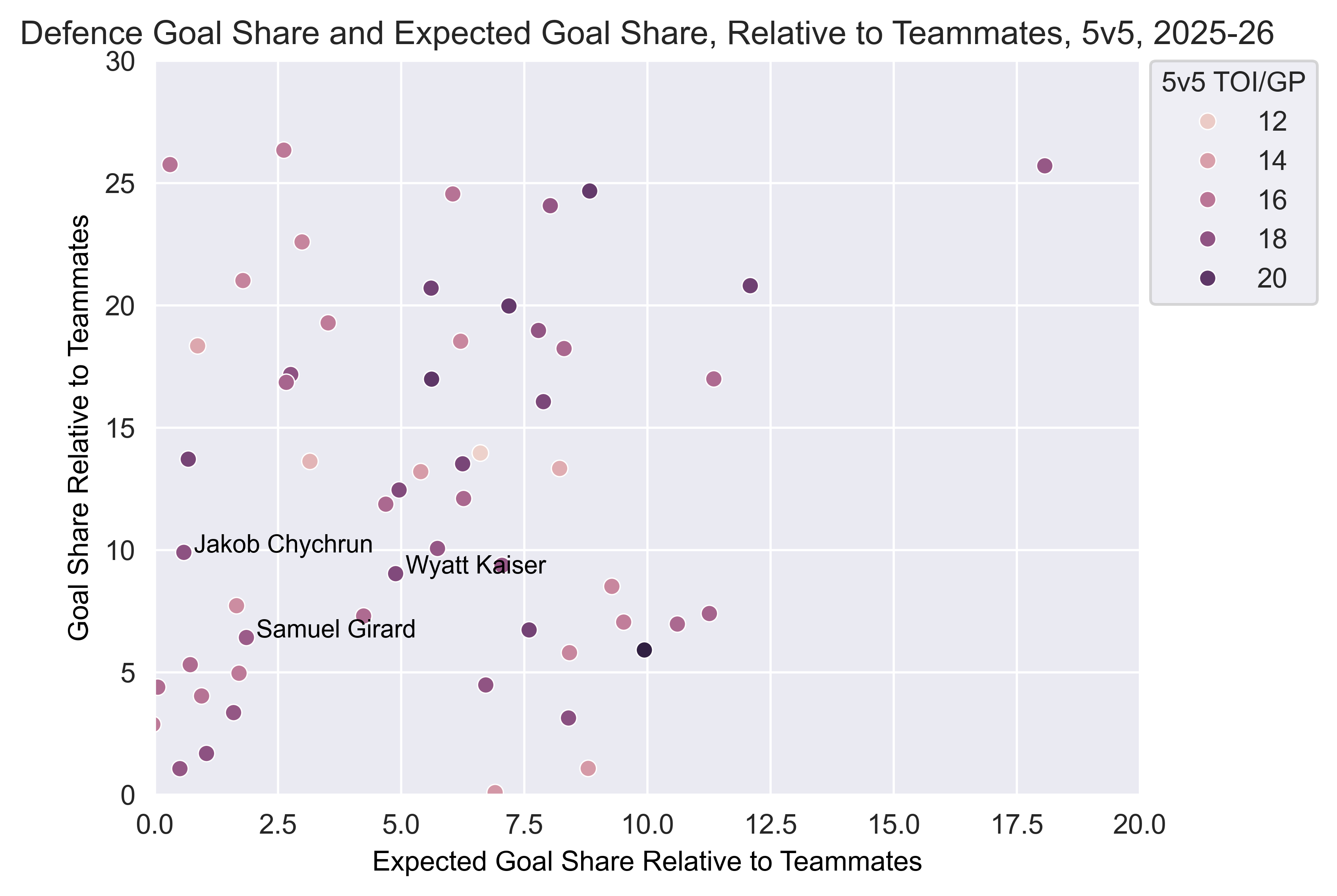
We see top defenceman Jakob Chychrun and a rising blue liner from a rebuilding team. What is key for Girard is he has lifted Kris Letang’s results tremendously, and if Girard keeps driving that pair to positive impacts, that is a big development for a Penguins team that needs more from Letang.
9 – Brett Howden (Vegas Golden Knights)
In the section on Jamie Benn, we saw a slew of forwards from playoff teams who’ve had very good goal-scoring rates with efficient shot attempts/expected goal rates. What Howden can do is a bit different from those players because among players with an efficient shot attempts per expected goal rate, here is who Howden compares to by goals/60 and hits/60:
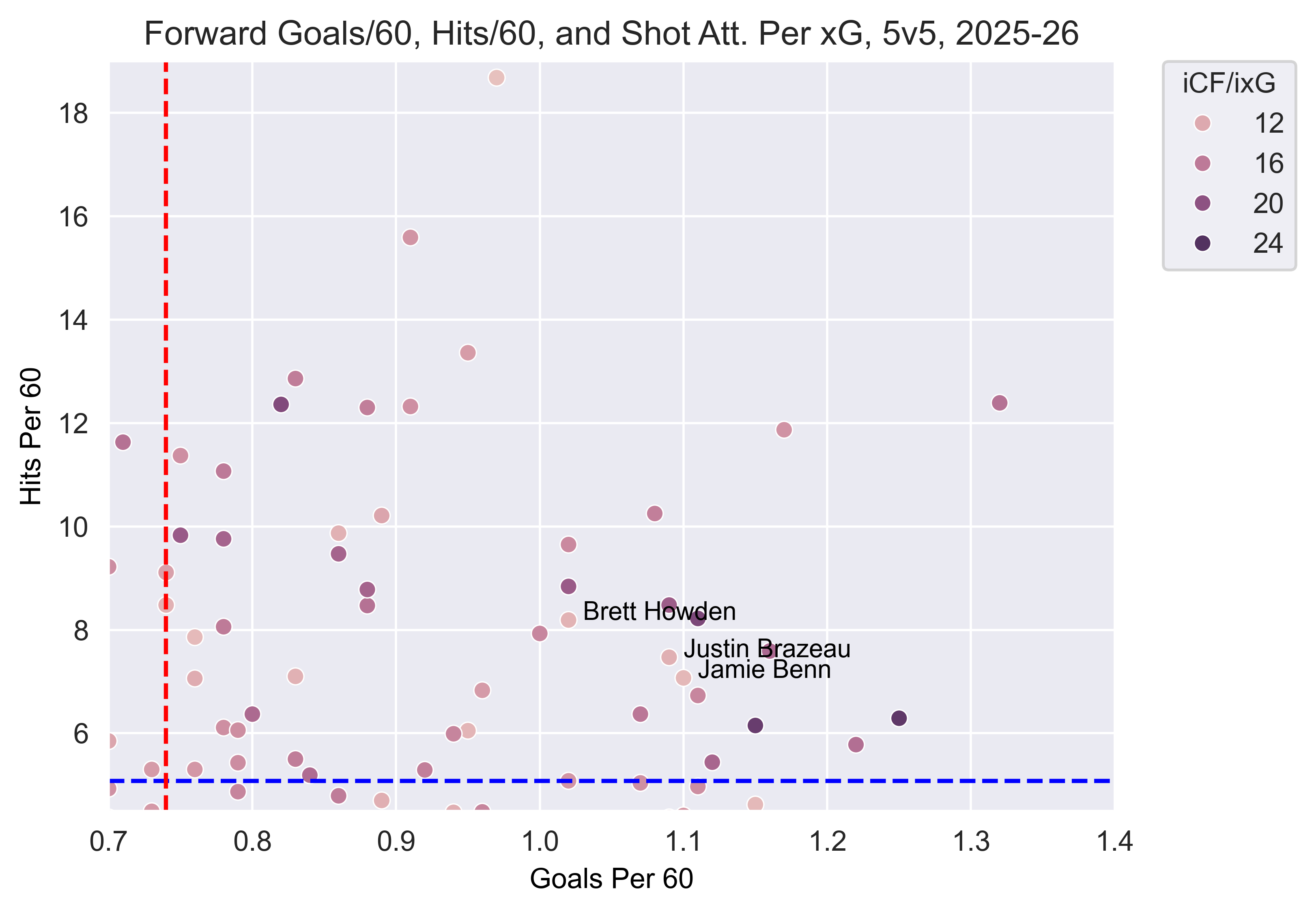
These are players we often think of as built for playoffs: physical goal scorers. Each will have to contribute in both areas if their teams want deep runs, and Howden will need a couple big games to pick up Vegas’ stars whenever they get shut down.
10 – Michael Carcone (Utah Mammoth)
Carcone has been covered a few times this season in this newsletter, so let’s do one more. Utah has established two very good scoring lines, but their third line has been solid this season. Among forwards with an above-average goals/60 rate at 5-on-5, here is where Carcone stands by shots and hits per 60 minutes:
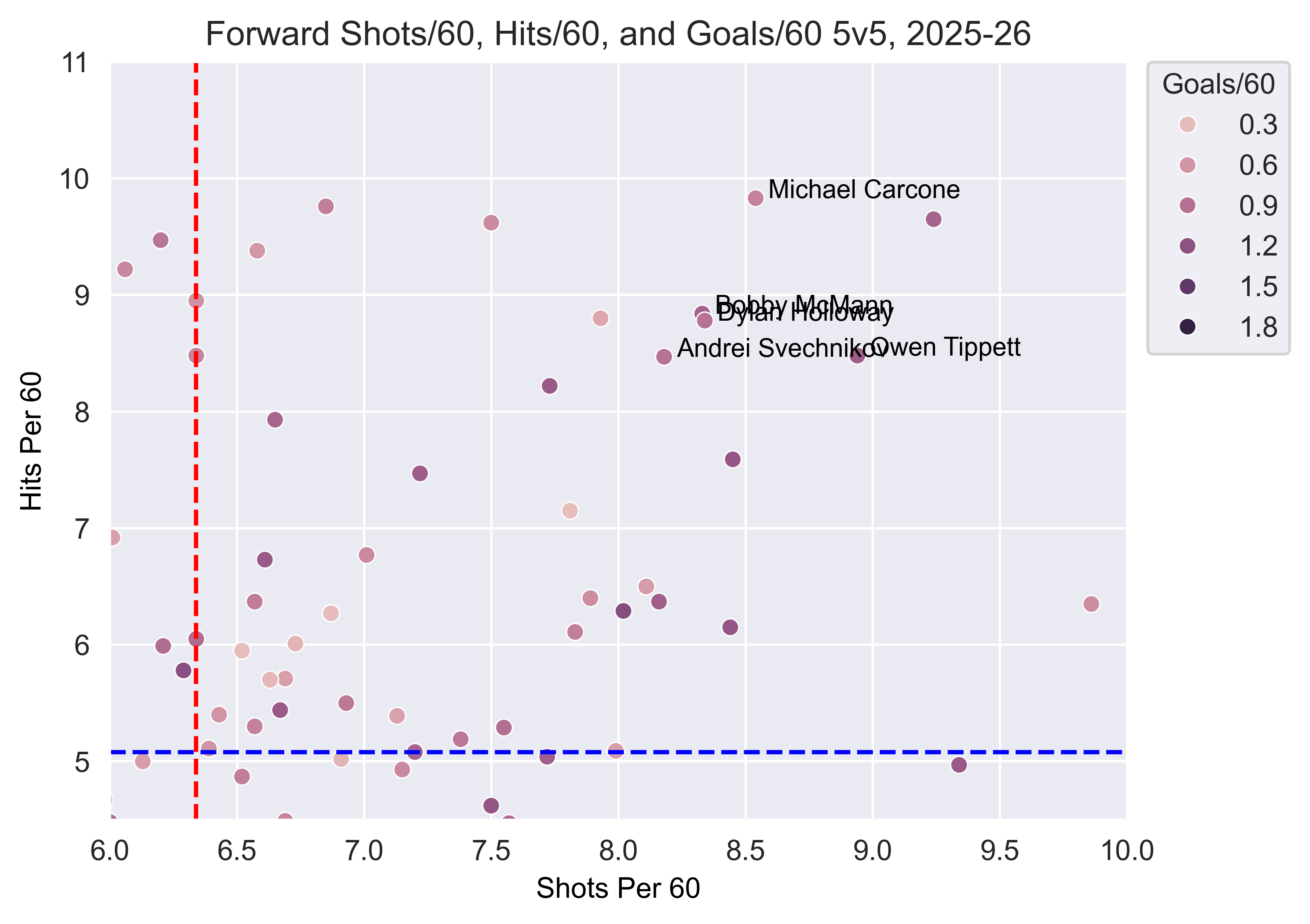
The names overlap but they are Bobby McMann, Dylan Holloway, Andrei Svechnikov, and Owen Tippett. That is a great group for Carcone and highlights the mix of physical play and offensive ability he brings to Utah’s depth and can help lift Utah in games where the top two lines go quiet.
Until next week.