10 Interesting (To Me) Stats For This Week - June 30, 2026
Welcome back to another week of ’10 Interesting (To Me) Stats’. Tomorrow (July 1st) marks the beginning of NHL free agency, so today, we will review some of the top remaining free agents, using tracking data from All Three Zones. We will use just last two seasons and compare free agents to the average of their respective team(s) and position to see whom they measure up with across the league. It helps identify how some players can help emulate what others around the league have done while taking the team quality into account.
*Reminder: This newsletter will move to Ghost in the coming months, so to ensure you keep getting them, be sure to subscribe there. Just follow this link.
1 – Anders Lee
Last month, Lee was in a ’10 Stats’ newsletter where his evolution as a playmaking forward was discussed. When we look at his rate of assists on teammate scoring chances, his individual scoring chances, offensive contributions off both the rush and cycle, as well as his zone entries and how often those entries are carried in, he compares very well to Tomáš Hertl:
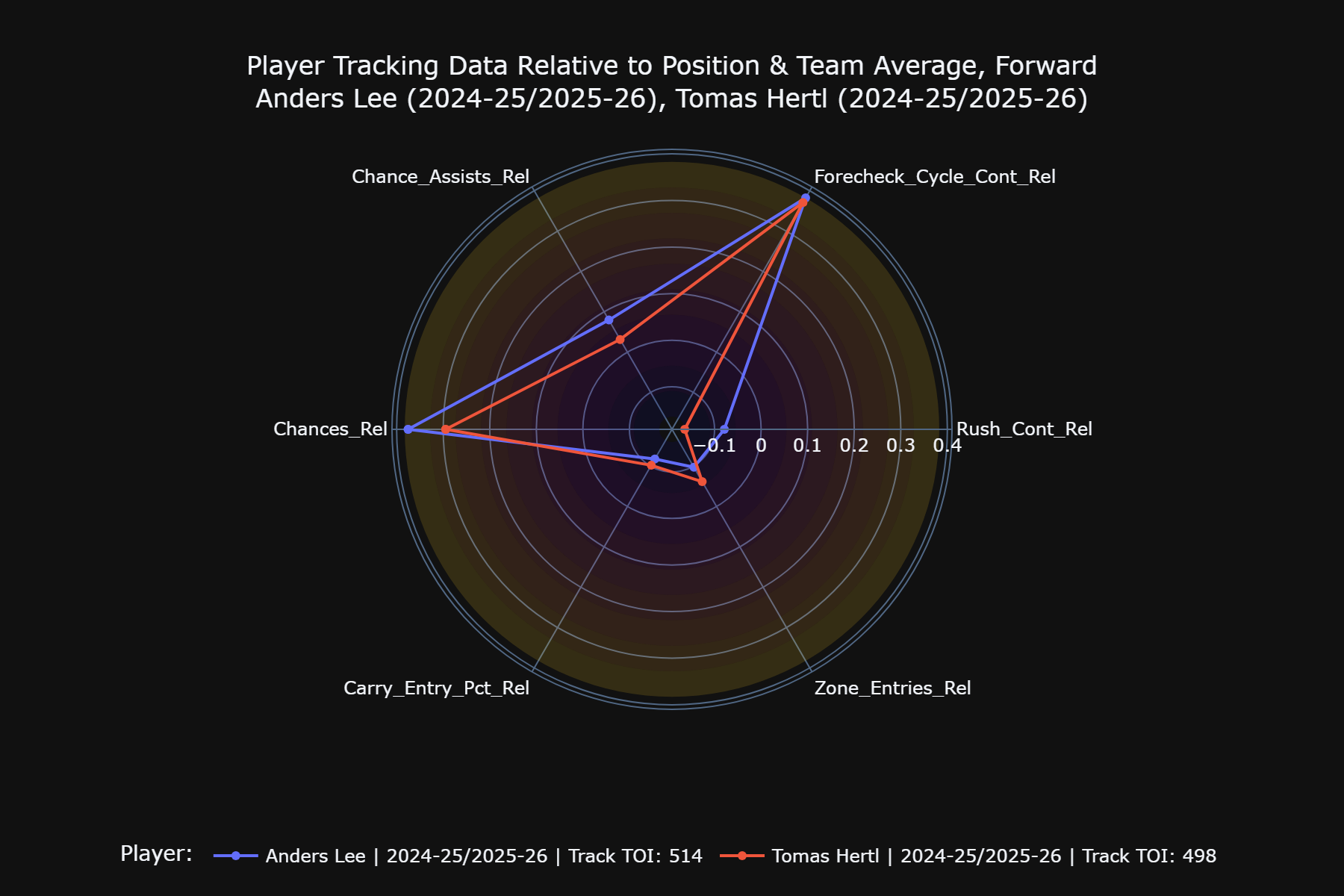
Lee is a winger and three years older than Hertl, but that also means he should be cheaper and available on a shorter-term contract. Players of Lee’s age (36 in a few days) can decline quickly, but he has shown no signs of slowing down yet and plays a power-forward style that teams covet.
2 – Mats Zuccarello
There is a bit of a good news/bad news situation here. The good news is that playmaking stats like chance assists and high-danger passes remain very strong for Zuccarello. The bad news is that he doesn’t contribute much volume in either rush or cycle offence, and that makes him comparable to a forward who was dumped by Anaheim this past season:
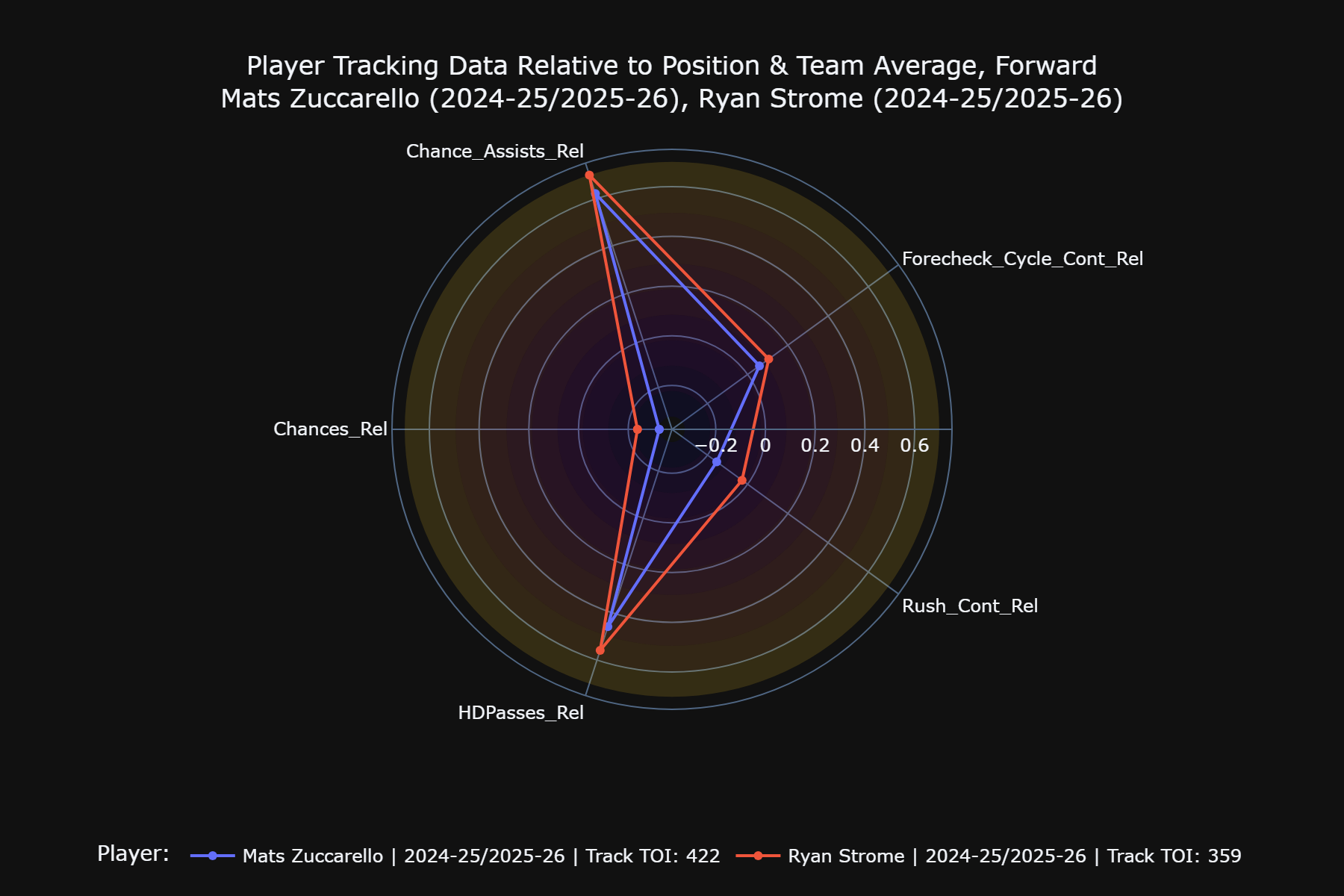
Zuccarello being such a good playmaker will draw attention from a lot of teams in free agency, and it is a skill that tends to age better than most. The question is what impact he has if he goes to a team without an elite offensive forward like Kirill Kaprizov, loses a bunch of ice time, or both.
3 – Mason Marchment
Marchment turned 31 years old a few weeks ago, so that he is much younger than Lee and Zuccarello might make him the top free agent forward left on the market. The interesting part of his profile is it maps reasonably well to former teammate Conor Garland:
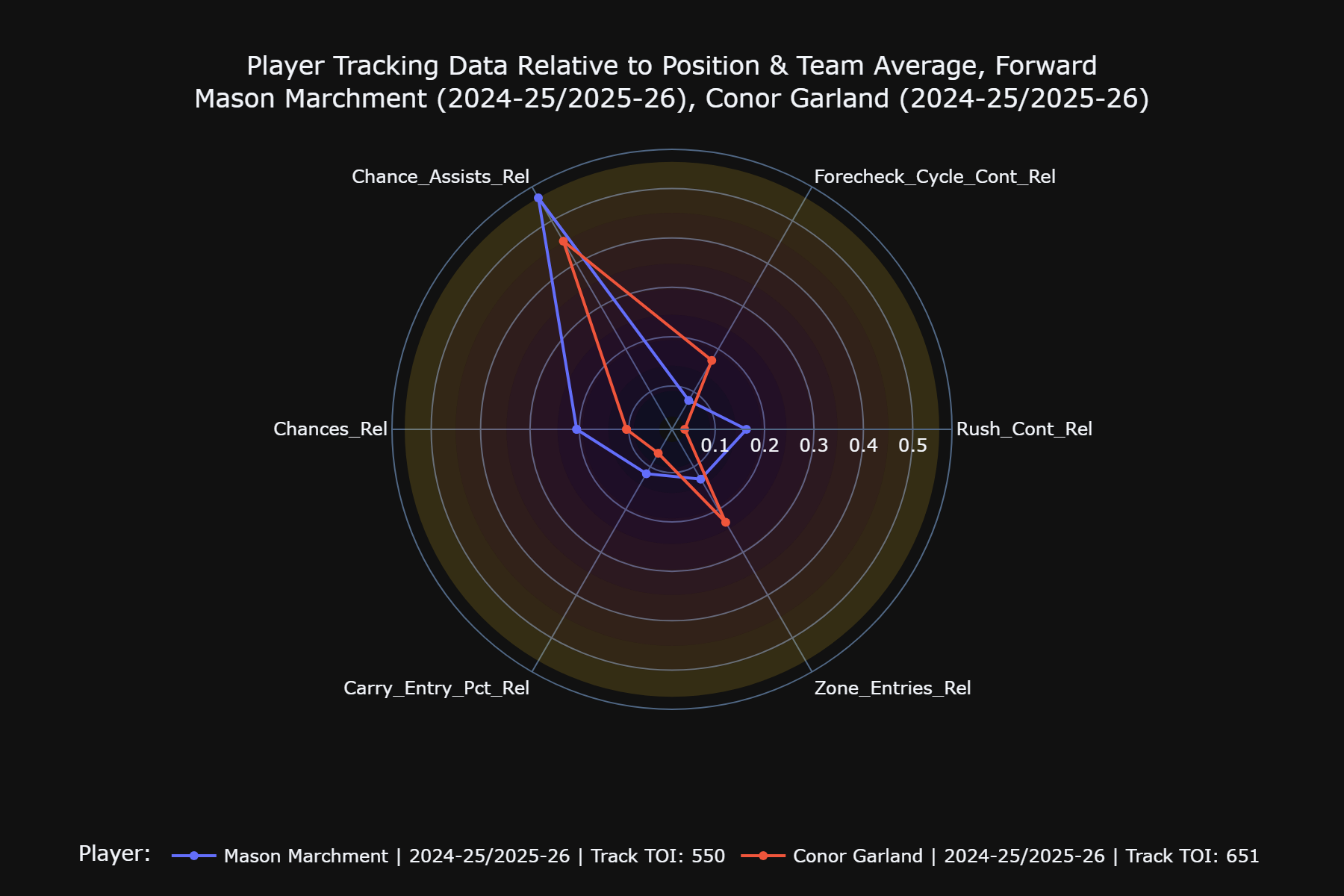
The difference between the two is that Marchment is 6’5 while Garland is 5’10. That Marchment can rip scoring chances so well while pairing that with very good rates of chance assists and high-danger passes makes him a true dual-threat forward. That he’s a dual-threat forward who is also a large human makes him a coveted winger contending teams want on their roster.
4 – Viktor Arvidsson
Generally, Arvidsson is a player who can tip the scales both by expected goals and actual goals, per Evolving Hockey, he just has trouble staying on the ice, playing at least 70 games once in his last six 82-game seasons. Anyone who has watched him knows that he’s a shooter, not a passer, but what might be surprising is the winger Arvidsson’s offensive profile compares to:
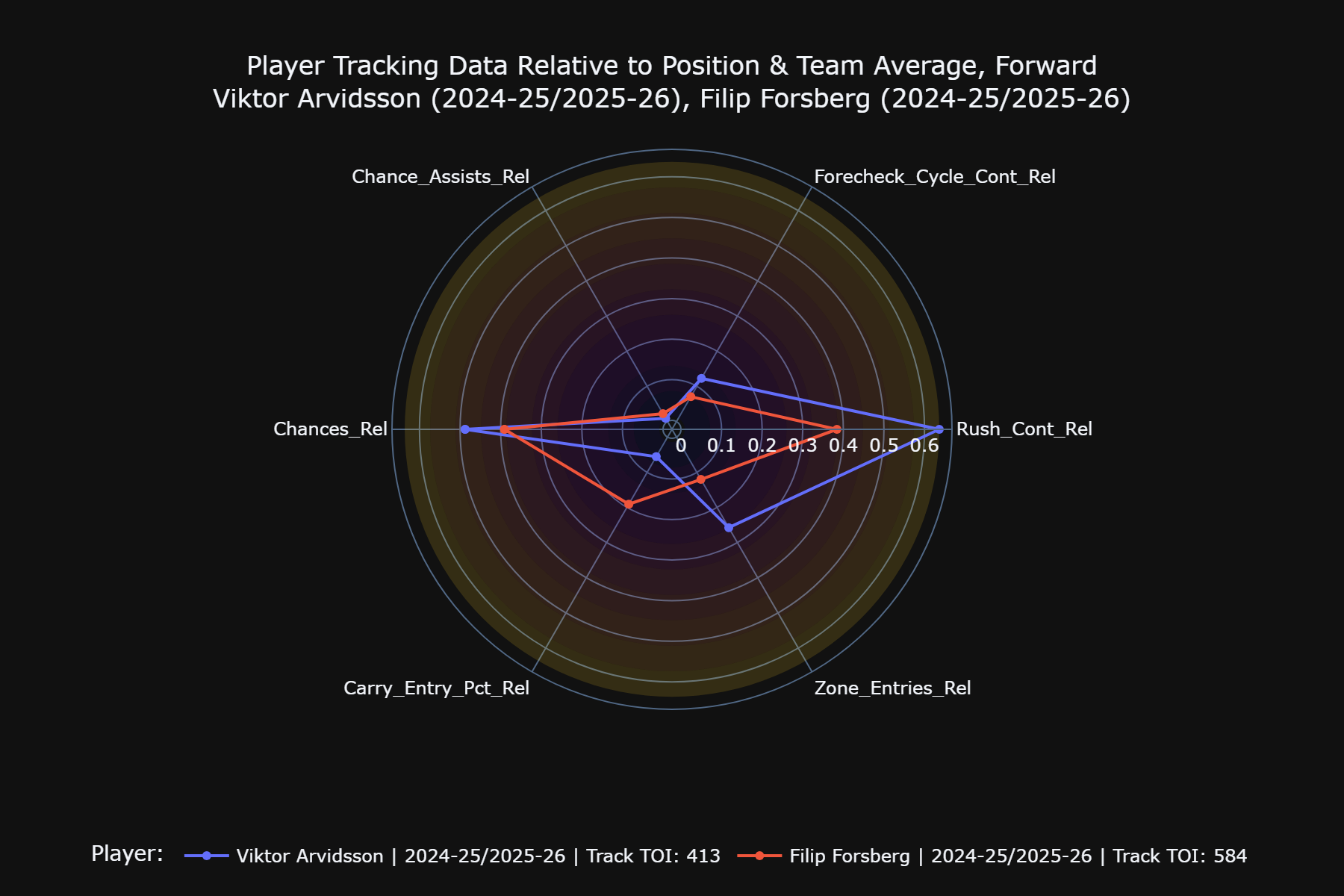
The big difference is durability. Forsberg has played all 82 games in three straight seasons, averaging 18:48 per game in TOI. Forsberg stays in the lineup and plays nearly four more minutes per game doing so. Arvidsson can help boost the depth scoring of almost any team – as this past year in Boston showed – but his health issues remain at the forefront.
5 – Ilya Mikheyev
What the tracking data won’t show is Mikheyev’s strength, and that’s his defensive game, where he’s very good both at even strength and on the penalty kill. The problem is the tracking data shows him as worse than his teammates in all the key numbers we’ve looked at so far, and the player he compares to isn’t flattering:
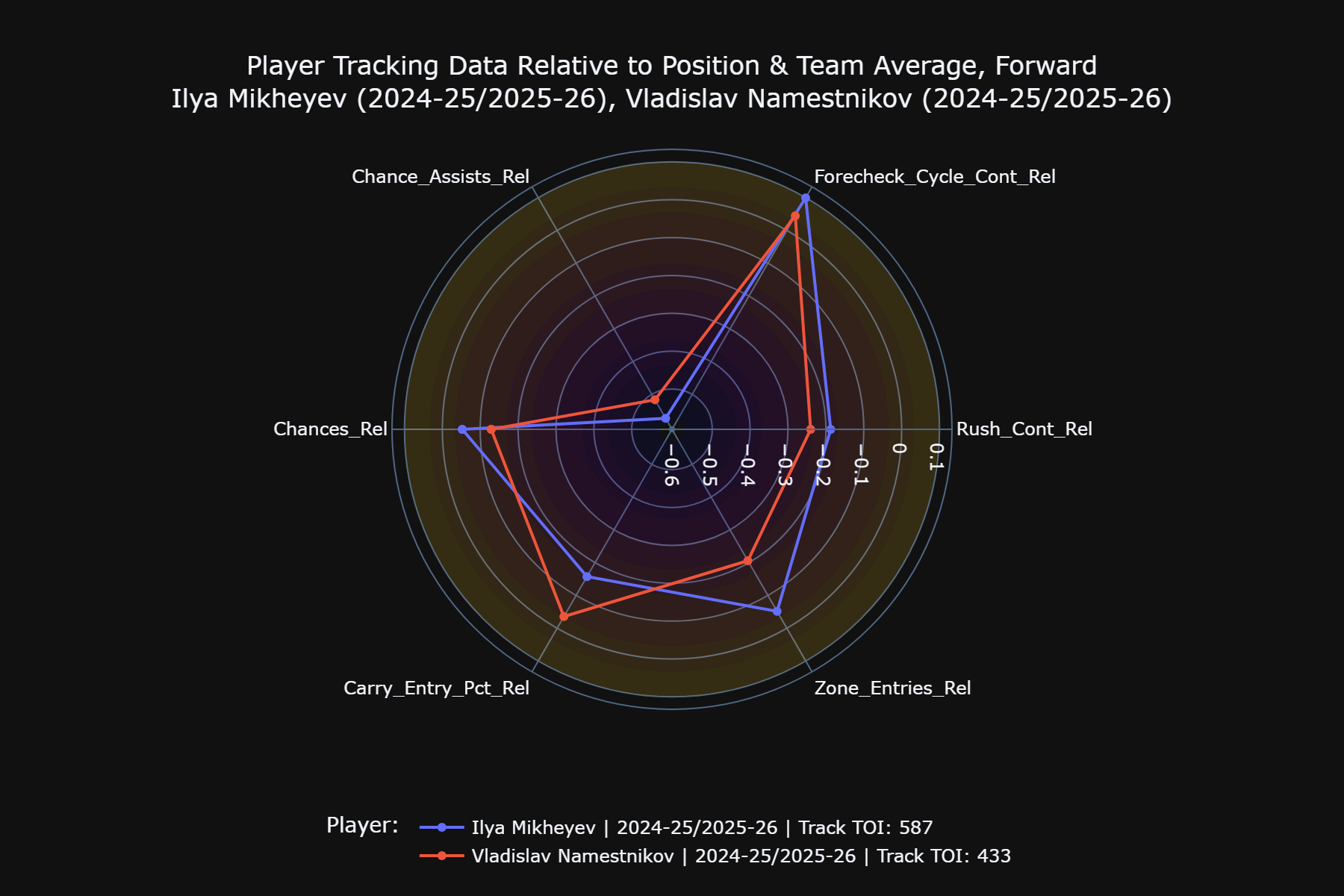
Therein lies the problem with defence-first players. The stellar defence and penalty killing is great, but the inability to create at just an average rate offensively can wash out that defensive strength. He showed the ability to drive offence for his team earlier in his career, so maybe he can do it again on a new team.
6 – Eeli Tolvanen
When discussing Arvidsson, we saw a player who gets scoring chances but doesn’t create much for his teammates. The same can be said for Tolvanen, who gets scoring chances, shoots frequently off the rush, and shot near his team average off the cycle, but the assists on scoring chances and high-danger passes were non-existent:
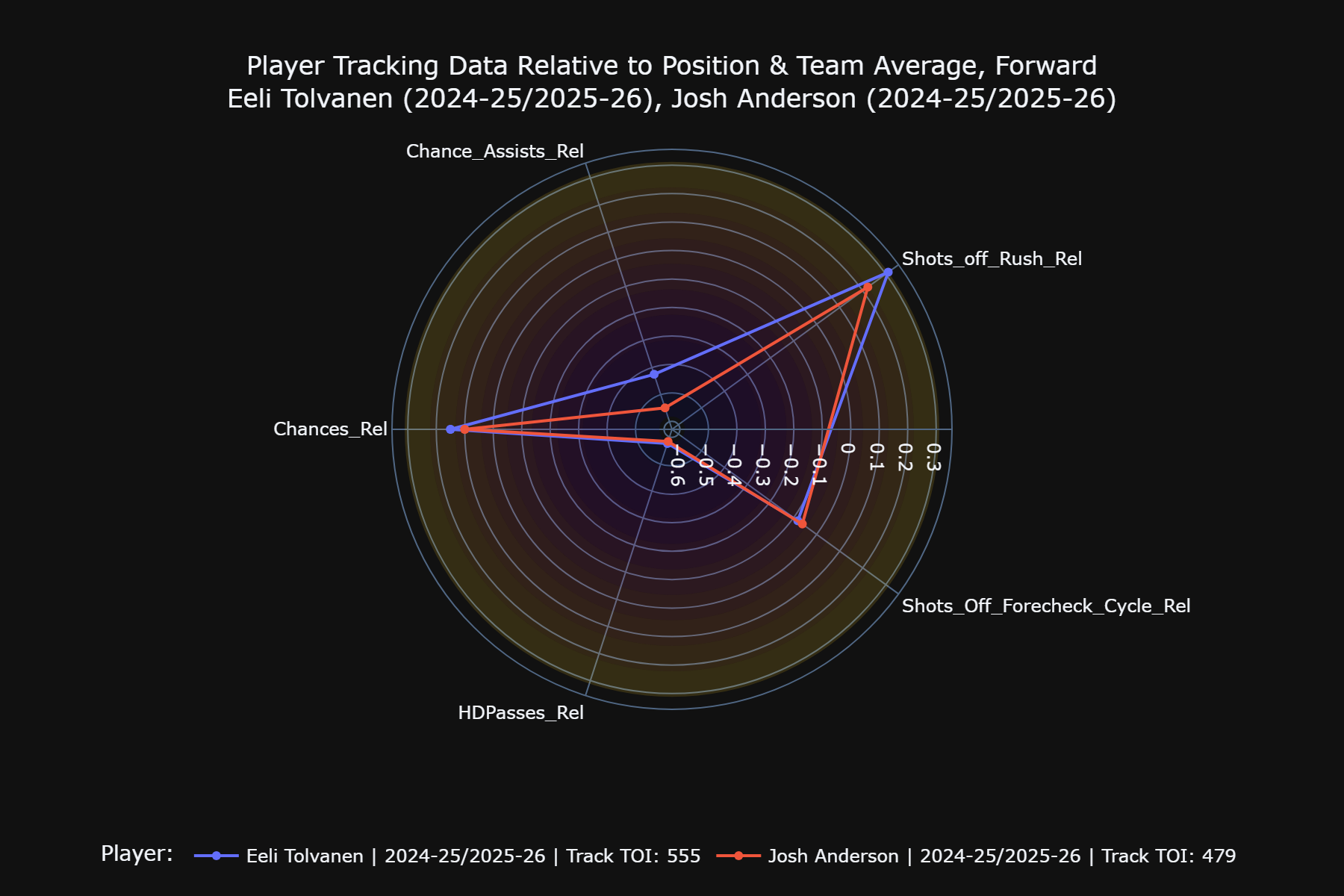
It is funny seeing Josh Anderson’s name there because both he and Tolvanen are physical forwards, but Anderson is five inches taller and 40 lbs. heavier; the NHL is a land of contrasts. Regardless, Tolvanen has shown he can finish plays, he just can’t generate chances for his teammates, so where he lands and the players he skates with will determine his value.
7 – Rasmus Andersson
Andersson stands 6’1, regularly scores over 10 goals a season, blocks a lot of shots, and plays a lot of minutes. That is the type of defenceman teams love, but the concern is he doesn’t really get the puck out of the defensive zone with possession very much, and botches defensive retrievals or fails to exit the zone at a rate much higher than his teammates:
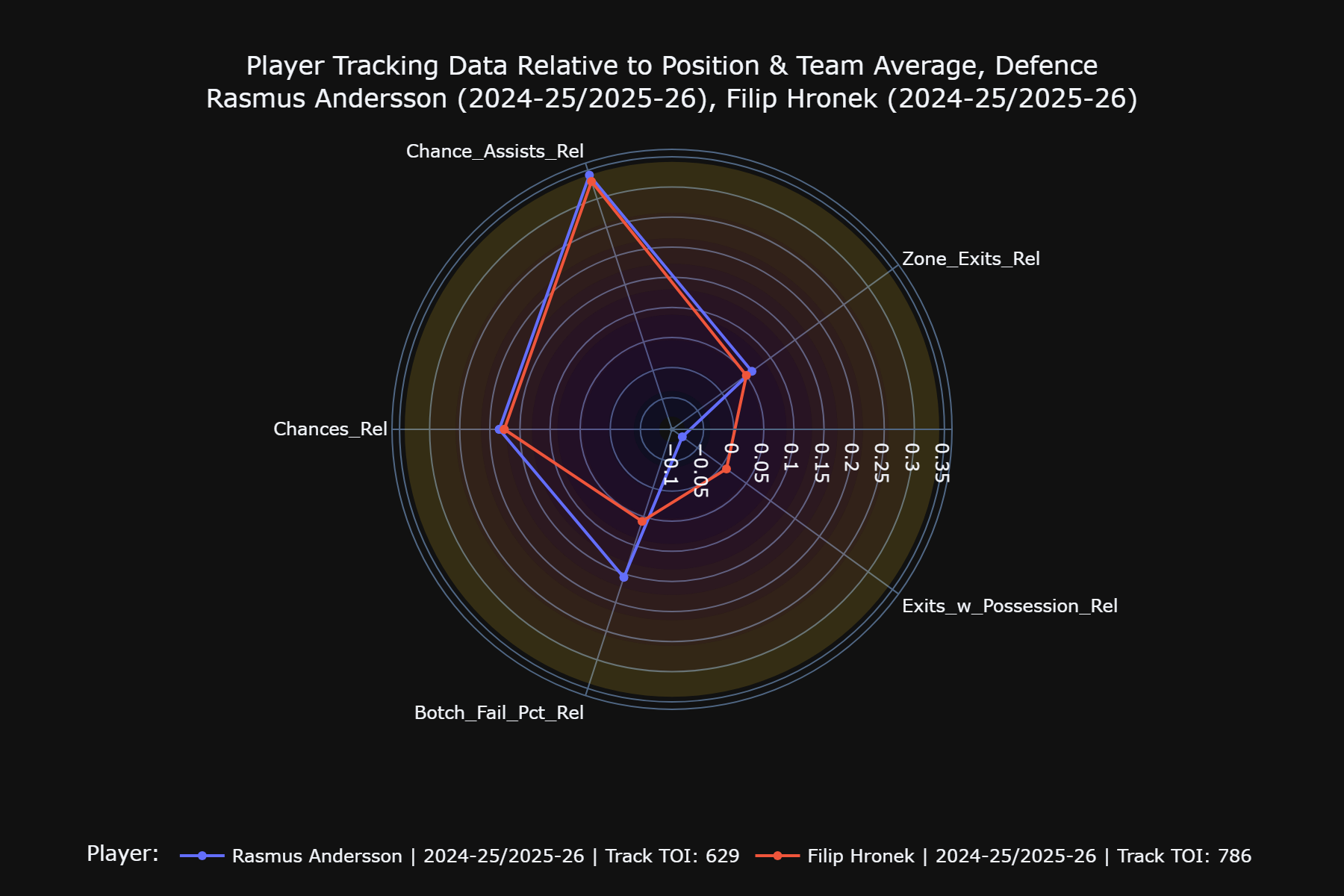
Comparing to Filip Hronek isn’t a bad thing as Hronek is probably a second-pair defenceman if he were on a good playoff roster. The issue is that Andersson is probably the top defenceman left on the free agent market, and that’s going to drive his price very high, likely to where he’s paid as a top-25 defenceman, and he is nowhere near that.
8 – John Carlson
It will be very interesting to see what Carlson signs for because he turns 37 years old in January, so age-related decline can hit hard and fast at any time. But when we look at how he facilitates for his teammates with assists off the rush and cycle, assists on teammate chances, zone exits, and exits with possession, he compares to a top-pair defenceman from a playoff team who is eight years younger:
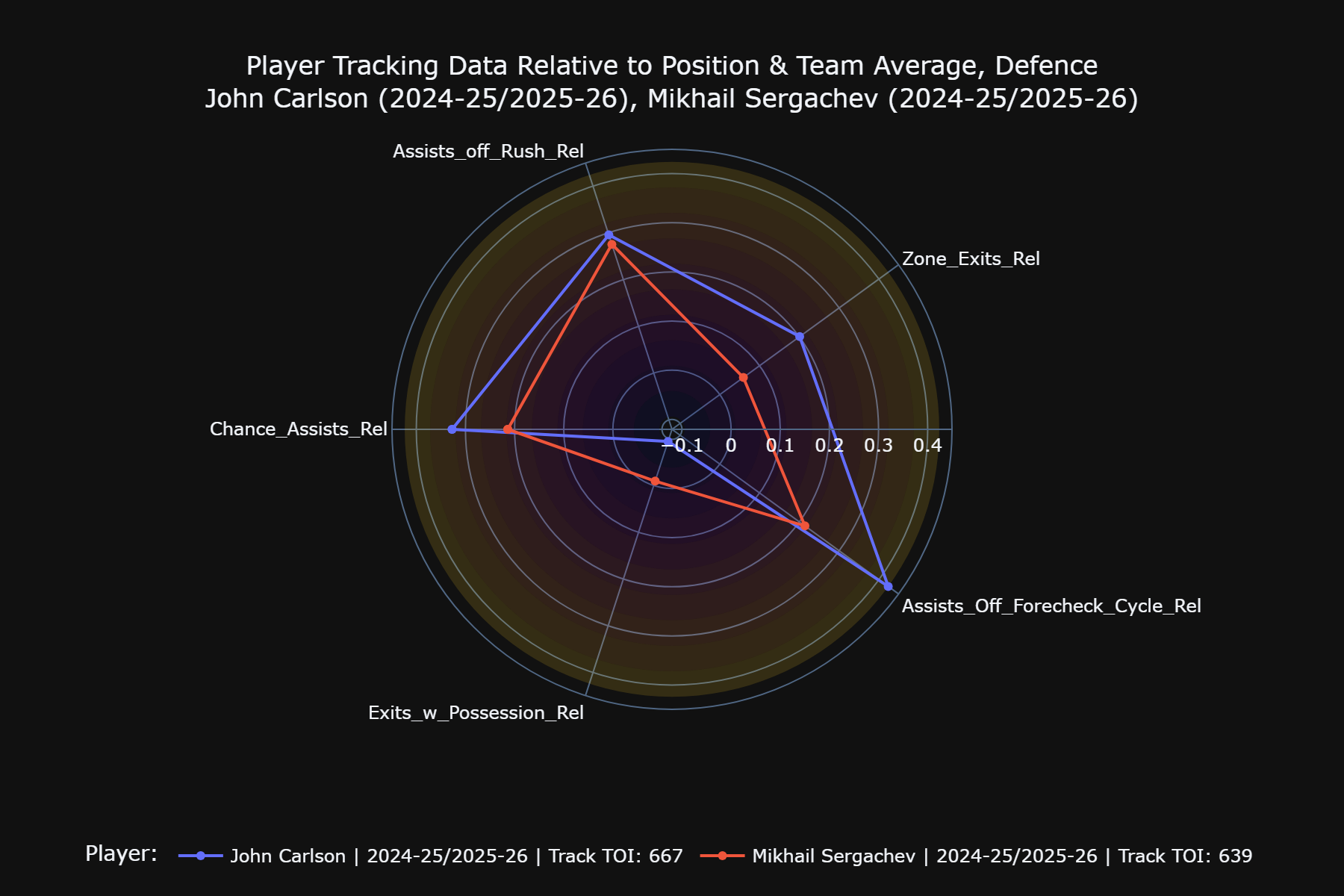
Maybe Carlson takes less to go play with a contender, or maybe a contender can afford to pay a high price, but either way, whomever signs Carlson gets a guy still capable of playing top-pair minutes and can greatly lift his teammates offensively.
9 – Jacob Trouba
I will be honest, I didn’t know what to make of Trouba’s comparable defenceman by scoring chances, assists on chances, and some zone entry/exit data:
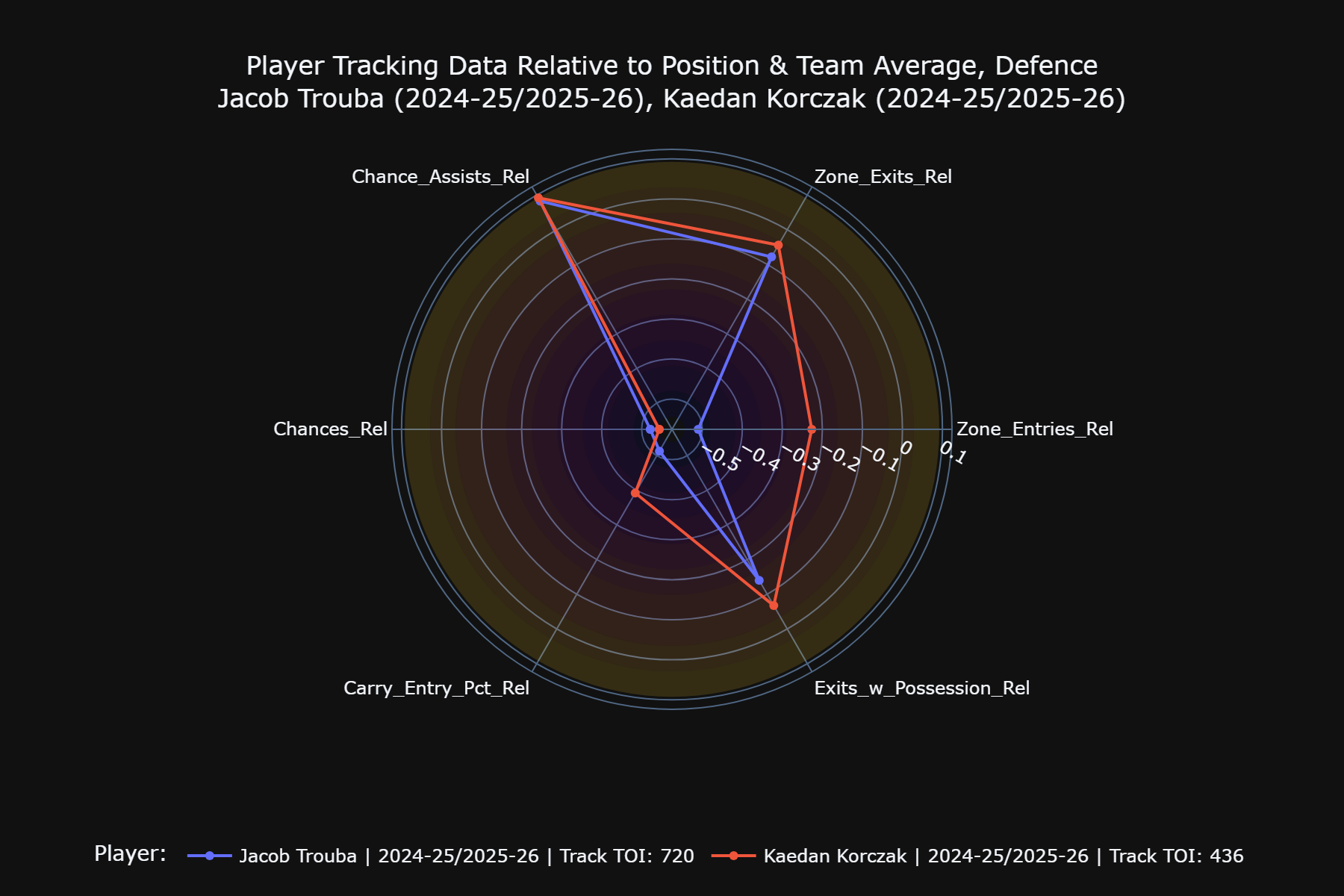
The reason I don’t know what to make of it is that Kaeden Korczak is a defenceman I’ve been waiting on for a full-fledged breakout, but it hasn’t quite happened yet, and he was healthy scratched by Vegas in the playoffs. Maybe there is something I’m missing with Korczak, just as there might be something teams are missing with Trouba, but it did perk my ears up a bit to see Trouba compared to a blue liner I’m very high on.
10 – John Klingberg
Comparisons are funny sometimes because Klingberg rated closely to Sean Durzi in a number of areas except for zone entries (where Durzi had much higher numbers) and percentage of entries carried in (where Klingberg had much high numbers):
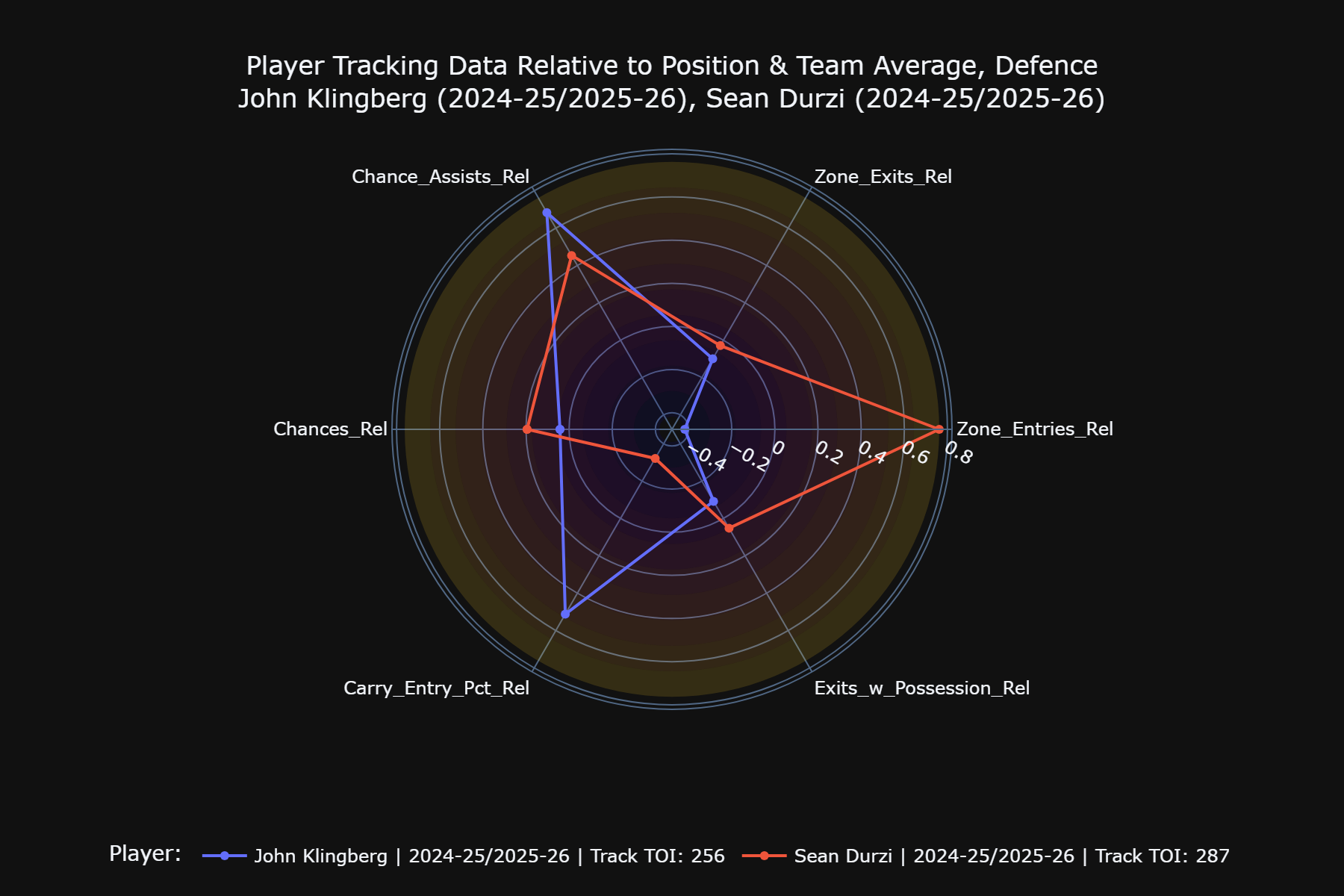
This also represents the duality of Klingberg. When healthy and on the ice, he can still elevate his teammates offensively, particularly through his playmaking. However, he is poor defensively, and that makes him hard to rely on for over 20 minutes a night. San Jose learned that lesson, and we’ll find out if every other team did too.
Until next week.