10 Interesting (To Me) Stats For This Week - July 28, 2026
Welcome back to another week of ’10 Interesting (To Me) Stats’. We have spent the last couple of weeks looking at forwards who’ve changed their zone exit involvement and defencemen who’ve changed their playmaking skills. Today, let’s look at more changes, but which forwards have become better dual-threat offensive players, or who’ve improved their shooting and playmaking volume.
*Reminder: This newsletter will move to Ghost in the coming weeks/months, so to ensure you keep getting them, be sure to subscribe there. Just follow this link.
To do this, we are again using tracking data from All Three Zones. We are going to focus on three areas: individual scoring chances, assists on teammate scoring chances, and high-danger passes. We will once again use two pairs of seasons for comparison: 2022-23/2023-24 and 2024-25/2025-26. The rates are relative to the league average forwards in each season.
1 – Clayton Keller (Utah Mammoth)
Evolving Hockey has Keller with his best two-year offensive stretch being the last two seasons and he’s 1 of 7 forwards with at least 55 goals and 120 assists in that span. It should be no surprise that he’s seen substantial increases in two of the three stats we’re reviewing:
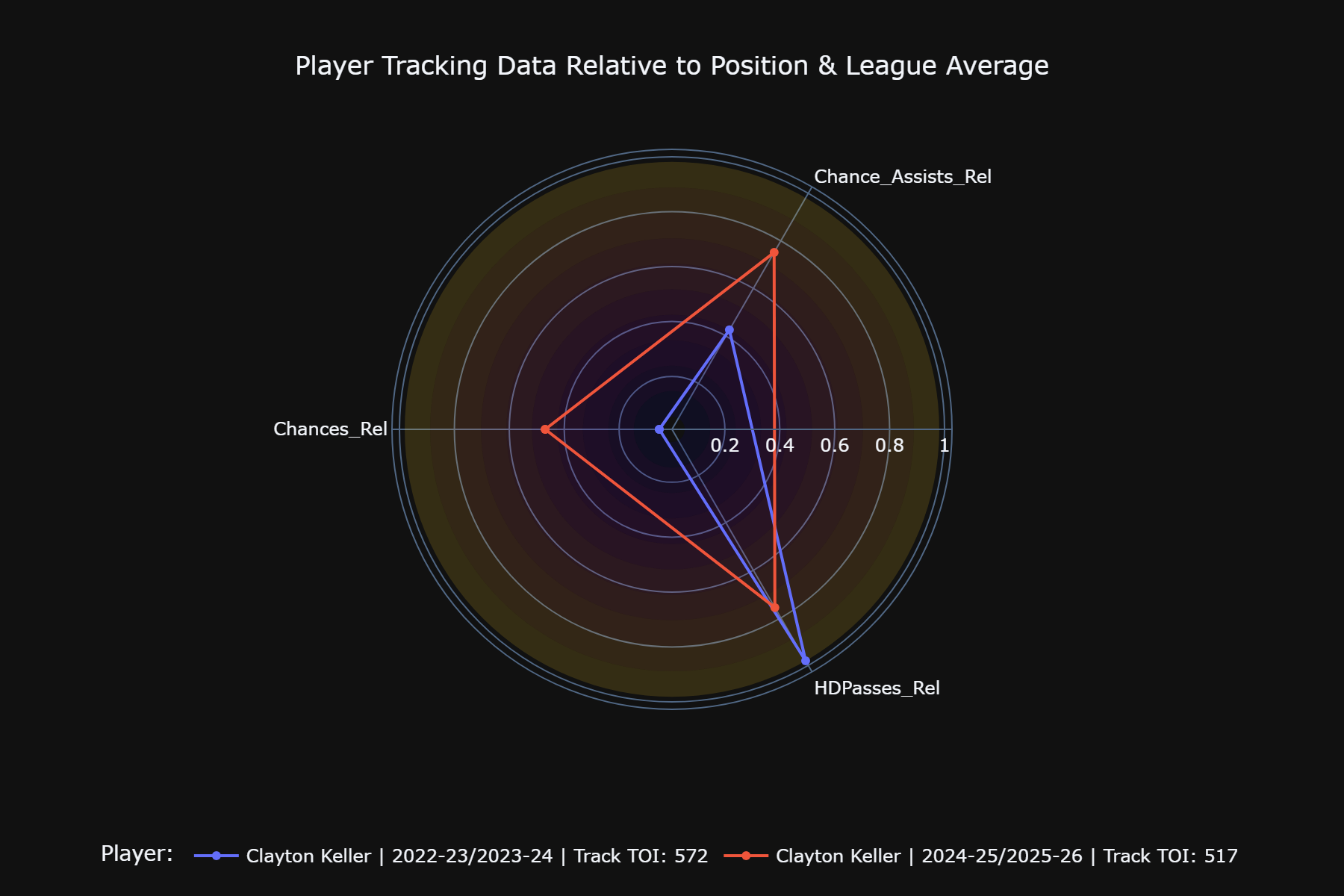
That Keller has remained with the Arizona/Utah franchise for his 10 NHL seasons and has just 15 career playoff games is probably why he’s never thought of as one of the top offensive wingers in the league, but over the last five years, his 5-on-5 points rate per 60 minutes (2.32) is nestled between Kirill Kaprizov (2.35) and Jake Guentzel (2.28). That is pretty good company.
2 – Pius Suter (St. Louis Blues)
Speaking of hidden gems, that Suter’s career has spanned Chicago, Detroit, Vancouver, and St. Louis probably hasn’t done his public reputation any favours. However, he is a great defensive forward and has started to sharpen his offensive skills in recent campaigns:
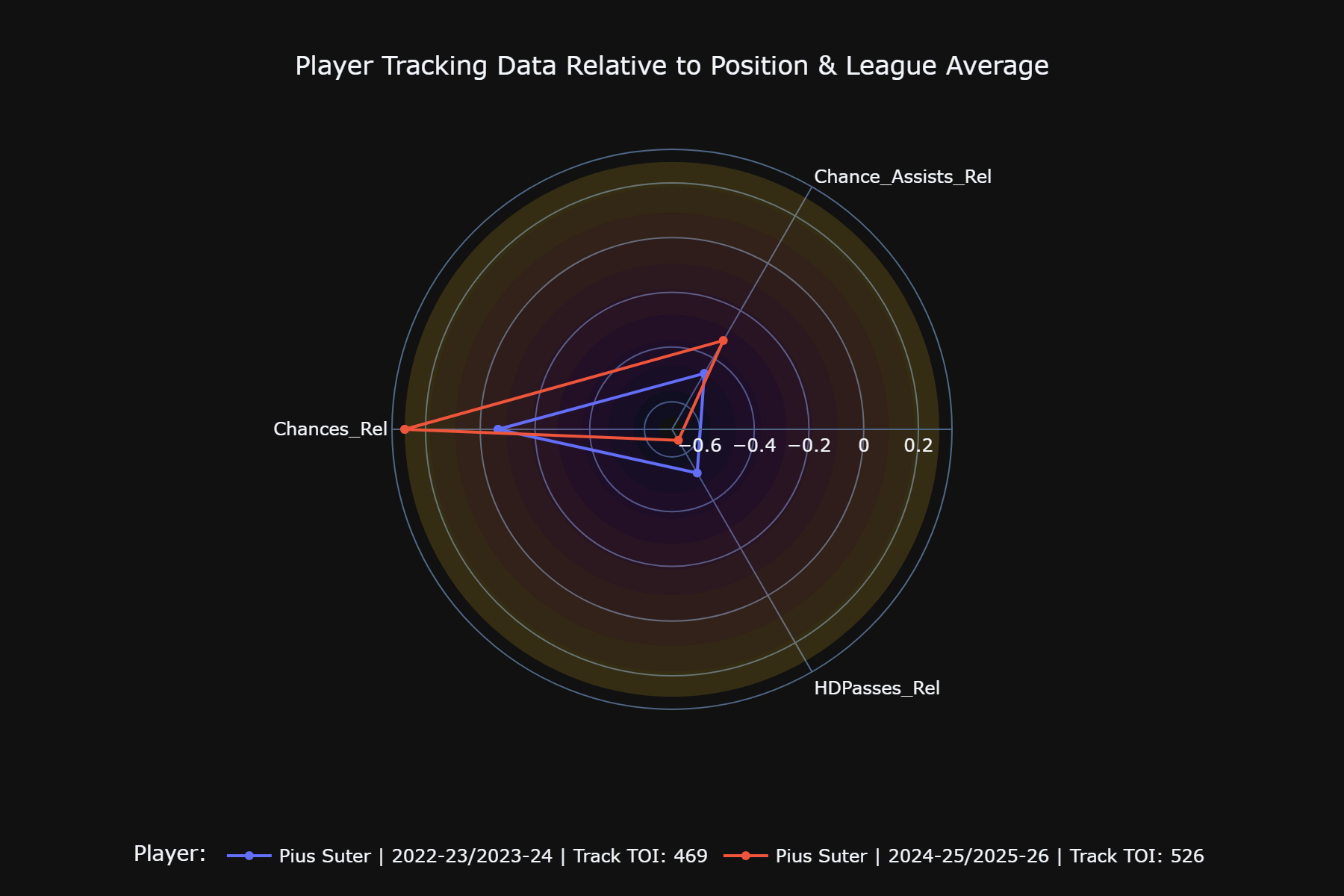
The issue is that the playmaking skills still aren’t good. They’ve been better, but still not good, and it’s something that leaves a hole in his offensive performance. However, his 60-minute goal-scoring rate over the last two years (0.88) is that of a low-end top-line forward, and just being able to do that while being a high-end defensive centre makes him a very valuable player.
3 – Bo Horvat (New York Islanders)
The notable thing for Horvat is that he has seen increases in all three stats we’re examining, but there are substantial increases in both his individual scoring chances as well as his high-danger passes:
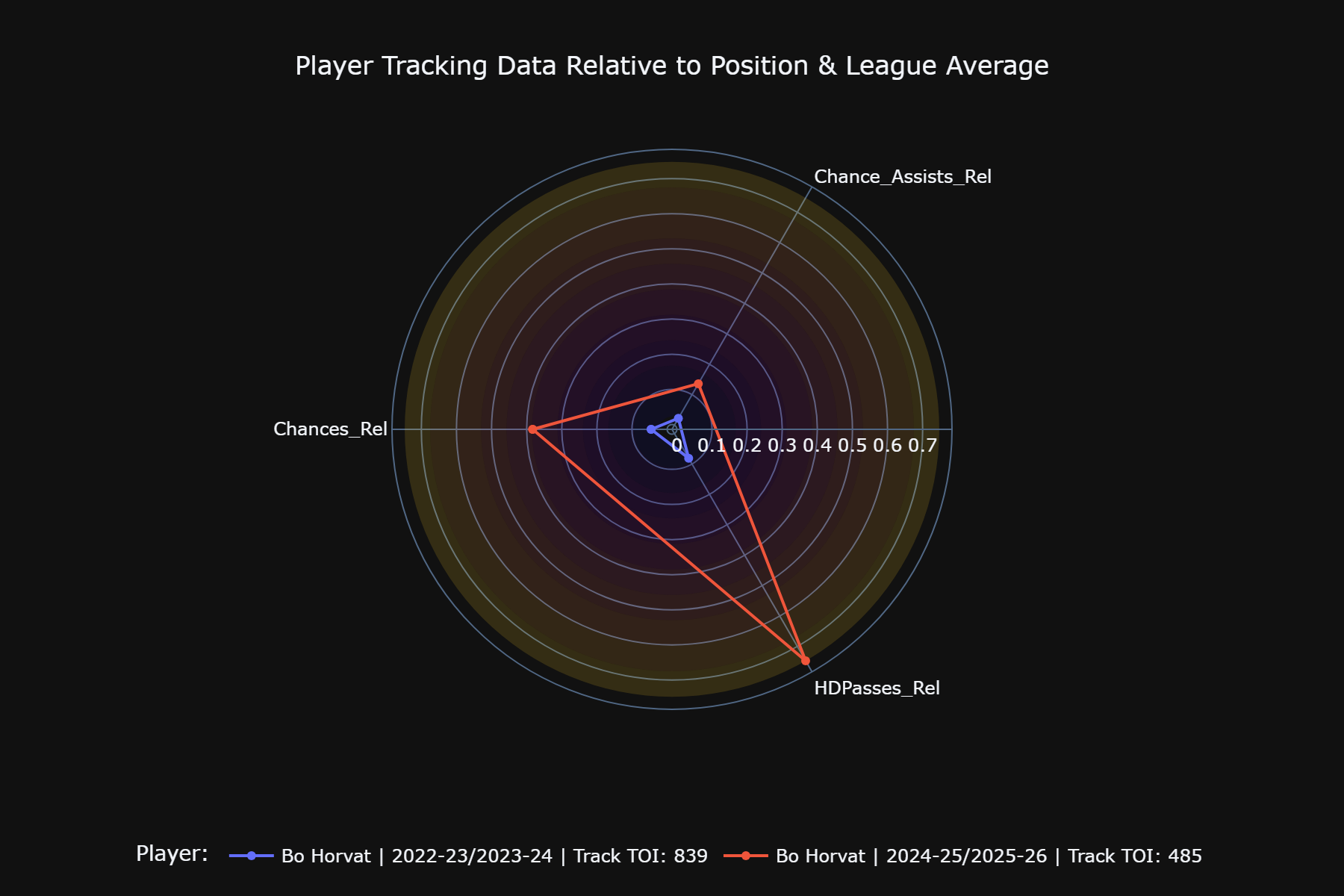
One thing holding Horvat back is his line mates. Over the last two years, his two most-common line mates are Emil Heineman and Anders Lee. Heineman is a support player who needs help and Lee is a good play-driver but not a high-skill forward. There is a reason why Horvat’s best offensive numbers are whenever he plays with Mathew Barzal and vice versa. Maybe Matthew Schaefer can help Horvat boost his scoring rates even more, but Horvat is now 31 years old with over 900 total NHL games played. Time is running short.
4 – Simon Holmström (New York Islanders)
Few players have done more to turn around their offensive fortunes than Holmström, who went from a major drag by both individual chances and assists on chances to at least roughly league average:
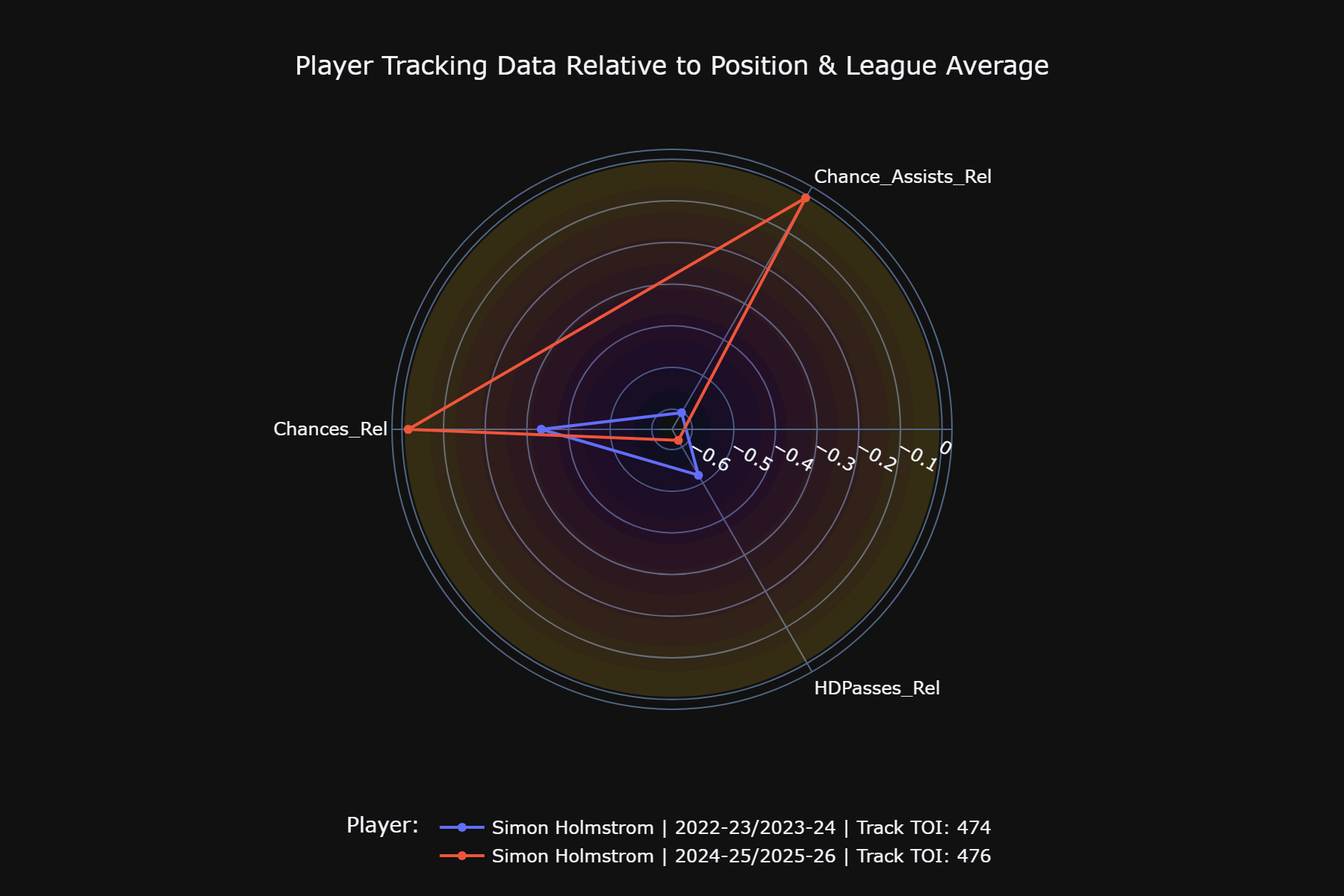
The point production turnaround has been massive: Holmström’s first two years in the league saw his 5-on-5 points rate land as a low-end fourth-line rate and his last two years has seen that points rate leap to that of a low-end second liner. On a contending team, he should probably be a third-line winger, but there’s no question he’s put in the work to turn himself from a borderline NHLer to an impactful top-9 forward. If he keeps improving? He might evolve into a genuine second-line winger on most any roster.
5 – Noah Cates (Philadelphia Flyers)
As we saw with Suter earlier, Cates is a great defensive forward who has been adding both shooting and passing skills over the last couple of years:
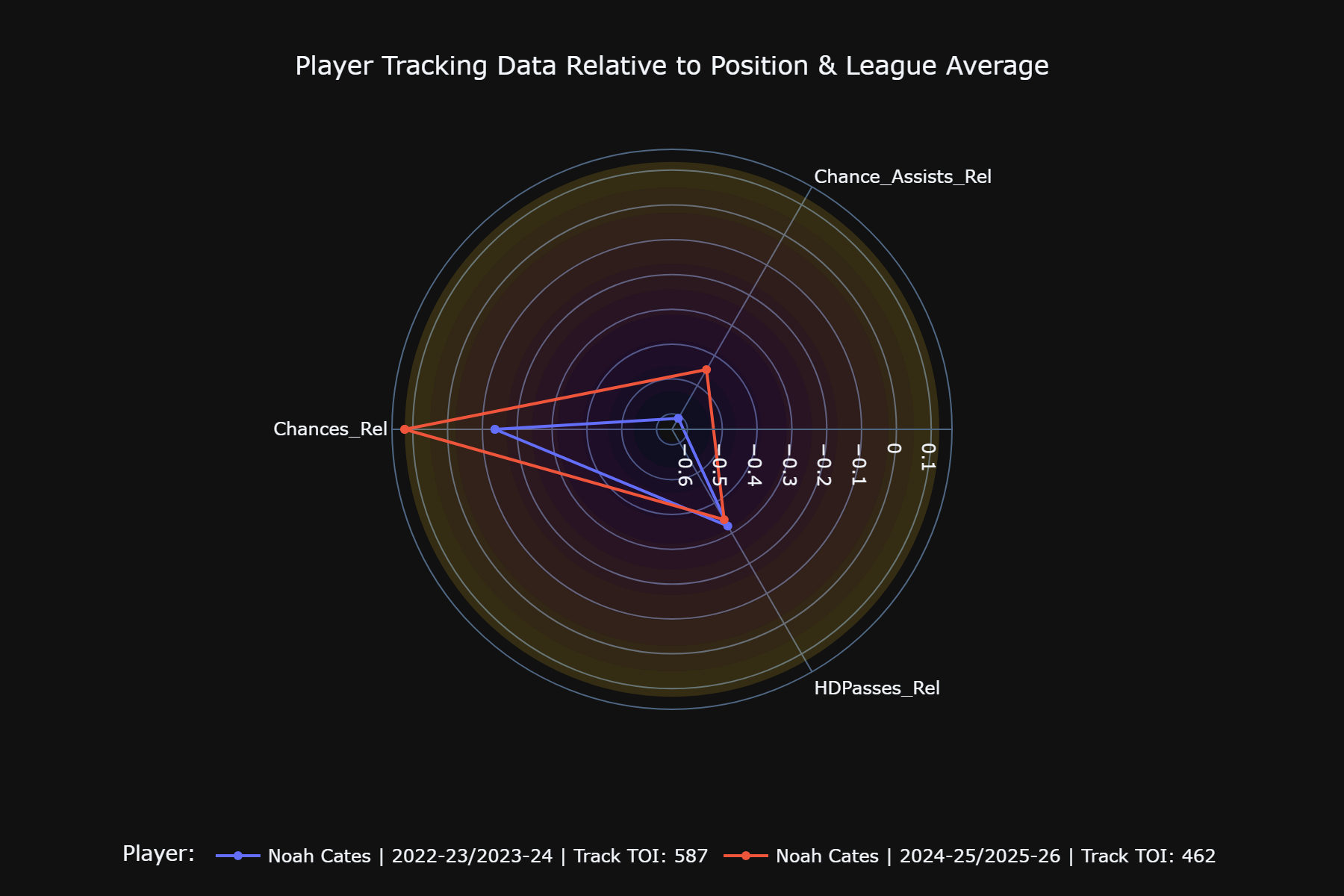
Again, like Suter, Cates’ playmaking has improved from ‘terrible’ to ‘not good’. His playmaking isn’t the reason he’s been trusted as a middle-6 centre by two different coaches despite having just four full seasons to his name – that Cates is one of the best defensive centres in the league is why he’s trusted in that role. Continuing to make incremental offensive improvements will only help him rise in the estimation of the Flyers’ coaching staff and turn him into one of the more valuable two-way centres in the league.
6 – Jack Drury (Nashville Predators)
On the topic of defensive centres making offensive improvements, Drury has gone from a drag in all three areas ranging anywhere from -20% to -50%, to being above-average in all three areas:
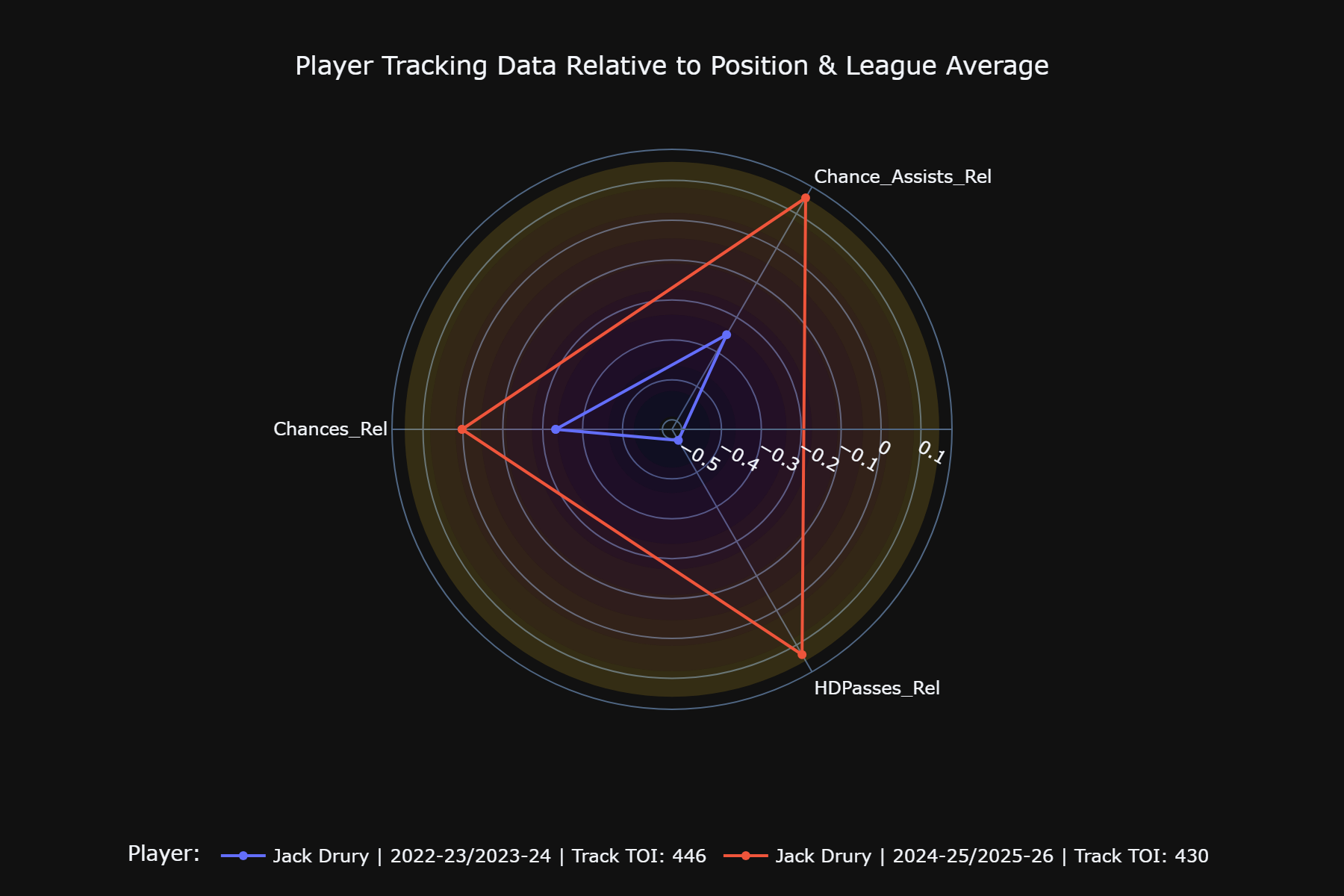
This is a case where I’m not sold yet. Drury spent the last year and a half in Colorado and the Avalanche were arguably the best 5-on-5 offensive environment in that span – I feel safe saying that Nashville won’t be the best 5-on-5 offensive environment in the league this year or next. It will be telling to see how Drury performs on his new team, and whether those improvements hold.
7 – Joel Farabee (Calgary Flames)
In all sincerity: there are few players more confounding to me than Farabee. He had a four-year stretch from 2020-2024 where his 5-on-5 points rate was that of a mid-tier top-line forward, exceeding names like Guentzel, Konecny, and Keller. Over the last two years, that has completely collapsed to the rate of a fourth liner, and that’s despite improvements in all three tracking stats:
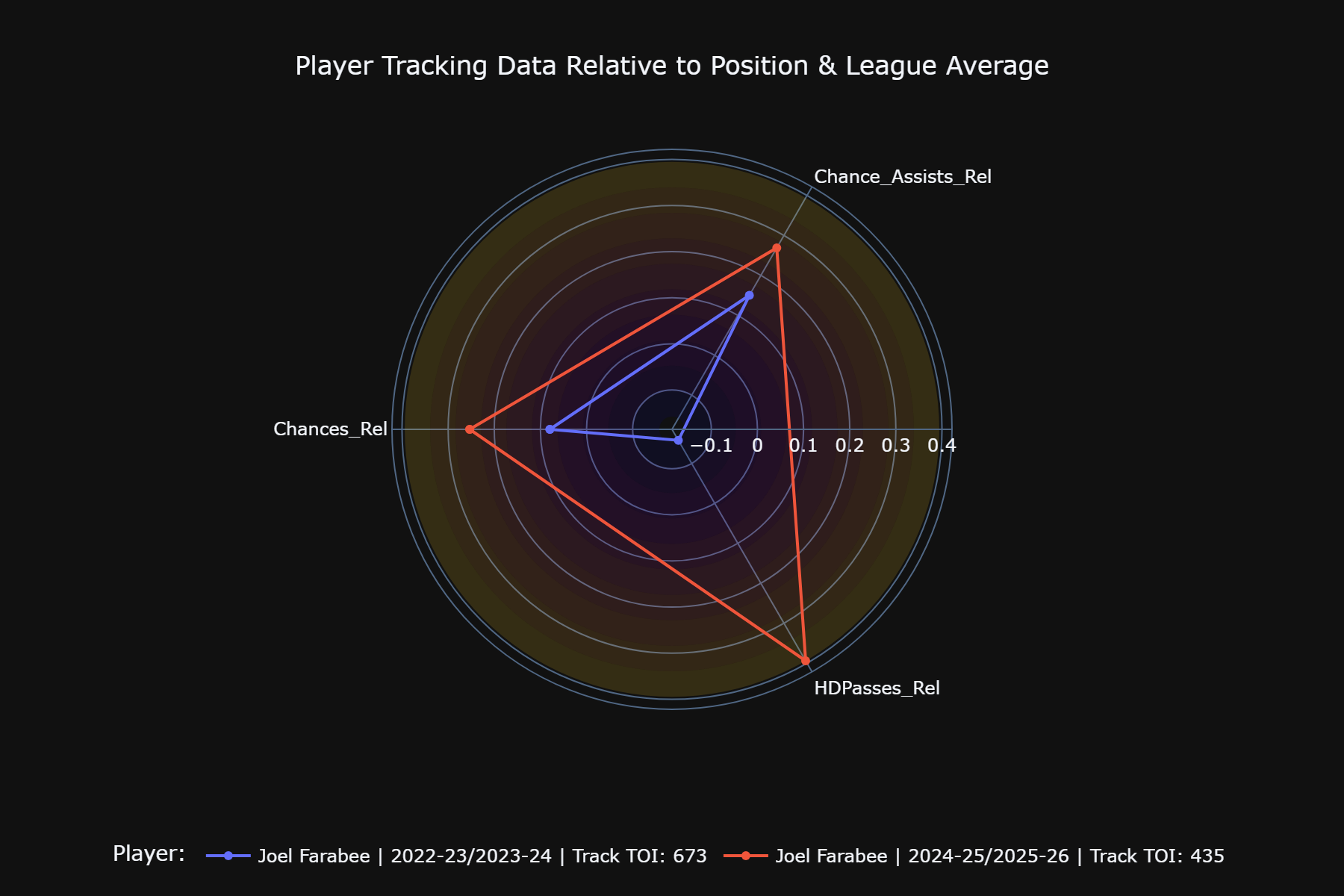
Playing in Calgary is part of this, but even then, his 5-on-5 points rate is 7th among regular Flames forwards over the last two years. He just turned 26 years old in February, so this isn’t age-related decline, either. The improvements give hope that he’ll be better, but man, this is so weird.
8 – Mason McTavish (St. Louis Blues)
There was a small improvement in McTavish’s rate of scoring chances, but the real improvements were in the playmaking as he went from below league average to a genuine asset:
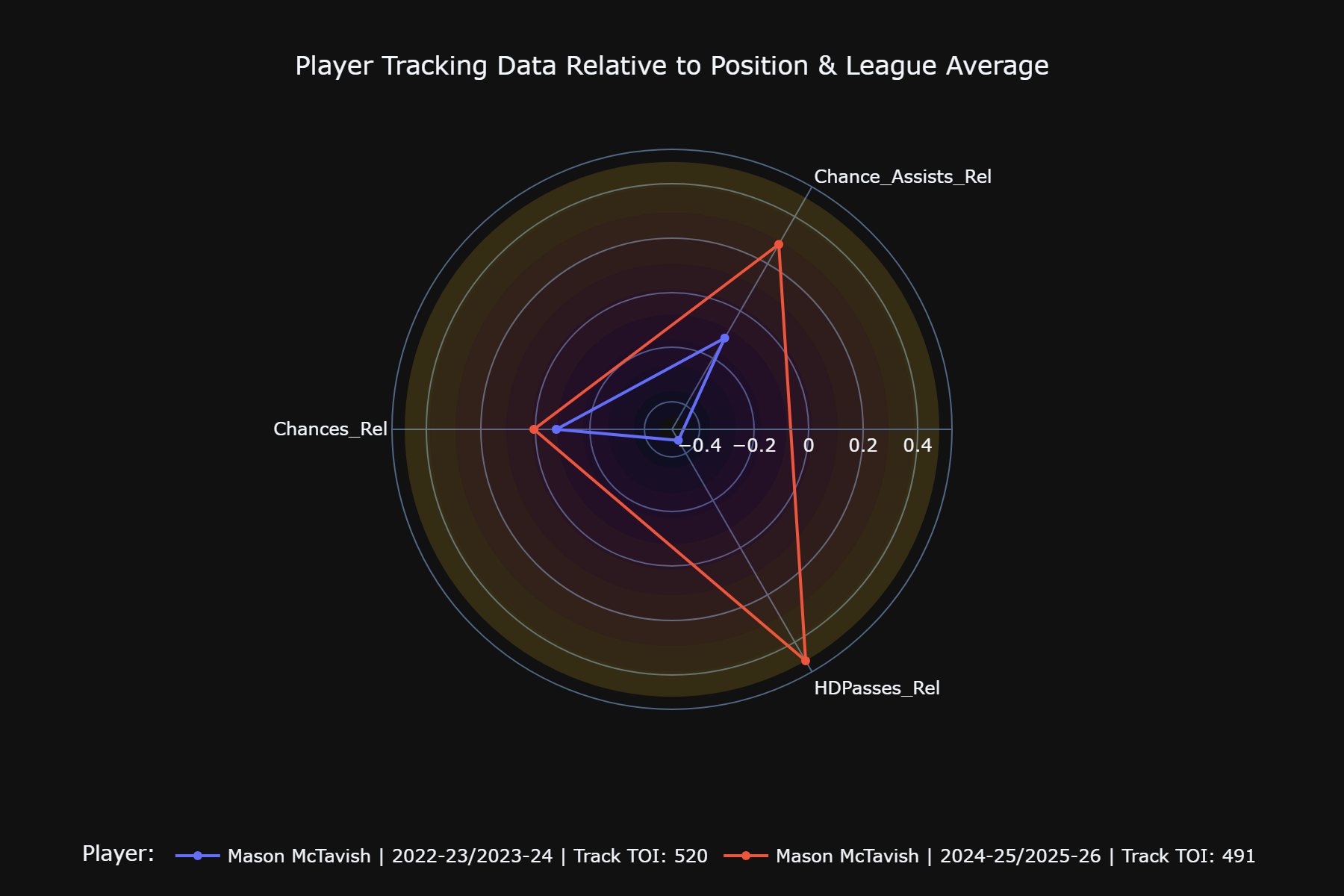
It should be mentioned that over the last two years, McTavish had a higher 5-on-5 assist rate than all the top Ducks forwards except for Troy Terry. Additionally, after shooting 11% at 5-on-5 across his first four seasons, that fell to 7.6% this past year. He has serious defensive issues to clean up, but McTavish is showing all the signs of a true dual-threat scoring forward.
9 – Jake Neighbours (St. Louis Blues)
By any number of measures, the 2025-26 season was the best of Neighbours’ career, it was just hard to notice on a Blues team that struggled to find success. It is no surprise, then, that the last two seasons show notable offensive improvements in all three areas:
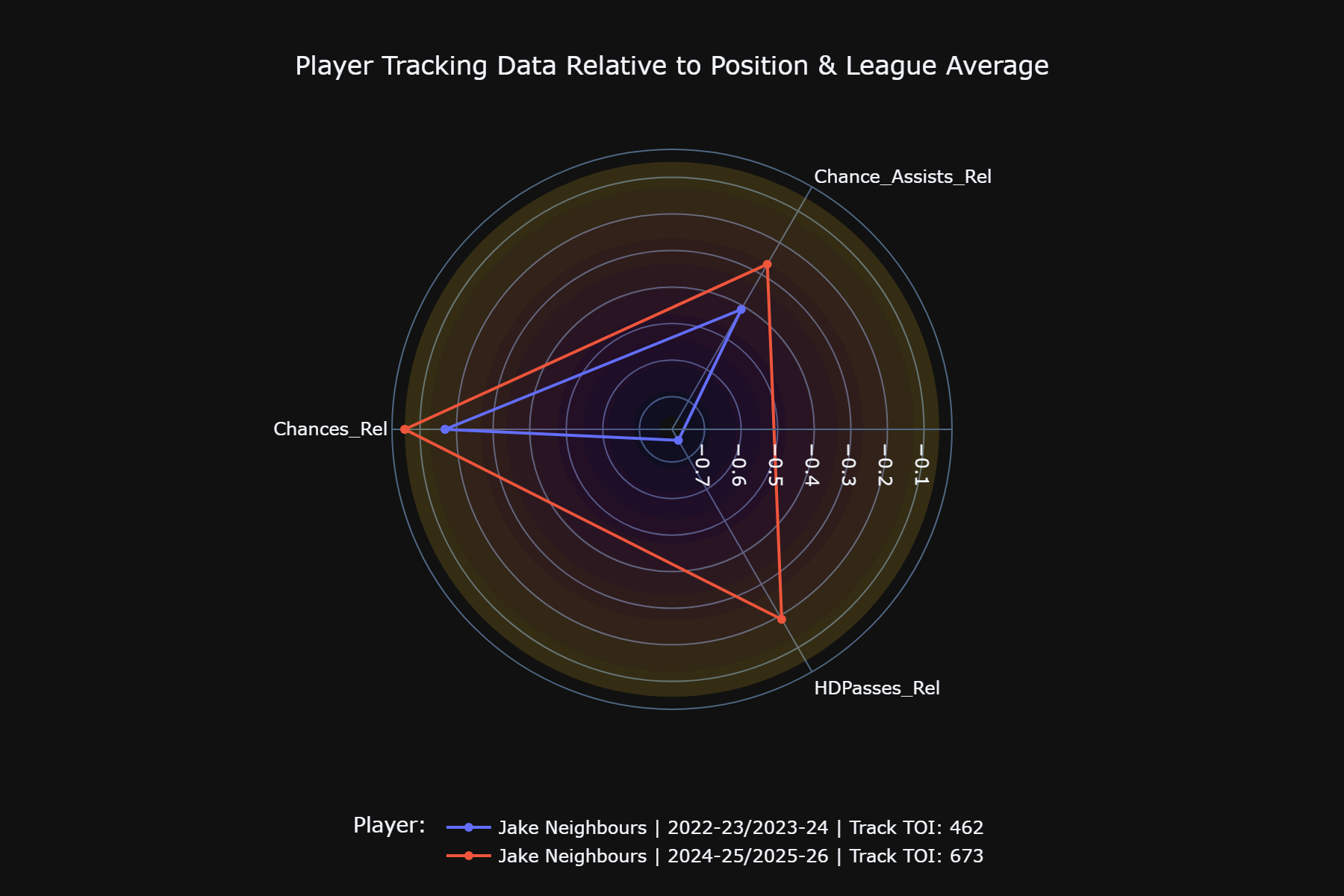
There is still work to be done as the improvements are nice, but he’s still underwater in all three stats. Regardless, for a young player in the NHL, seeing skills upgrades is always a key part of development, and he’s now 24 years old with 3.5 seasons’ worth of games to his name. He is a physical player, and if he can be at least average by both his shooting and playmaking skills to go with that physicality and solid defensive play? The potential is scary.
10 – Nico Hischier (New Jersey Devils)
Fresh off a five-year contract extension, Hischier rounds out the list of two-way centres who has been adding to both his shooting and playmaking skills over the last couple of years:
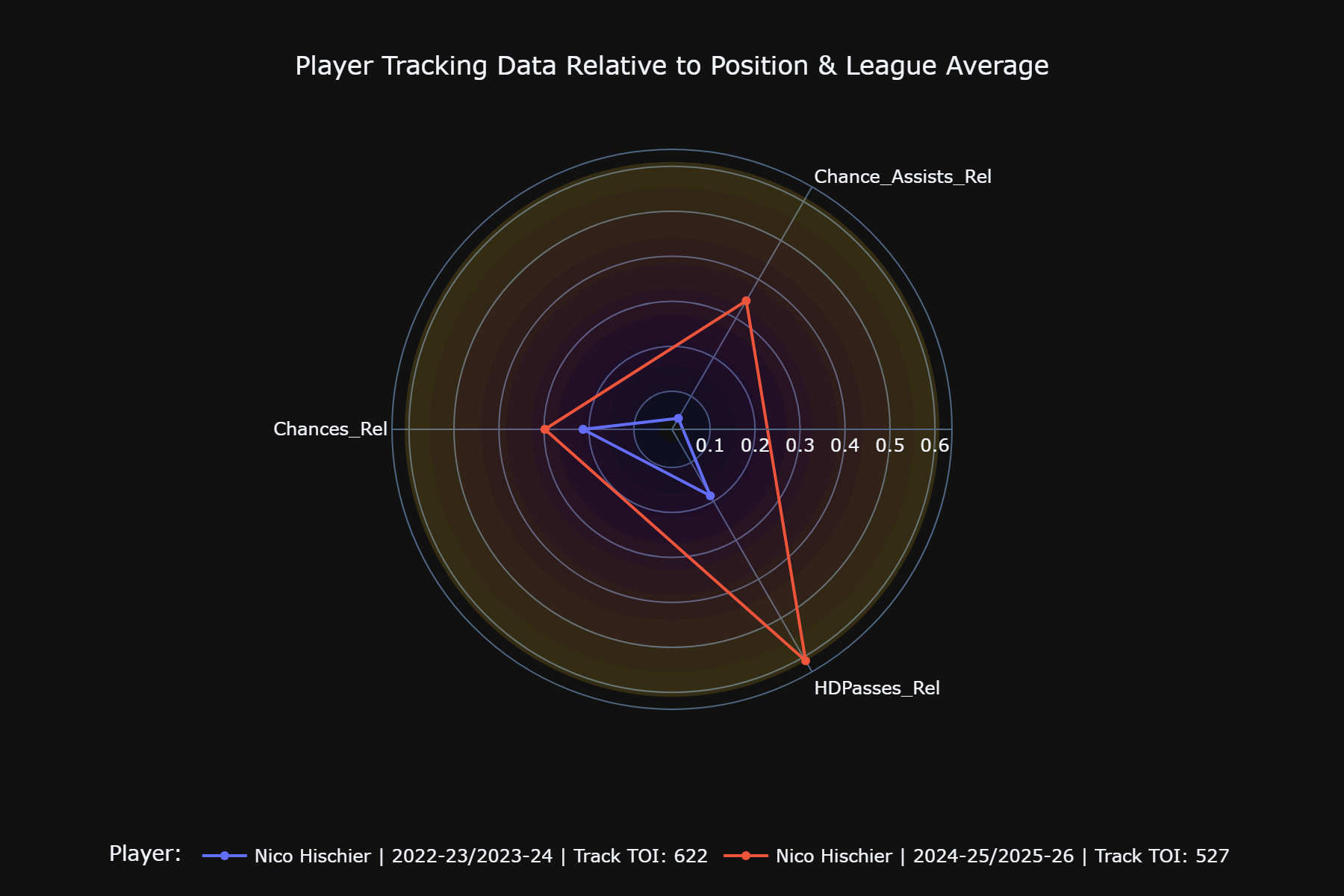
The odd part is Hischier’s 5-on-5 points rate has collapsed between the two pairs of seasons from a top-20 forward to basically league average. He has just not found any real offensive chemistry with Timo Meier or Dawson Mercer, so it might be up to veteran Anthony Mantha or sophomore Arseny Gritsyuk to help Hischier get back to where he was a couple of years ago, points-wise.
Until next week.