10 Interesting (To Me) Stats For This Week - March 31
Welcome back for another week of ’10 Interesting (To Me) Stats’.
Tracking data and play-driving data are useful tools to see who is helping elevate their teammates, and that is especially true for defencemen. The issue is that a lot of defencemen start in lesser roles, so their impact isn’t notable to a lot of us until they start earning big minutes.
Using the tracking data from All Three Zones and play-driving data from Evolving Hockey, which defencemen look to be on the ascent? Think of recent examples like Jackson LaCombe in Anaheim, Dylan Samberg in Winnipeg, Philip Broberg in St. Louis, and Sam Malinski in Colorado.
1 – Jordan Spence (Ottawa Senators)
This is the last time Spence will be included in a section like this because of how good he’s been and because he’s been playing a much bigger role lately thanks to injuries on Ottawa’s blue line. Here is where Spence’s play-driving numbers stand by even-strength expected goals-for and against per 60 minutes, as well as even-strength goal differential per 60 minutes, over the last two seasons:
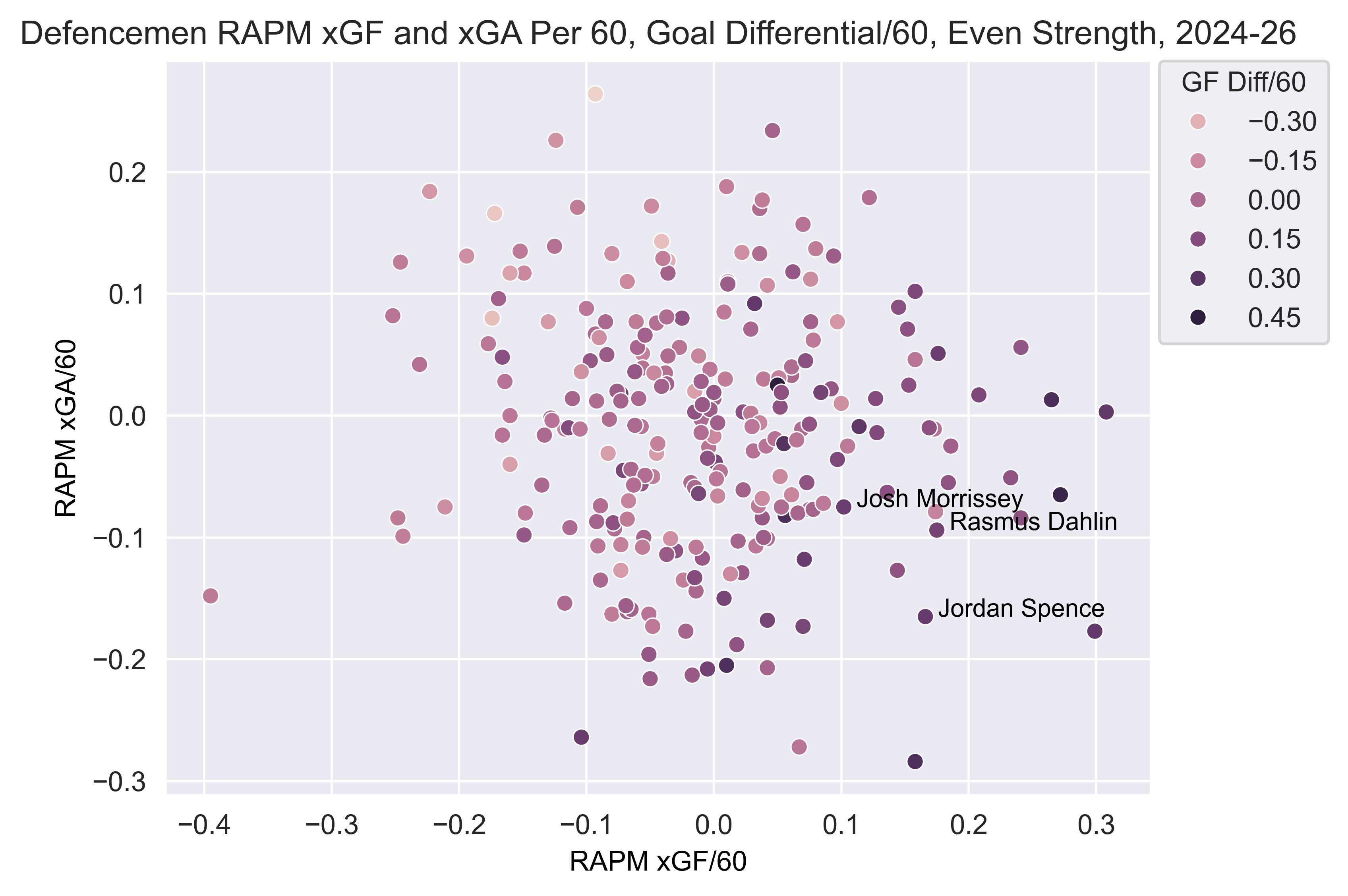
Rasmus Dahlin and Josh Morrissey are bona fide Norris Trophy candidates and they’re the closest recent play-driving and goal differential comparisons to Spence. It is reminiscent of Devon Toews where he’ll never be The Top Guy on his team’s blue line, but he’ll be A Top Guy.
2 – Simon Nemec (New Jersey Devils)
I wrote about Simon Nemec at Dobber Hockey a few weeks ago and how his puck skills were stellar this season. However, that has been the case over the last two seasons as these are his comparables by assists on teammate scoring chances, zone entries per 60 minutes, and percentage of those entries carried in:
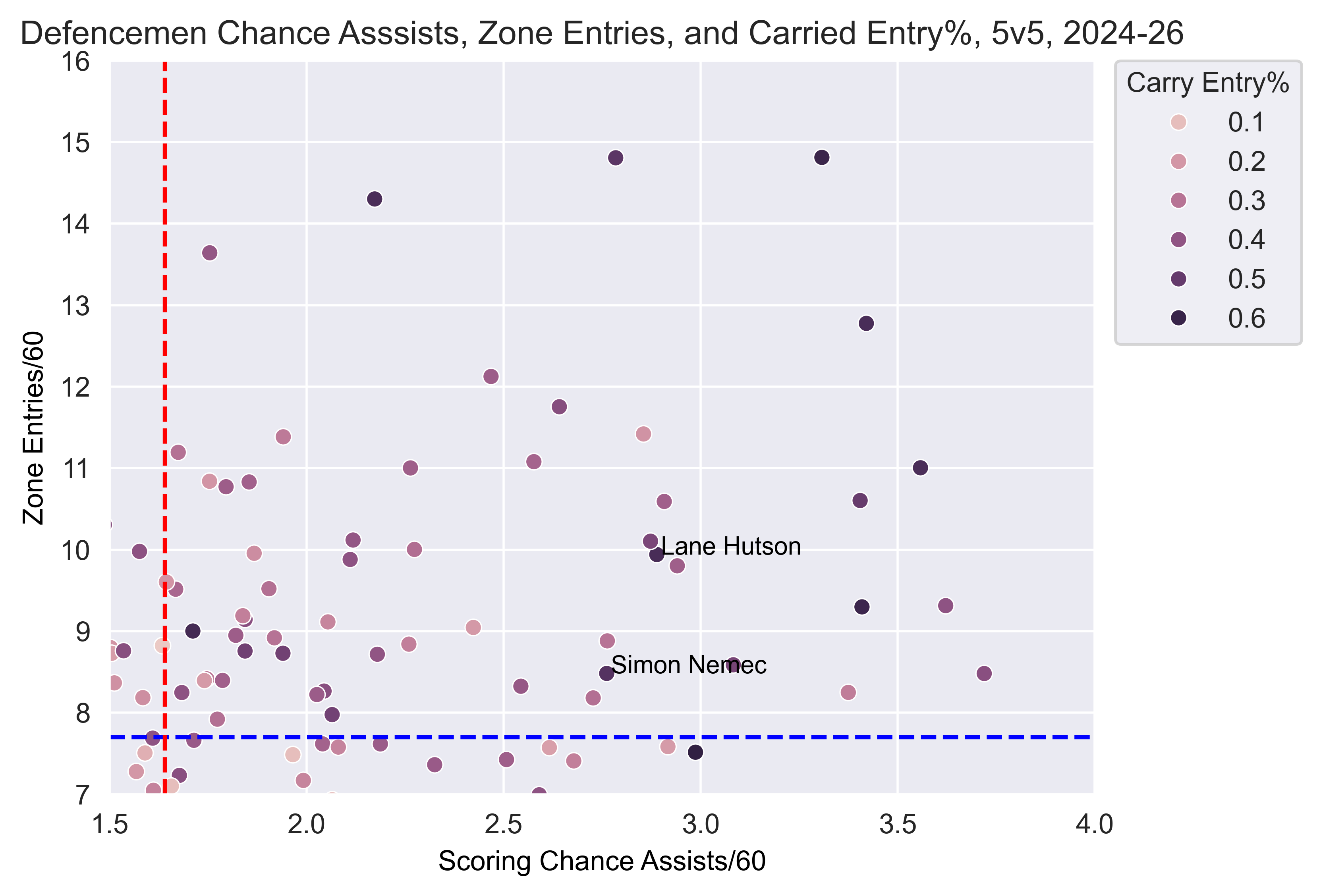
Lane Hutson needs no introduction. Nemec’s style can lead to inconsistent defensive results, but this is the kind of profile that leads to a high-end offensive defencemen at some point, and Nemec just turned 22 years old in February.
3 – Charle-Edouard D’Astous (Tampa Bay Lightning)
Perhaps the most underrated group of defencemen are in Tampa Bay as injuries forced players like D’Astous into bigger roles, and they’ve mostly thrived. This is D’Astous’ first season, and he turns 28 years old in April, but it doesn’t take away from how he’s facilitated the Tampa Bay offence. Using the chance assists again, but this time looking at his Botch+Fail% (how often he botches a defensive zone retrieval or fails a zone exit), here are his comps:
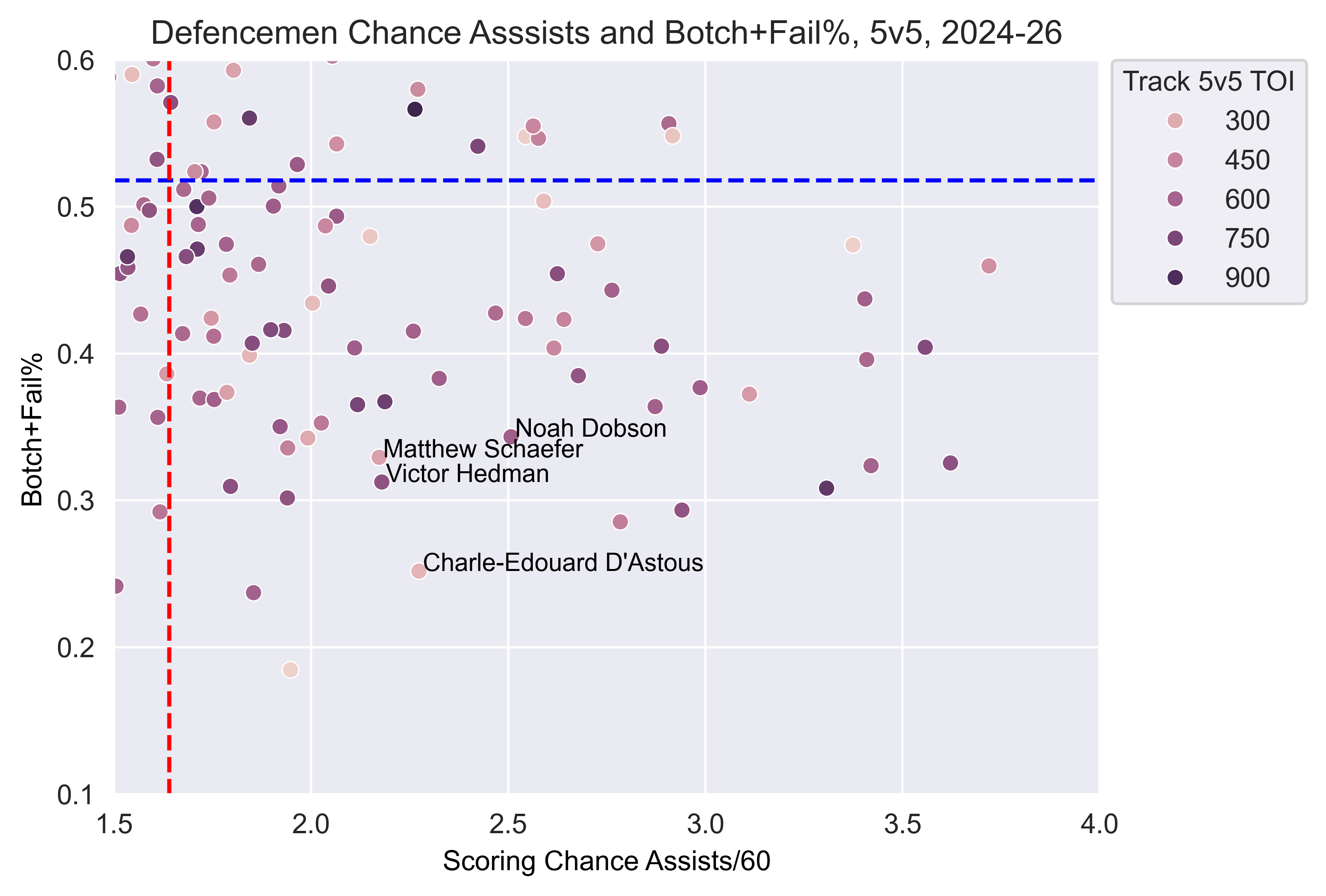
We see Noah Dobson and Victor Hedman alongside super-rookie Matthew Schaefer. We don’t want to make firm determinations off one rookie season, but D’Astous doing anything close to this in future seasons makes him a top-4 defenceman on almost any roster.
4 – Zeev Buium (Vancouver Canucks)
Step 1 in evaluating any young player in the NHL is ‘Are the building blocks there?’ What those blocks are is up to the evaluator, but for me, it’s having something in the tracking data to point to and say ‘this shows promise’. That is the case with the rookie Buium, who has had poor on-ice results, but has a high rate of zone entries and carried entry percentage with a low Botch+Fail%:
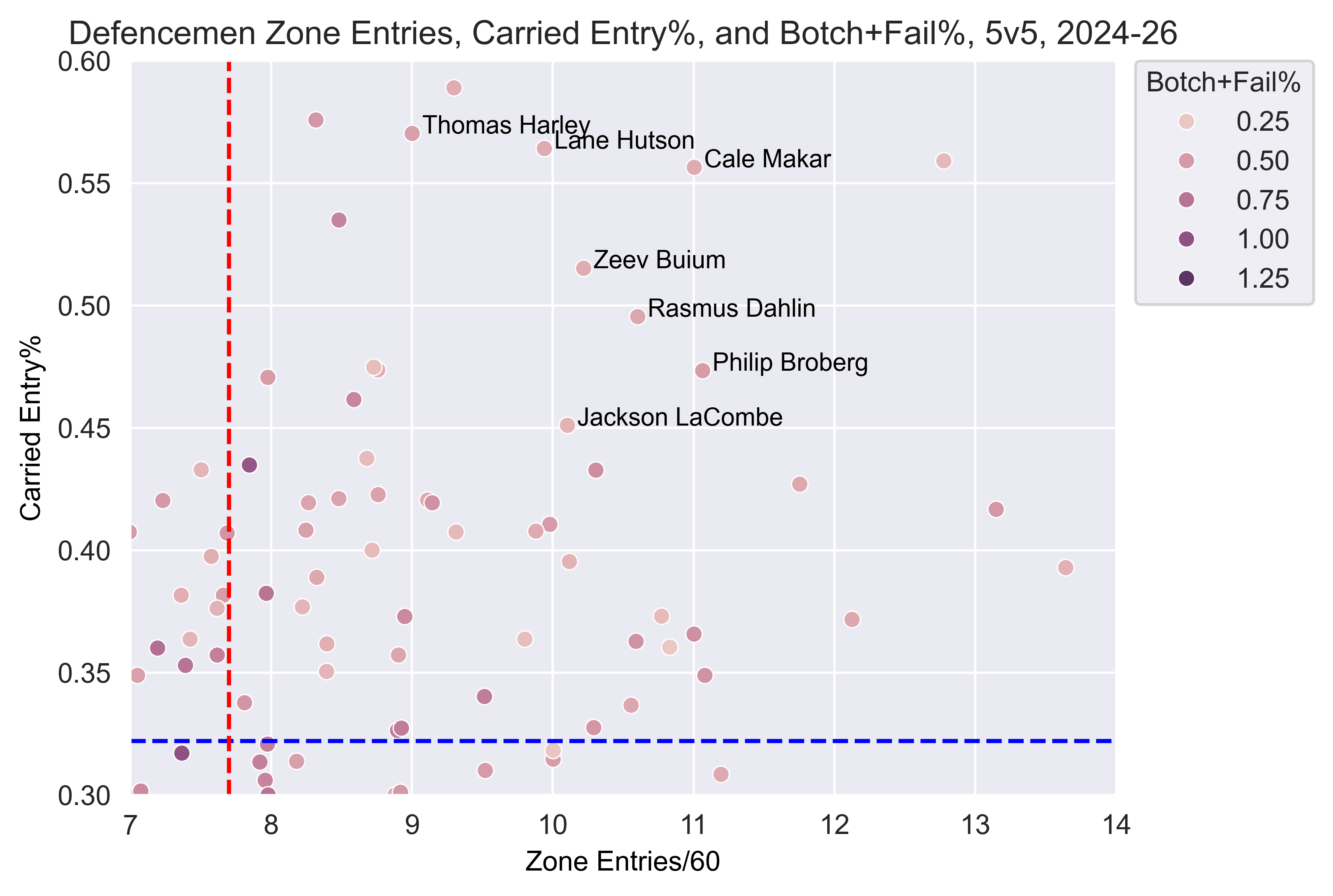
The other six names on that chart are all top-pair defenceman. Buium is a 20-year-old rookie but that he’s showing this level of puck skills as a 20-year-old rookie is more important than having good goal differentials. He won’t stand out until Vancouver starts improving a few years down the road, but the building blocks are there.
5 – Kaeden Korczak (Vegas Golden Knights)
At the outset of the season, this newsletter covered defencemen who showed promise and could have a big impact on their team in 2025-26. Among them was Korczak, and he’s done exactly that by being 2nd among Vegas defencemen by 5-on-5 goal share (only Shea Theodore is higher). While his impact is mainly on the defensive side, here are his comparables by scoring chance assists, expected goals against play-driving, and EV goal differential over the last two seasons:
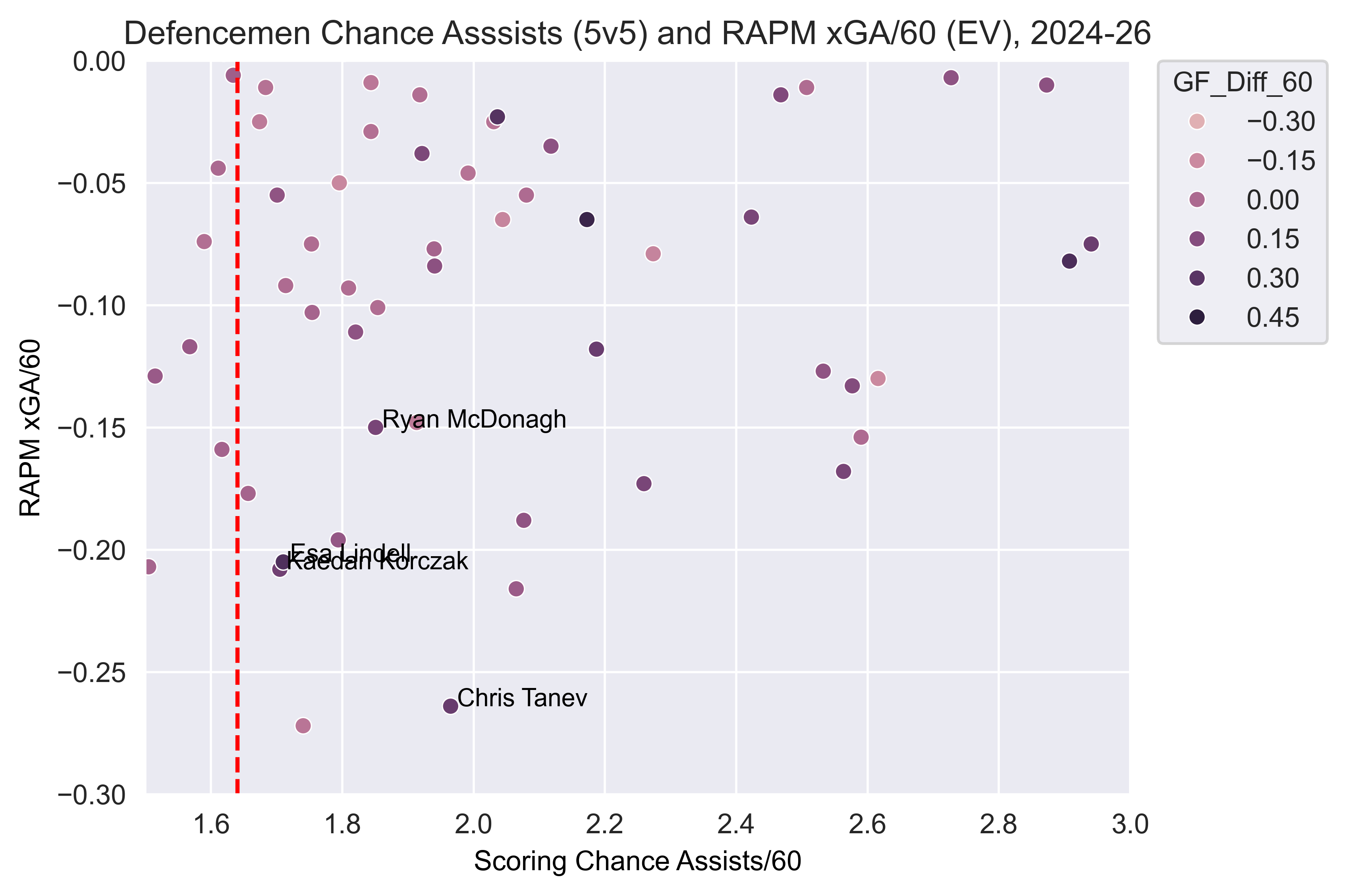
Comparing to Ryan McDonagh, Esa Lindell, and Chris Tanev is a great list of reliable top-4 defencemen. Korczak is still being used as a number-6 defenceman, but maybe Vegas would be better off giving him some more ice time down the stretch and into the playoffs.
6 – Nick Blankenburg (Colorado Avalanche)
This newsletter covered Blankenburg a few weeks ago, but it’s been two years of success for him. In that span, here are the closest comparables by play-driving impact on expected goals for and against, as well as goal differential, at even strength:
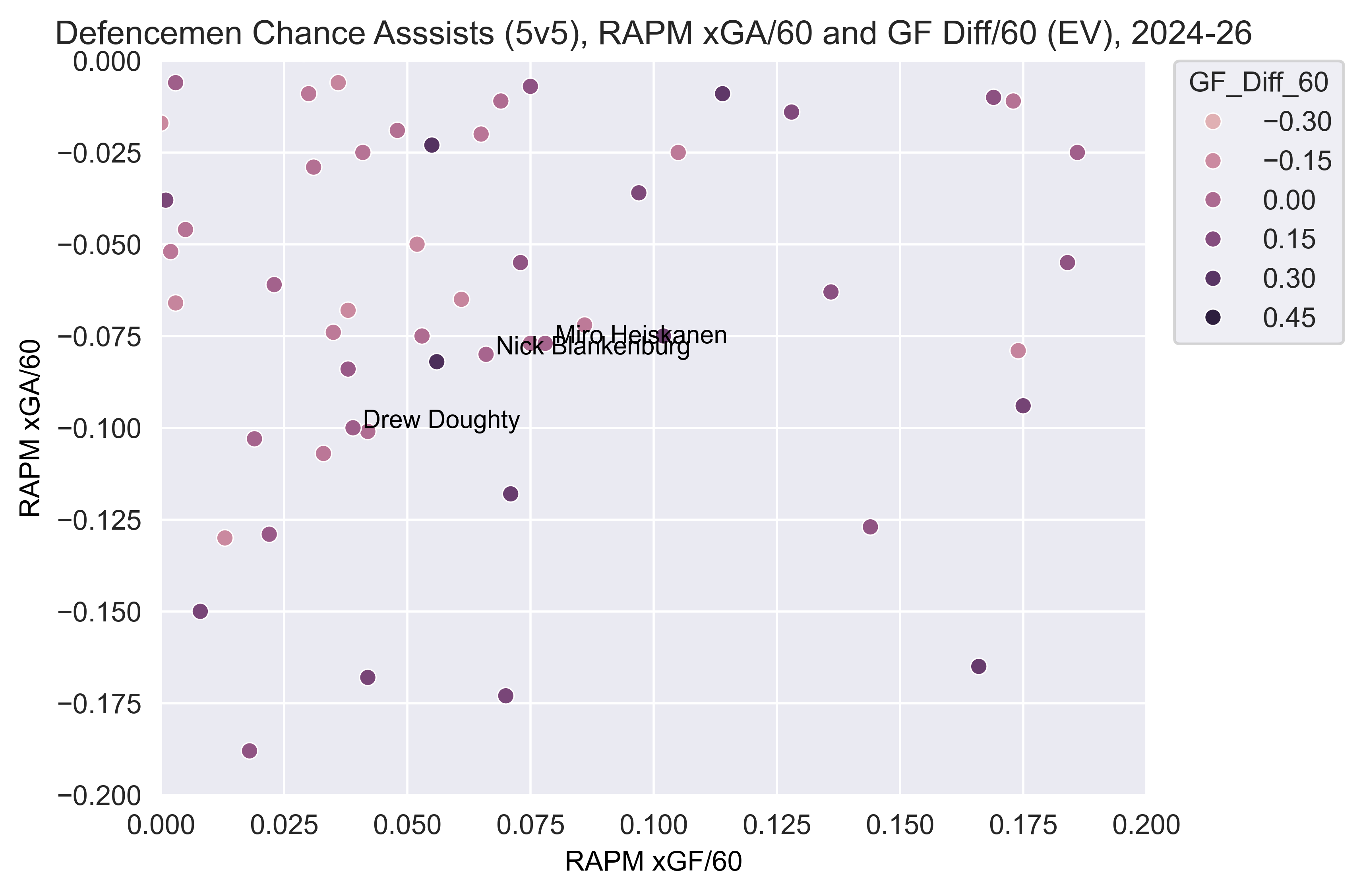
That list is Miro Heiskanen and Drew Doughty. It is a pretty good list for Blankenburg, but he’s stuck on a loaded Colorado blue line. He is a pending free agent, though, and teams on the upswing looking to solidify their blue line – San Jose and Chicago – would do well to give him a chance.
7 – Nils Lundkvist (Dallas Stars)
The one thing constantly working against Lundkvist is his health. He missed time with a concussion in 2023-24, played his last game of the 2024-25 season in January because of shoulder surgery, and a lower-body injury caused 27 missed games so far this season. It is a shame, because when he’s been on the ice, he’s had a comparable expected goals-for and against impact, as well as goal differential, as Blankenburg, Heiskanen, and Cale Makar:
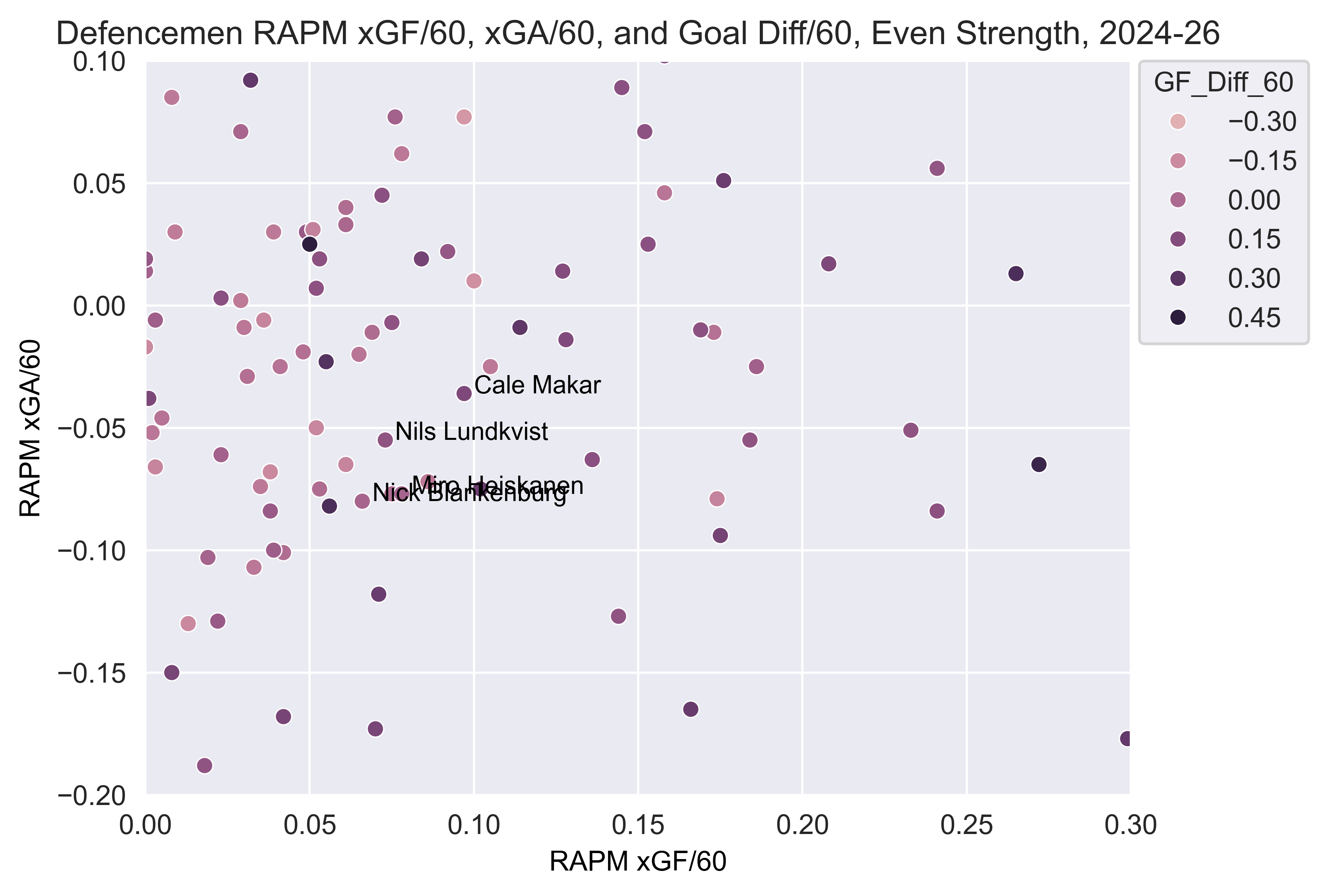
I do not believe Lundkvist is actually as impactful as Heiskanen, but it does highlight that he can be a very effective number-4 or number-5 defenceman when he’s healthy. He is skating a career-high 16:28 per game, is 25 years old, and passed the 200-game threshold earlier this season. He is an interesting name to watch as an RFA this summer, especially if he has a good postseason performance.
8 – Emil Andrae (Philadelphia Flyers)
In the article I linked in the Nemec section, Andrae’s was another name included. Highlighted in that article was Andrae’s scoring chance assist rate, his workload on zone exits and entries, and his assist rate, all from this season. Going back to last year, among defencemen who have an above-average rate of zone entries, here is where Andrae stands by rate of scoring chance assists and EV goal differential per 60 minutes:
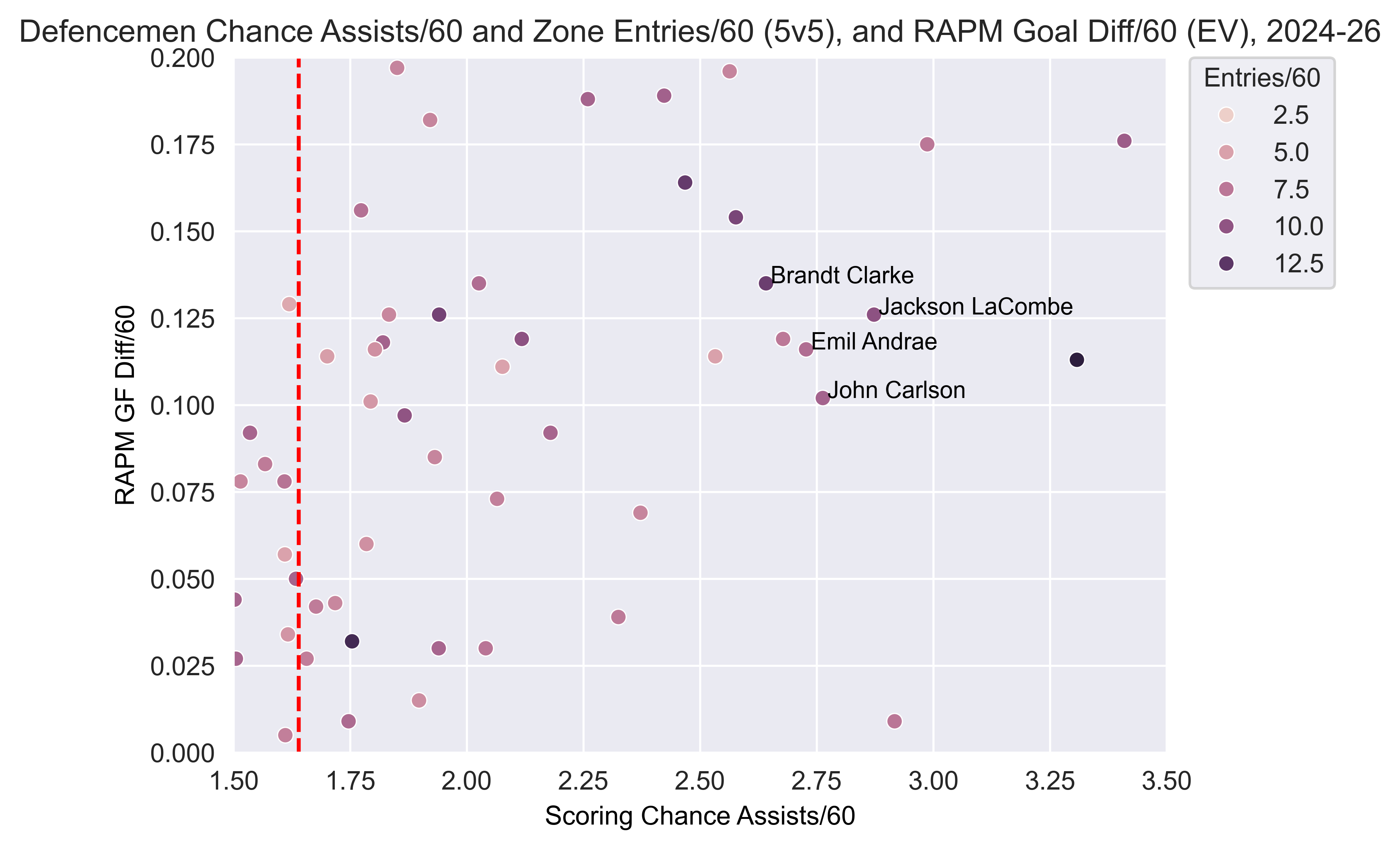
Andrae just turned 24 years old in February and doesn’t even have 100 NHL games to his credit. He doesn’t have the trust of the coaching staff to play 20+ minutes a night yet, and he’s an RFA this summer like Lundkvist, so keep an eye on what the Flyers do because Andrae has the profile of a player who can really help his forwards offensively.
9 – Scott Morrow (New York Rangers)
Morrow was traded to the Rangers as part of the K’Andre Miller deal and he doesn’t have a big NHL sample over his last two seasons (43 total games). However, his limited sample has shown very good tracking data as his rate of carried zone entries, Botch+Fail%, and scoring chance contributions compare very well:
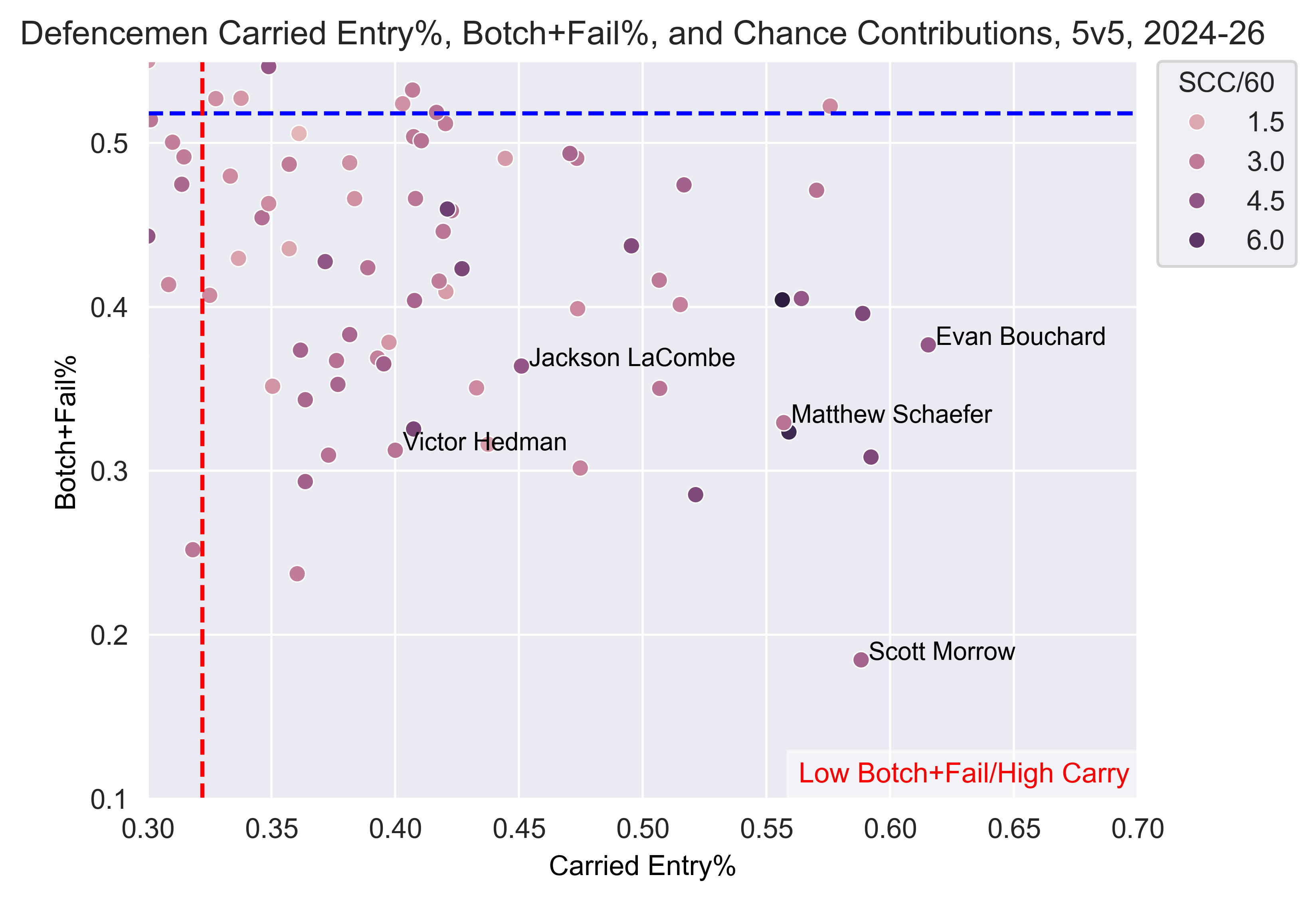
Because of the limited sample, we don’t want to draw firm conclusions, but he has been good at creating goals in that limited sample, with very good tracking data underpinning the goal creation. He is also a pending RFA, so watch to see what the Rangers do this summer, because if Morrow can do this in a bigger sample, he should be an impact offensive defenceman.
10 – Adam Wilsby (Nashville Predators)
To a lesser degree than Buium above, Wilsby has shown good building blocks for the future. Among defencemen with a positive goals differential rate over the last two seasons, here are the players Wilsby ranks alongside in terms of zone entries and carried zone entry percentage:
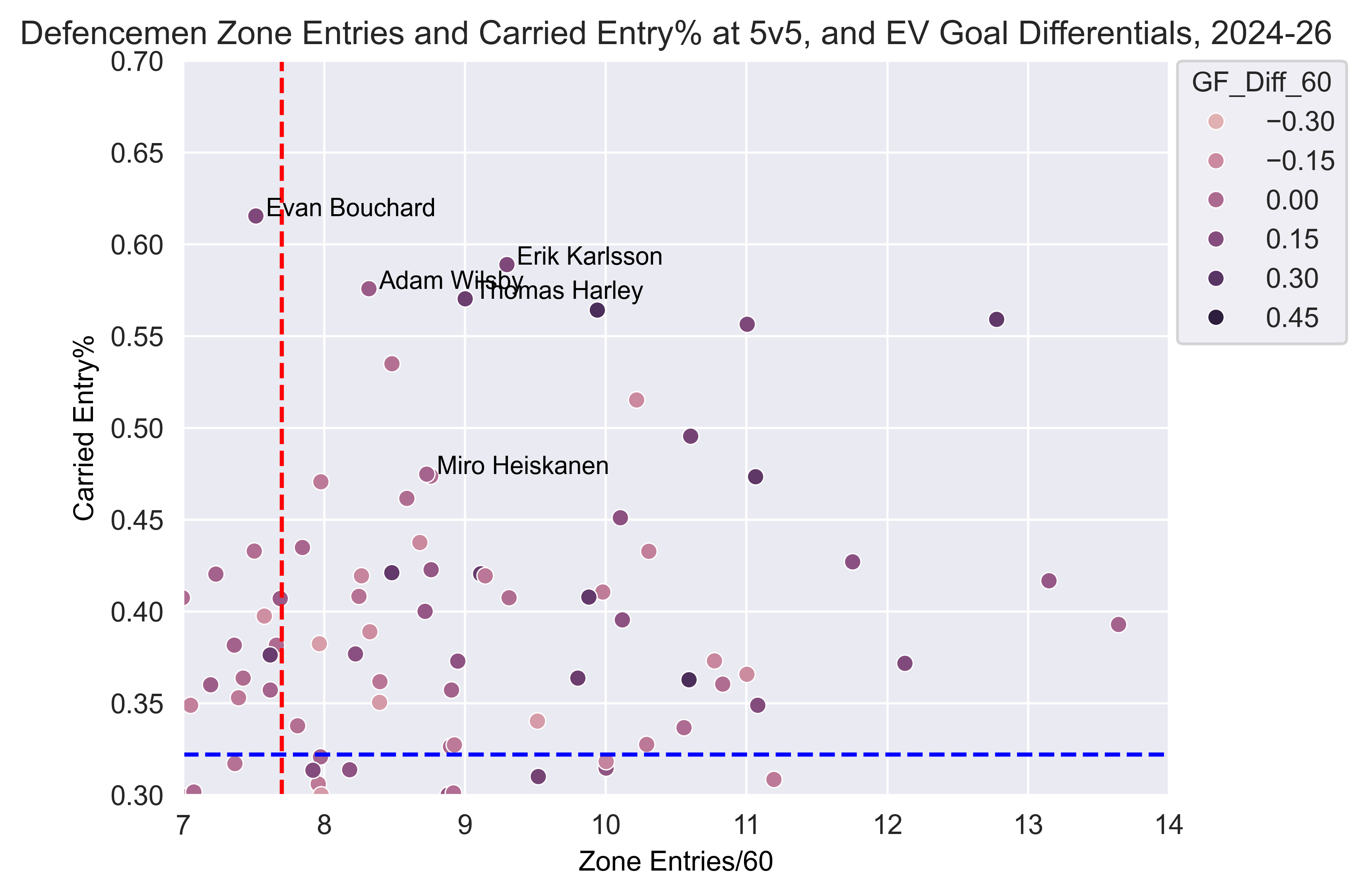
There isn’t a big sample here – 72 games across two seasons – but of the seven Nashville defencemen with at least 1000 minutes played at 5-on-5 over those two seasons, Wilsby leads them in goal share. Add that with the good work on zone entries, and there is something here for Nashville and Wilsby to believe in.