10 Interesting (To Me) Stats For This Week - December 23
Welcome back for another week of ’10 Interesting (To Me) Stats’! Last week, we went over one reason why 10 bubble players for the Team USA Olympic roster should make the team, and this week we’re heading north. Here is one reason why 10 different bubble players for Team Canada should make the Olympic squad.
Remember that each country has already named six players to the roster. For Canada, they are Sidney Crosby, Nathan MacKinnon, Connor McDavid, Brayden Point, Sam Reinhart, and Cale Makar. We will also assume there are some locks like Mitch Marner, Brandon Hagel, Josh Morrissey, Devon Toews, and Colton Parayko. We are also assuming that if he returns from his shoulder injury, Connor Bedard will be on the roster.
Player data is from Evolving Hockey, tracking data is from All Three Zones, and are current as of Monday, December 22nd.
1 – Macklin Celebrini
With the torrid start from Celebrini so far in 2025-26, he’s gone from ‘should he really be there?’ to ‘how can he not be there?’. But that also belies what was a great rookie season, too. Putting it all together, here are the forwards (minimum of 250 tracked minutes) who are two standard deviations above average by scoring chance contributions (individual chances and assist on teammate chances) per 60 minutes at 5-on-5, one standard deviation above average by percentage of zone entries carried in, and above average by total zone entries per 60 minutes:
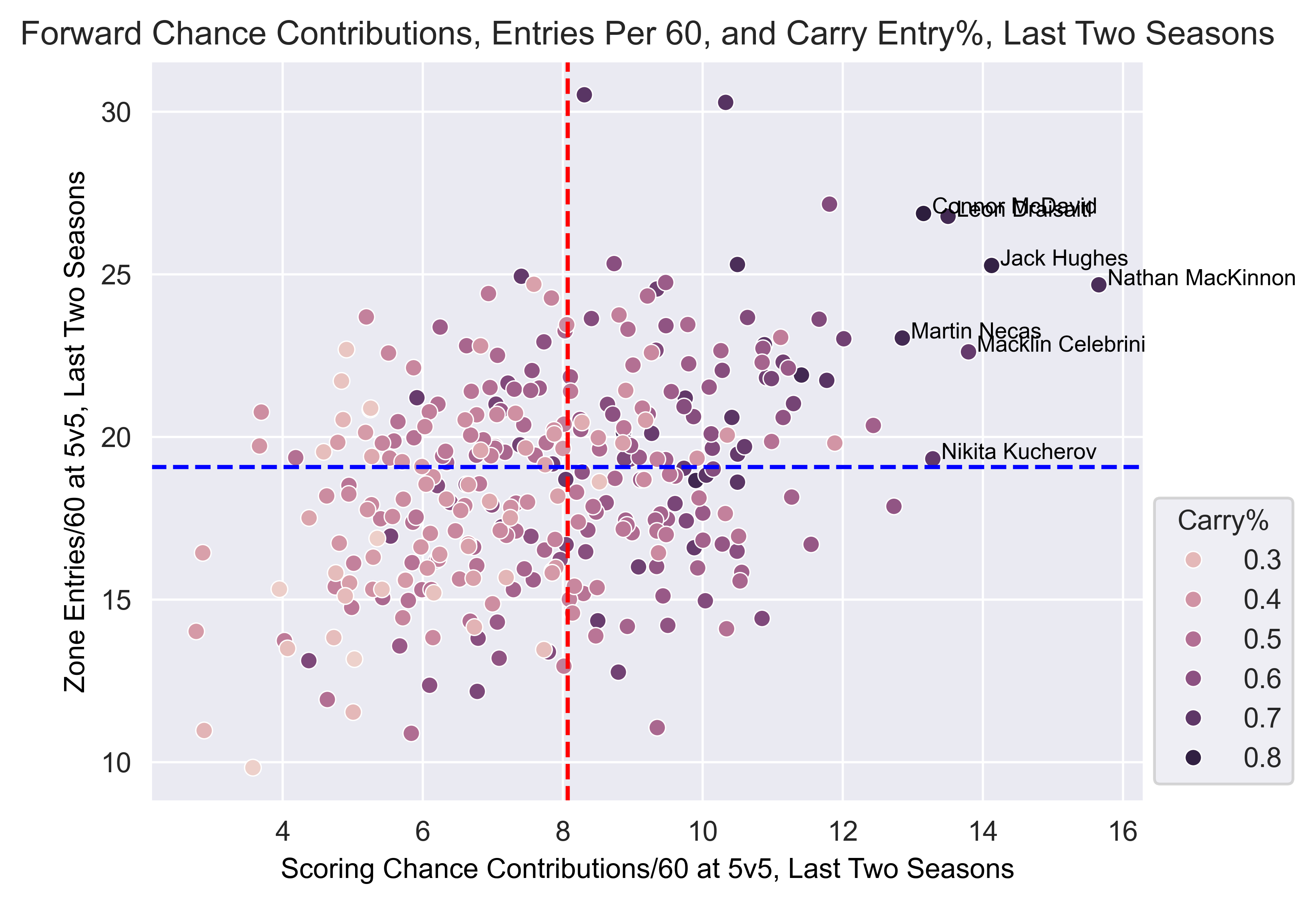
The overlapping names are Connor McDavid and Leon Draisaitl, then we have Colorado’s top-line duo of Nathan MacKinnon and Martin Necas, former MVP in Nikita Kucherov, and superstar Jack Hughes. When those are the comps for key tracking data through 1.5 seasons, it’s hard to come up with reasons why Celebrini shouldn’t be on Team Canada.
2 – Seth Jarvis
Jarvis was on the Four Nations roster, but he was scratched for a game and skated under 12 minutes each appearance. The Olympics aren’t guaranteed, but it’s Jarvis’ ability to contribute everywhere that makes him an appealing option. Here are the forwards who, over the last 2.5 seasons, are above average by expected goals-for driving on the power play, expected goals-against on the penalty kill, and by xG differential at even strength:
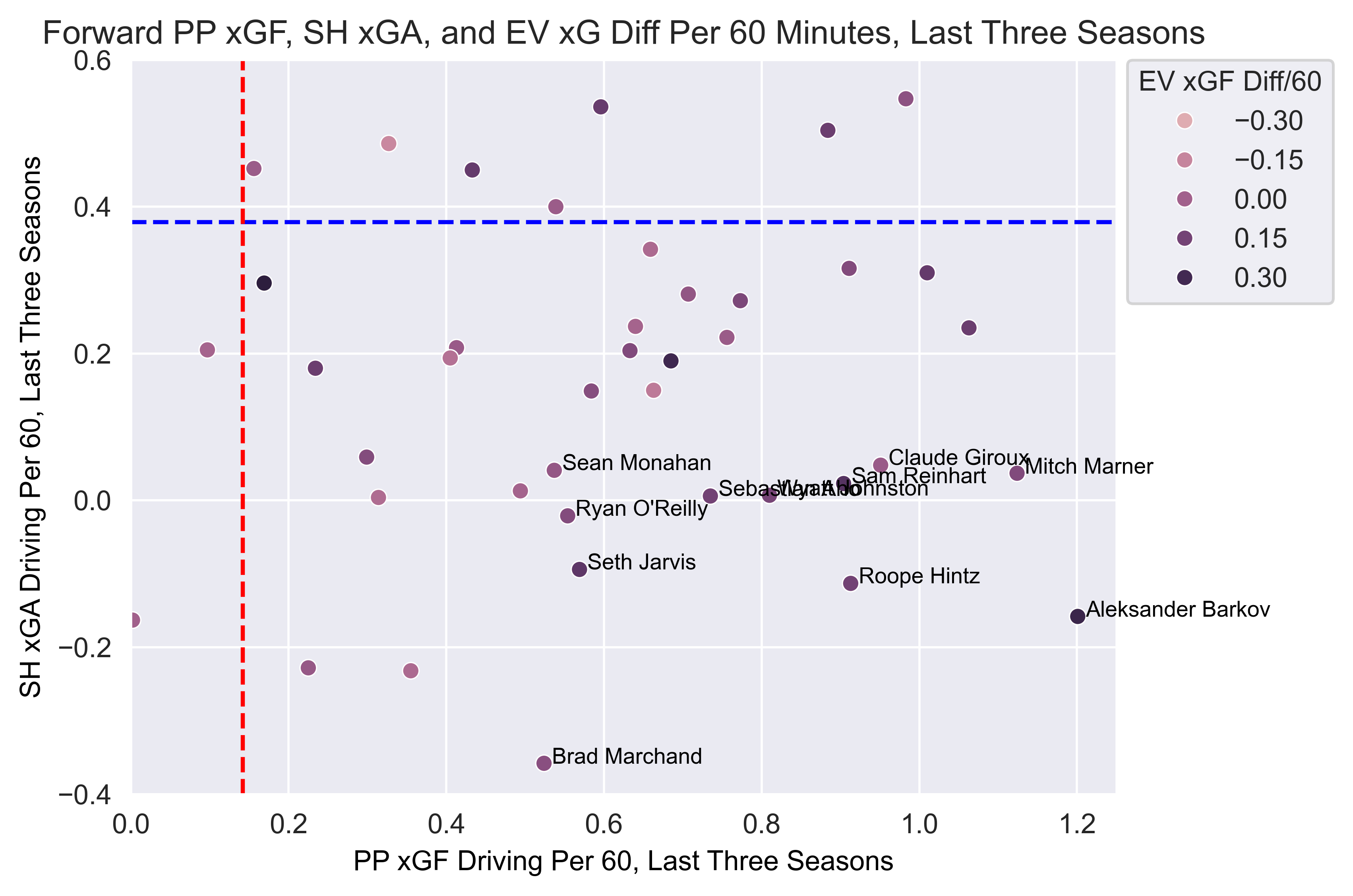
Obviously, the number of players that play meaningful minutes in all three phases is small, but this list has superstars like Mitch Marner, Sam Reinhart, and Aleksander Barkov, other top NHL stars like Sebastian Aho, Roope Hintz, and Brad Marchand, and reliable veterans like Ryan O’Reilly and Sean Monahan. That Jarvis can help in all three phases is what differentiates him from most players and could place him on the Olympic roster.
3 – Tom Wilson
Wilson was on the periphery of the Four Nations roster and his play to start the 2025-26 season has kept him there. Teams like to have different kinds of players on their roster, and there are few like Wilson as here is the entire list of forwards who, over the last two seasons, have a 5-on-5 goal-scoring rate of a top-line forward, are at least one standard deviation above average by hits per 60 minutes, and above average defensively:
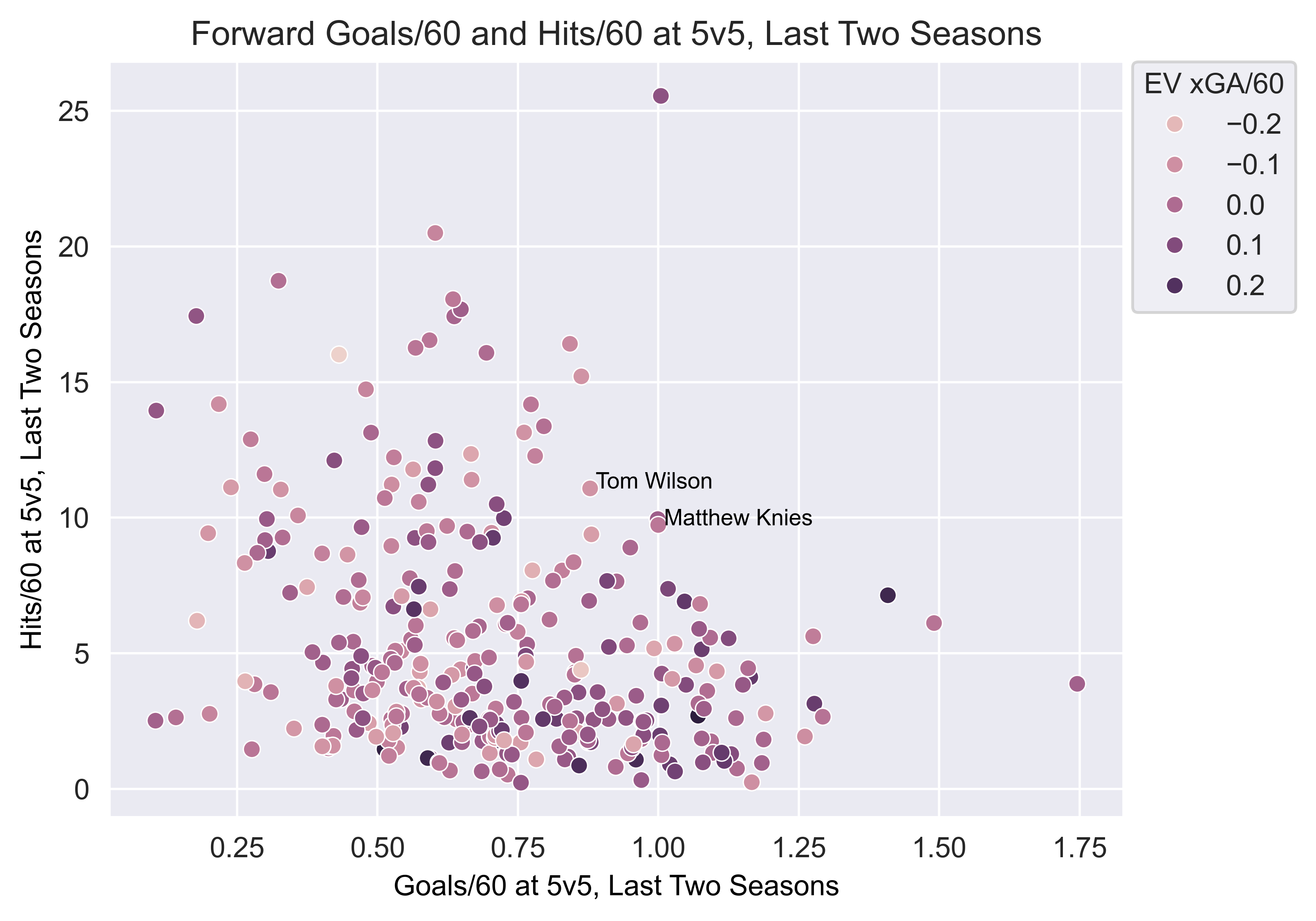
Matthew Knies is also an Olympic hopeful and is the only player in the league that can score, hit, and play solid defence like Wilson. Whether Wilson makes the team or not will be decided soon, but he has done what he can to push his name into the conversation.
4 – Mark Scheifele
What makes Scheifele such a dangerous offensive player is he is a true dual-threat option, being able to both score and facilitate. Here are all the forwards with scoring chance assist and entry rates at least one standard deviation above average while also having above-average individual scoring chance rates over the last 1.5 seasons:
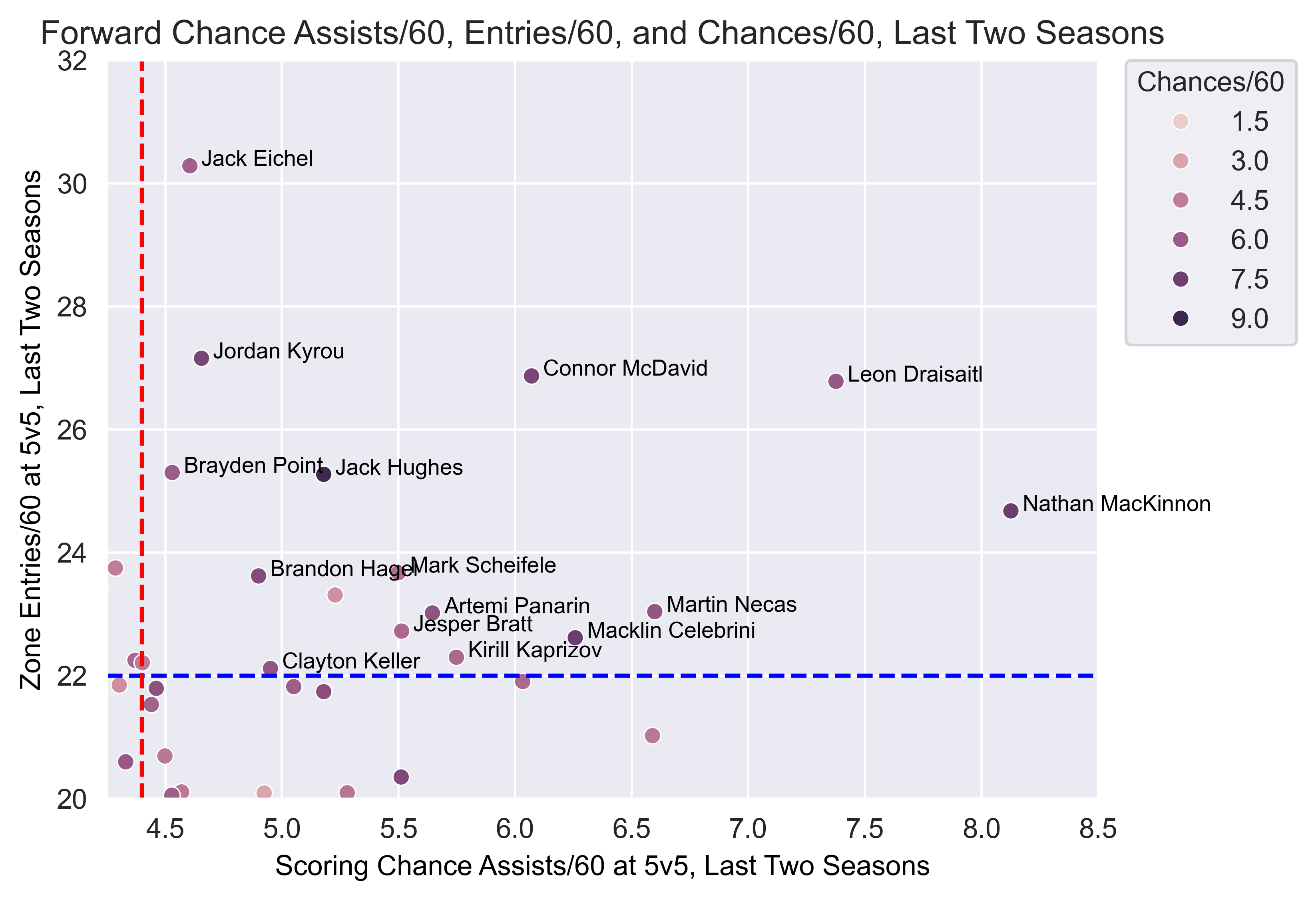
We see the expected superstars along with several top wingers like Brandon Hagel, Jesper Bratt, and Clayton Keller. Scheifele can do it all in the offensive zone, and that kind of versatility will at least keep him on Team Canada’s radar.
5 – Nick Suzuki
As with Seth Jarvis, Suzuki is a player who can help at even strength, the power play, and the penalty kill. His even-strength play, though, is what really stands out for him. Since the start of the 2023-24 season, here are comparable forwards by expected-goal and actual-goal driving per 60 minutes:
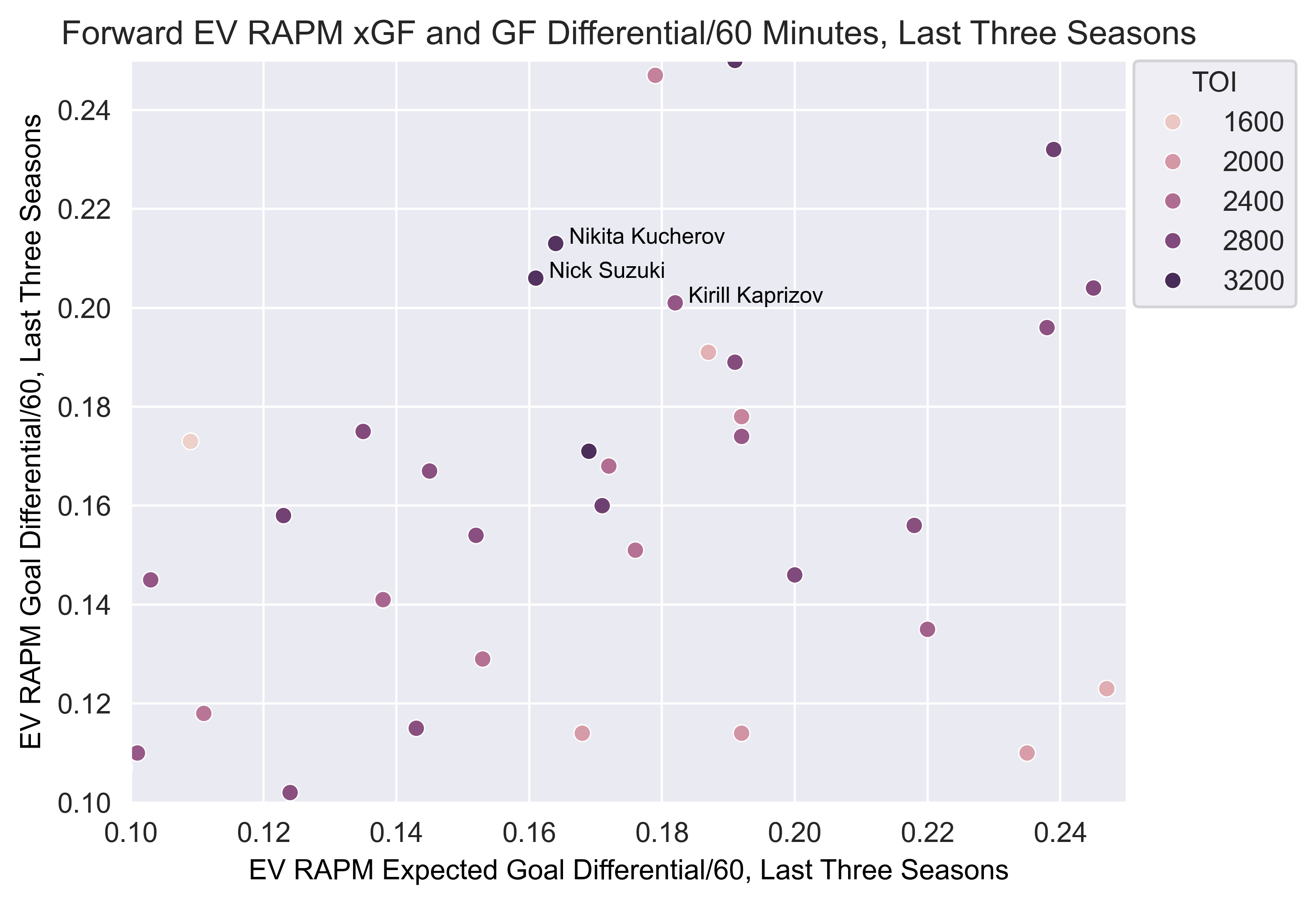
The closest names to Suzuki in those two overall even-strength measures are Nikita Kucherov and Kirill Kaprizov. Add that with his ability to contribute on the power play and penalty kill, and Suzuki is one of the top all-around players available for the Canadian roster who wasn’t on the Four Nations Cup team.
6 – Bo Horvat
While not a superstar name, consistency has been the key to Horvat being a big contributor in the NHL for years now. In fact, here are the players who have had a top-line rate of even-strength goal differentials per 60 minutes over the last three seasons while also having a 90th percentile rate of ice time per game:
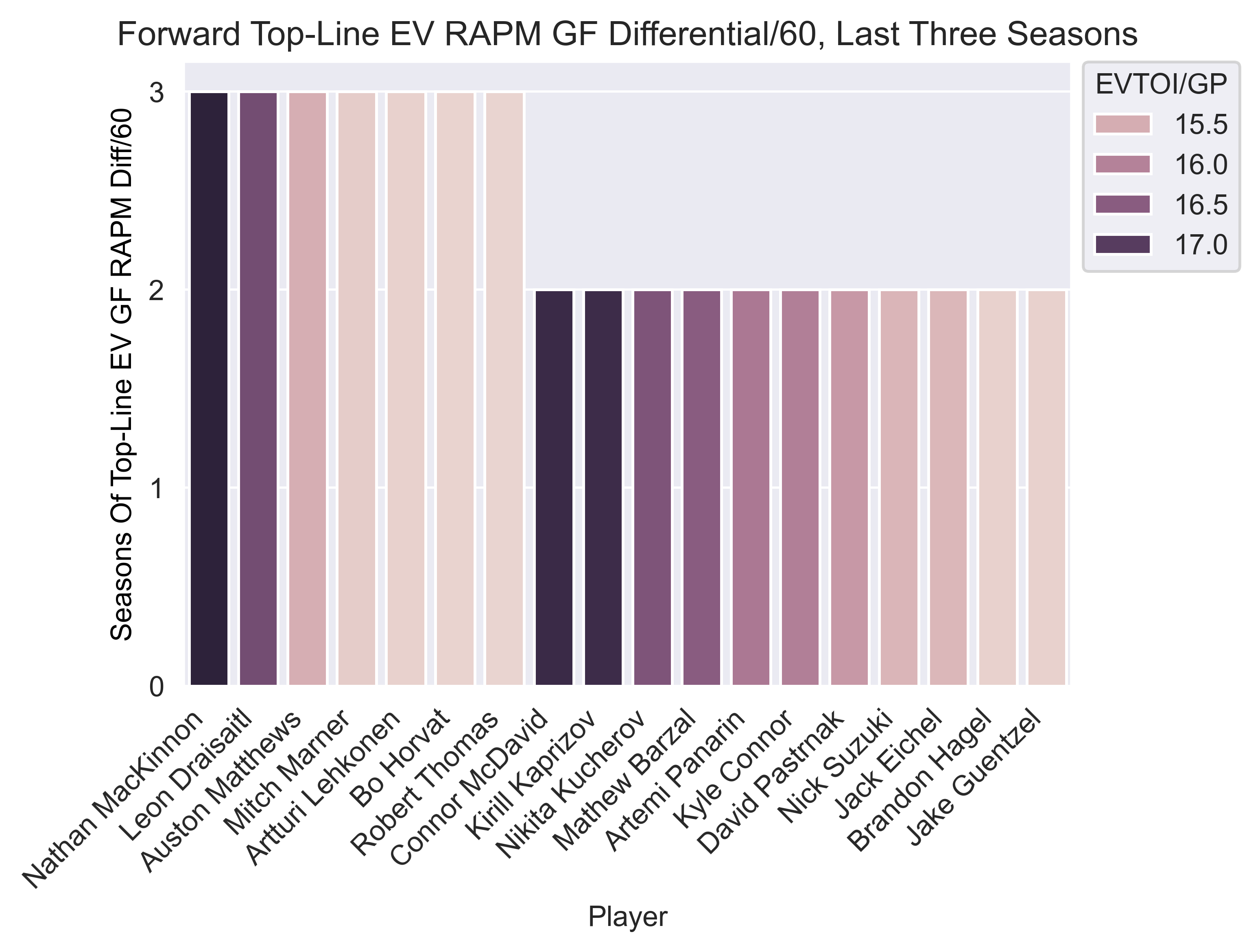
Look at the names with at least three such seasons we outlined (even McDavid, Kaprizov, and Kucherov only have two such seasons). Being a consistently strong goal-driver as a heavily-used forward is very difficult, and Horvat does it year after year. He might be a longshot given the depth of Team Canada’s roster, but his consistency and goal scoring has pushed him into the conversation.
7 – Matthew Schaefer
Three months ago, Schaefer would not have been anywhere near the top of the names for potential Team Canada roster spots. That has completely changed with his play so far this season as here are his comparables by total zone entries+exits per 60 minutes, combined botched retrieval + failed exit percentage, and zone entry carry-in% at 5v5 (minimum of 90 tracked minutes):
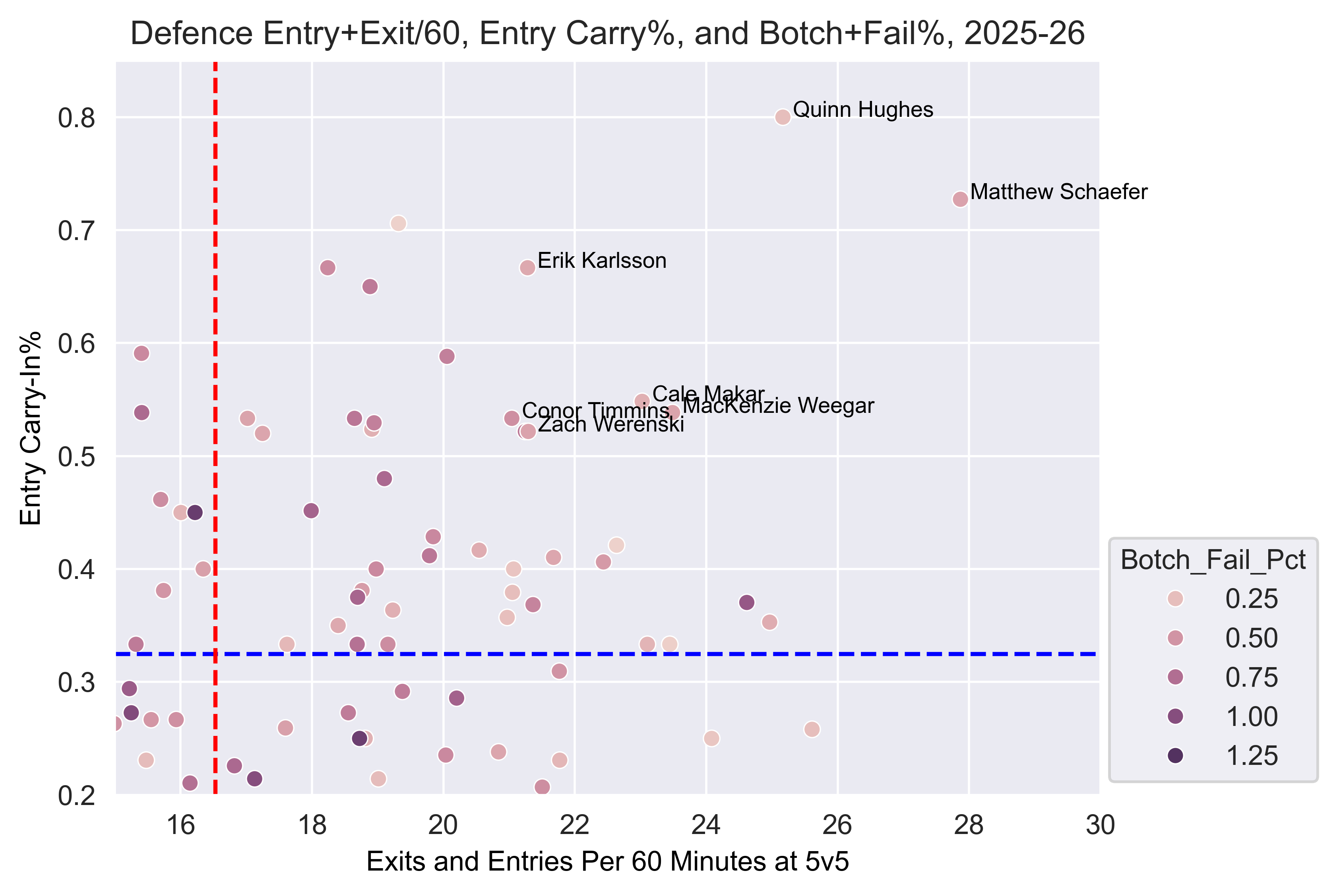
Four of those names (Hughes, Karlsson, Makar, Werenski) are going to the Olympics for a gold medal contender, MacKenzie Weegar is at least on the bubble for Canada, and shout out to Conor Timmins! Schaefer is already performing like an elite top-pair defenceman, so regardless of his age, it will be very hard to leave him at home when the rosters are announced.
8 – Jakob Chychrun
Another player who has thrust himself into the Canada conversation is defenceman Jakob Chychrun. Over the last two seasons, here are the names with top-pair rates of Evolving Hockey’s Goals-For/60 RAPM, Goals-Against/60 RAPM, and playing top-pair minutes at even strength:
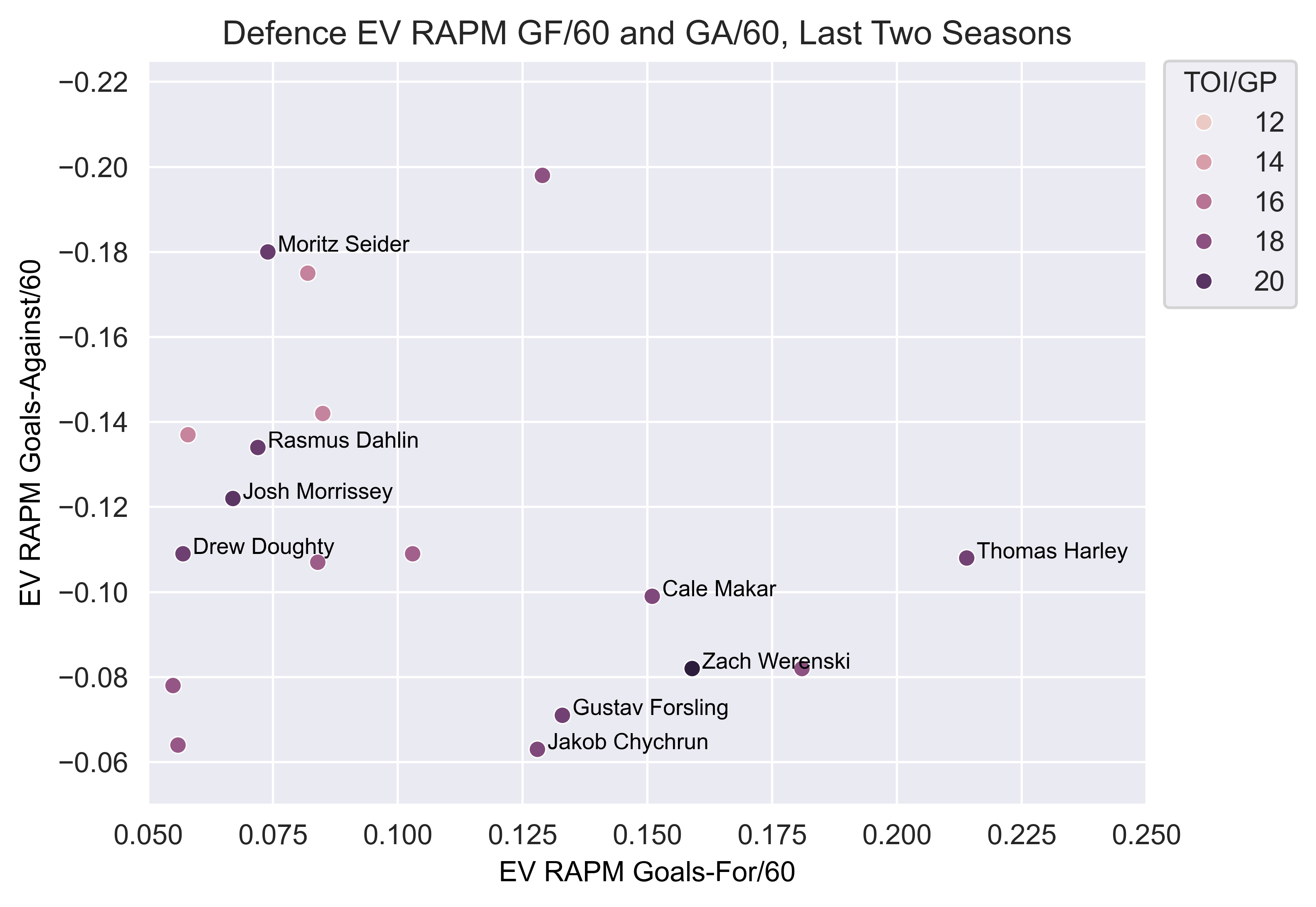
More specifically, in the area right around Chychrun we see Zach Werenski, Gustav Forsling, and Cale Makar. Those names are locks for their Olympic team, and Thomas Harley was at the Four Nations Cup, which is what makes Chychrun an interesting outlier if he doesn’t make Team Canada. Chychrun can help the team at both ends, so he’s at least going to warrant some chatter in the next week or so.
9 – Travis Sanheim
One of the more reliable defencemen in the league is Philadelphia’s Travis Sanheim. He isn’t overly busy on exits and entries, but both his scoring chance contribution rate and botched retrieval + failed exit percentage are that of a #1 defenceman, and only one other name can say that:
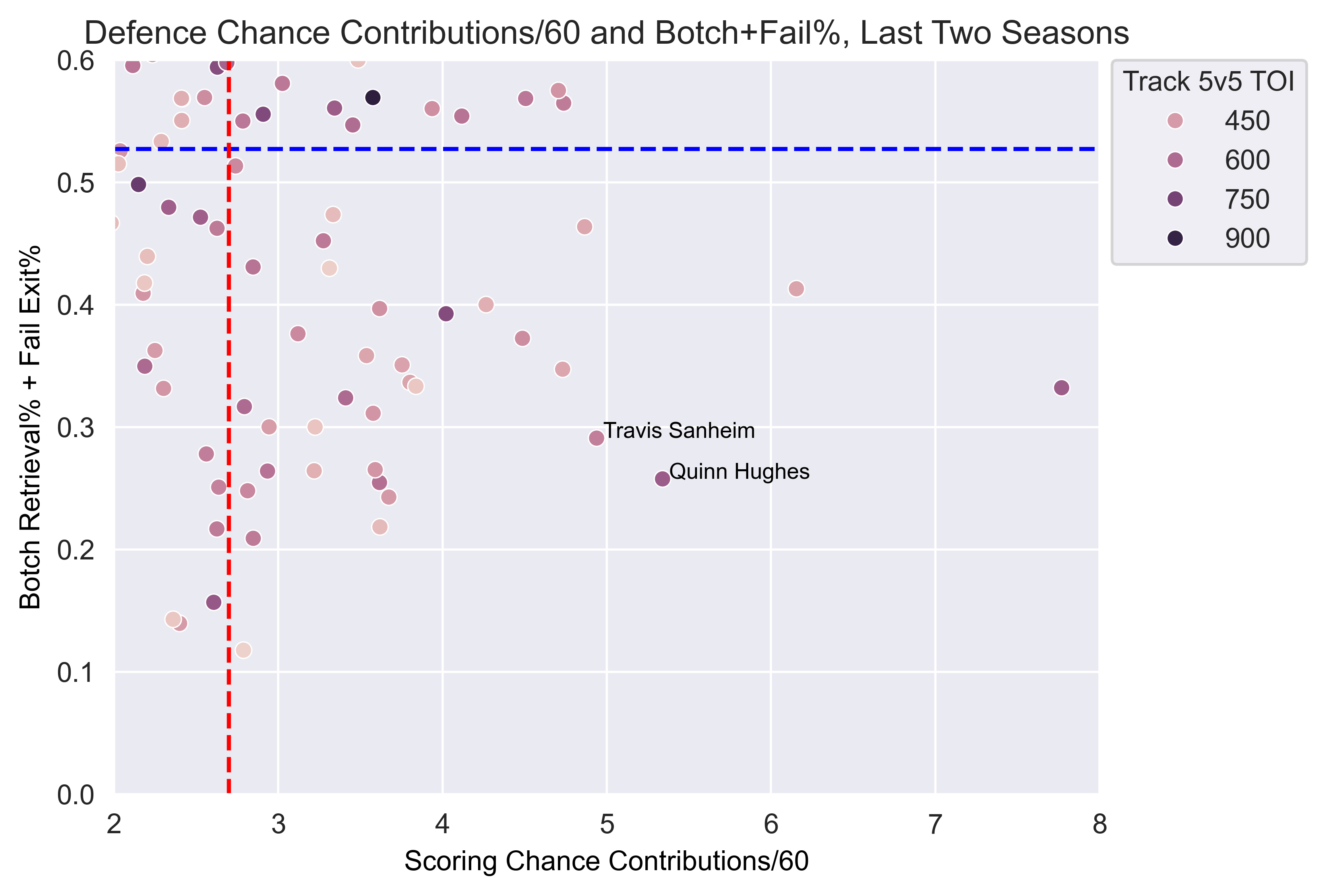
Playing for a team that has struggled for success in recent years has kept Sanheim with a low profile, but he rarely makes mistakes and can help the team generate offence once the puck gets in the offensive zone. That combination of skills makes him a reliable player at both ends of the ice, and puts him in conversation for Team Canada’s roster.
10 – Logan Thompson
Finally, assuming one of the three goals from the Four Nations Cup doesn’t make the Team Canada roster, the replacement should be Thompson. Over the last 2.5 seasons, here are the goalies one standard deviation above average by Goals Saved Above Expected/60 and Shots Against Per GSAx:
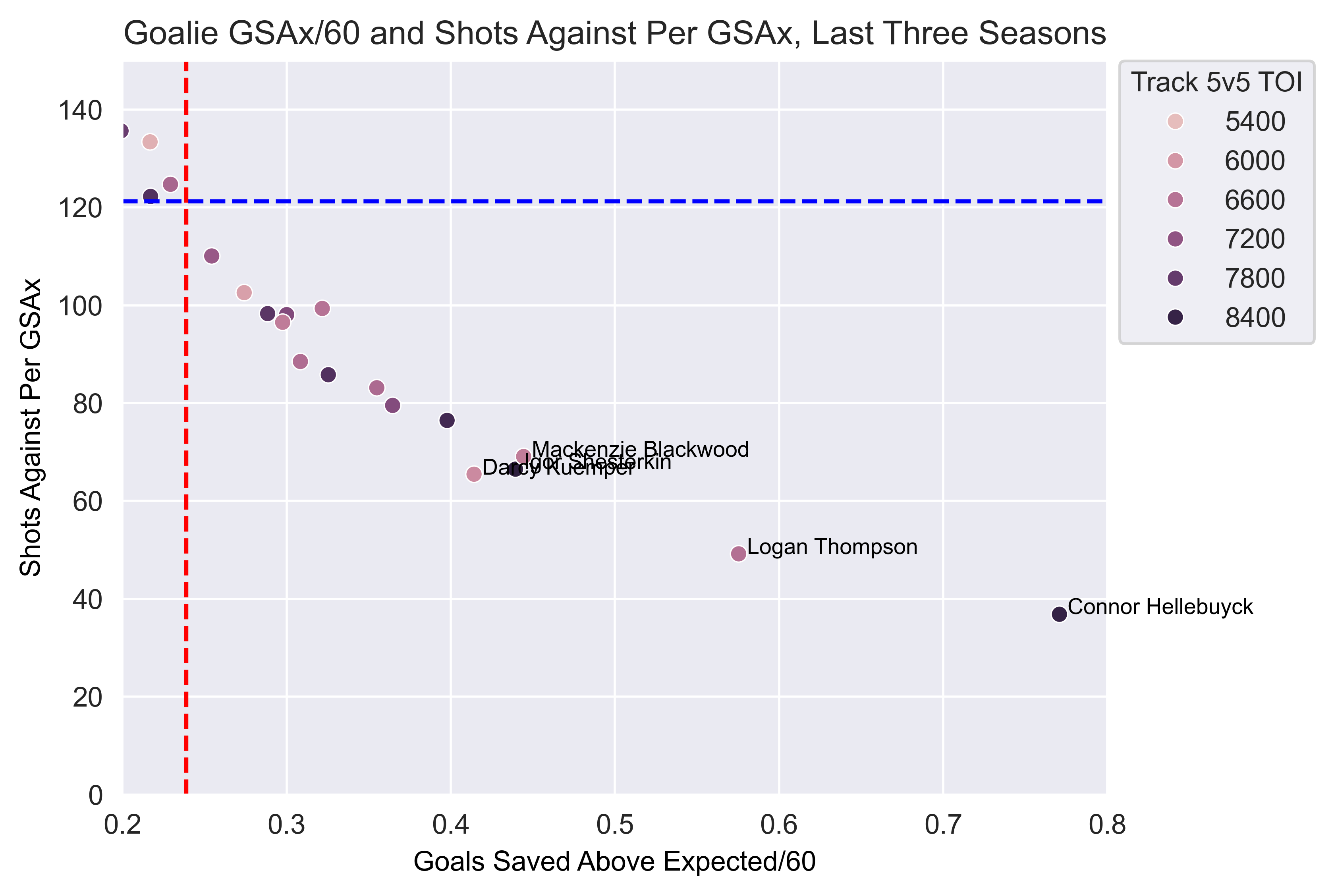
The overlapped names are MacKenzie Blackwood and Darcy Kuemper (both of whom may make the Canada roster), Igor Shesterkin, and Connor Hellebuyck. With that kind of company for a 2.5 season span, it will be very hard for Canada’s management group to leave Thompson (and Blackwood and Kuemper) at home again.
Until next week, and happy holidays, everyone.